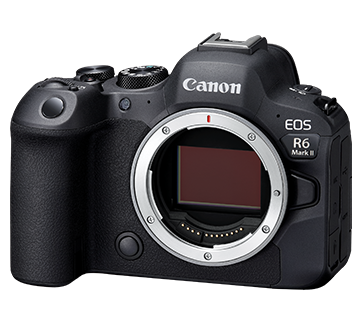
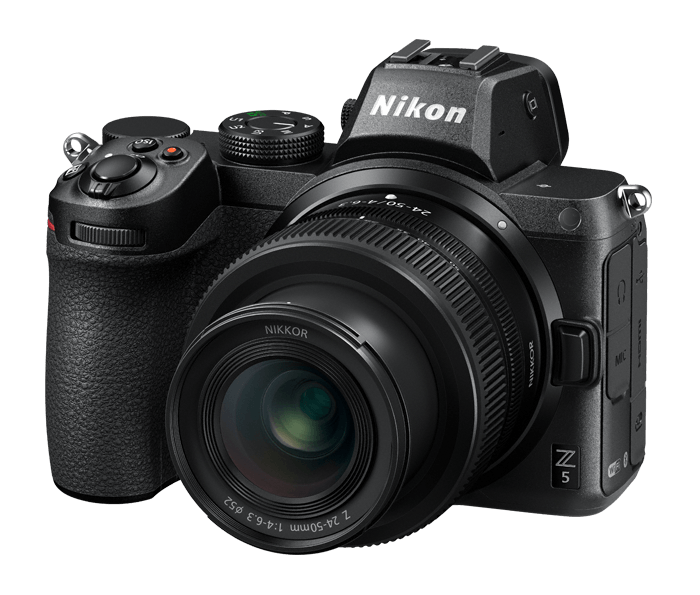
The Canon EOS R6 Mark II and Nikon Z5 are two standout options in the full-frame mirrorless camera segment, often compared by both enthusiasts and professional photographers. With both models boasting 24-megapixel sensors, these cameras appeal to those who prioritize image quality and the ability to perform well in various shooting conditions. The Canon model, launched in 2022, brings advancements in autofocus and video capabilities, whereas the Nikon Z5, released in 2020, offers a compelling entry point into full-frame photography with a more budget-friendly price. Buyers looking for performance in action photography or advanced video features may lean more towards the R6 Mark II, while those prioritizing a balance of quality and affordability might consider the Z5.
Specifications Comparison
Detailed Comparison
Image Quality
Both the Canon EOS R6 Mark II and Nikon Z5 offer similar image quality with their 24-megapixel full-frame sensors. The R6 Mark II excels in low-light conditions due to its impressive ISO range of 100-102400, expandable to 204800, allowing for better performance in challenging lighting scenarios. On the other hand, the Z5 features a slightly narrower native ISO range of 100-51200, expandable to 50-102400, which may limit its efficacy in low-light situations compared to the Canon.
In terms of dynamic range and color rendition, both cameras perform admirably, producing vibrant colors and rich detail. However, user experiences suggest that the Canon model delivers slightly better performance in high ISO settings, producing cleaner images with less noise compared to the Nikon. This makes the R6 Mark II more desirable for event and wedding photographers who frequently shoot in low-light environments.
Overall, while both cameras produce high-quality images, the Canon EOS R6 Mark II has a slight edge in low-light performance and dynamic range, giving it the winning nod in this aspect.
Autofocus System
The autofocus capabilities of the Canon EOS R6 Mark II are significantly advanced, featuring an impressive 4897 autofocus points. This system utilizes Canon's Dual Pixel CMOS AF II technology, which ensures fast and accurate focusing in a variety of shooting scenarios. The R6 Mark II also offers eye tracking for both humans and animals, making it extremely versatile for wildlife and portrait photography.
In contrast, the Nikon Z5's autofocus system, while effective, is more limited with only 273 focus points. It performs well in most situations but may struggle compared to the R6 Mark II in fast-moving scenarios. The Z5 does offer contrast-detection autofocus with good performance in daylight but generally lacks the speed and precision of the Canon's system.
Given its superior number of autofocus points and advanced features, the Canon EOS R6 Mark II takes the lead in this area, catering to photographers who need quick and reliable autofocus performance.
Video Capabilities
The video features of the Canon EOS R6 Mark II are robust, offering 4K recording at up to 60 frames per second (fps) without a crop, which is crucial for videographers who require high frame rates for smooth motion. The R6 Mark II also includes advanced video features like Canon Log and HDR-PQ for enhanced post-production flexibility.
In contrast, the Nikon Z5 offers 4K video recording but is limited to 30 fps and applies a crop factor, which might be a drawback for those looking to create cinematic footage. While the Z5 still produces quality video, the limitations on frame rates and cropping make it less appealing for serious videographers.
Consequently, the Canon EOS R6 Mark II clearly stands out for video recording capabilities, providing more functionality for those who prioritize video in their shooting repertoire.
Build & Ergonomics
Both the Canon EOS R6 Mark II and Nikon Z5 are well-built and feature weather-sealing, making them suitable for outdoor photography. The Canon model weighs 670g and has dimensions of 138 x 98 x 88 mm, while the Nikon Z5 weighs slightly more at 675g with dimensions of 134 x 101 x 70 mm. The difference in weight and size is minimal and should not be a significant concern for most users.
Regarding controls, photographers often find the ergonomics of both cameras satisfactory, with accessible buttons and overall ease of use. That said, the Canon R6 Mark II features a fully articulating screen, which can be advantageous for vlogging and creative shooting angles. Meanwhile, the Z5 has a tilting screen, which is less versatile.
In terms of ergonomics and build quality, the Canon EOS R6 Mark II edges out owing to its superior screen flexibility, making it more user-friendly for a broader range of photography and video applications.
Battery & Storage
The Canon EOS R6 Mark II boasts a robust battery life, rated for approximately 580 shots, which is excellent for longer shoots without the need for frequent recharging. The R6 Mark II utilizes the LP-E6NH battery, which is well-known for its longevity. Additionally, the camera supports dual card slots, allowing users to efficiently manage their storage and create backups while shooting.
On the other hand, the Nikon Z5 offers a slightly lower battery life of around 470 shots using the EN-EL15c battery. While acceptable, it may require more frequent battery changes during extended sessions. However, the Z5 also features dual card slots, which would suit photographers who need reliable storage options.
Overall, despite both cameras having dual slots, the Canon EOS R6 Mark II's longer battery life provides an advantage for photographers who are often on the move or shooting long events.
Value for Money
The Nikon Z5 is more competitively priced at approximately $1399, making it an attractive option for those entering the full-frame market without breaking the bank. While it may lack some of the advanced features found in more expensive models, it is still a capable camera for beginners and enthusiasts alike.
Conversely, the Canon EOS R6 Mark II, while not officially priced here, is positioned in the higher end of the market due to its advanced features and performance. The additional investment may be justified for professionals who demand superior autofocus, video capabilities, and low-light performance.
Ultimately, the Nikon Z5 wins in terms of initial monetary investment, but whether the Canon's higher price point translates into value depends on the specific needs of the photographer. If advanced performance is a priority, then the R6 Mark II may be worth the extra expense.
Our Verdict
The Canon EOS R6 Mark II wins overall due to its superior performance in several critical aspects, including low-light image quality, autofocus capabilities, and video features. While the Nikon Z5 is a commendable option, especially for those on a budget or those who prioritize a less complex system, the performance enhancements of the R6 Mark II make it the better choice for serious photographers and videographers. Each camera has its strengths, but those who require cutting-edge features and performance in both stills and video will find the R6 Mark II to be the more advantageous investment.