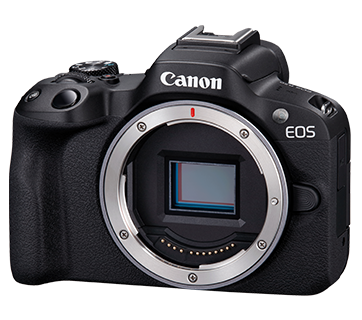

The Canon EOS R50 and the Fujifilm X100VI are two popular choices among photography enthusiasts and professionals alike. Both cameras target photographers looking for a compact yet powerful option with advanced features, but they cater to slightly different needs. The R50, released in 2023, is a more budget-friendly mirrorless camera ideal for those entering the Canon ecosystem, while the X100VI, launching in 2024, elevates itself with its premium features and advanced APS-C capabilities, making it suitable for serious photographers who appreciate a perfect blend of portability and manual control. The key differentiators include sensor resolution, autofocus performance, stabilization capabilities, and overall price point, which will dictate potential buyers' choices.
Specifications Comparison
Detailed Comparison
Image Quality
In terms of image quality, the Fujifilm X100VI takes the lead with a remarkable 40-megapixel APS-C sensor, compared to the Canon EOS R50's 24-megapixel sensor. This higher resolution allows for more detailed images, especially in large prints or heavy cropping situations. Fujifilm's unique color science and film simulations further enhance the overall image quality, providing vibrant and true-to-life colors that appeal to many photographers. Conversely, while the R50 offers excellent image quality for its class, it may not achieve the same level of detail in challenging situations. Both cameras perform well at high ISO settings, but the X100VI has a broader ISO range that extends down to 64 and up to 51,200, providing more versatility in low-light conditions.
Autofocus System
The Canon EOS R50 is equipped with an impressive autofocus system featuring 651 points, providing fast and responsive focusing across a wide area of the frame. This capability is especially beneficial for dynamic shooting situations, such as sports or wildlife photography. In contrast, the Fujifilm X100VI, while having fewer autofocus points at 425, still performs admirably due to its advanced hybrid autofocus system combining phase-detection and contrast-detection techniques. Both cameras excel in terms of speed, but R50's autofocus point coverage gives it an edge when tracking moving subjects. However, for street and portrait photography, many photographers find X100VI's autofocus performance to be more than sufficient for their needs.
Video Capabilities
Regarding video capabilities, the Canon EOS R50 supports 4K recording at 30 frames per second, making it a solid choice for vloggers and content creators seeking versatile video options. However, it does not offer in-body stabilization, which can lead to shaky footage without the use of external stabilizers. In comparison, the Fujifilm X100VI also captures video at 4K and includes a 6-stop in-body stabilization feature, which would benefit users filming handheld or in challenging conditions. While both cameras serve well for video, the X100VI's stabilization gives it a distinct advantage for those prioritizing smooth video capture.
Build & Ergonomics
The build quality of both cameras reflects their target market, but there are notable differences. The Canon EOS R50 is lightweight at 375 grams, making it highly portable and ideal for day-long shoots. Its compact dimensions also appeal to those who prefer a smaller camera without compromising functionality. On the other hand, the Fujifilm X100VI is built with a more substantial design, weighing 521 grams, and is renowned for its premium feel and robust construction. The X100VI features both an electronic and optical viewfinder, adding versatility for shooting preferences. While the R50 is easier to carry for extended periods, the X100VI's build quality and ergonomics may be more appealing to photographers who prioritize durability and a more tactile experience.
Battery & Storage
When it comes to battery performance, the Fujifilm X100VI boasts an impressive battery life with approximately 450 shots per charge, which is beneficial for extended shooting sessions. The Canon EOS R50, while slightly lower in battery life, still offers a reasonable performance but doesn't match the X100VI's longevity. Due to its mirrorless design, both cameras utilize SD card slots for storage; however, the R50 supports RF lenses, allowing for future camera upgrades or lens variety. The X100VI, being a compact fixed-lens camera, solves the lens choice conundrum but lacks versatility in that aspect. Ultimately, those needing longer battery life might prefer the X100VI for its endurance.
Value for Money
Value for money is a critical aspect for many potential buyers. The Canon EOS R50 is priced at $679, making it an attractive option for those entering the Canon mirrorless ecosystem or looking for a capable entry-level camera with great features. In contrast, the Fujifilm X100VI, at $1,599, aims at the premium segment, offering advanced features, superior image quality, and a higher build standard. While the X100VI justifies its price with exceptional capabilities, budget-conscious buyers will find the R50 to be a more accessible choice with good overall value. Therefore, the determination of value is heavily dependent on the individual's budget and specific use cases.
Our Verdict
Ultimately, the Fujifilm X100VI proves to be the overall champion in this comparison, primarily due to its superior image quality and advanced stabilization for video. While the Canon EOS R50 offers a compelling value, especially for beginners on a budget, the added features and ergonomics of the X100VI make it more appealing for serious photographers. Those who prioritize a lightweight, versatile option suitable for casual use may lean towards the R50, while professionals or enthusiasts seeking top-notch performance and enhanced creative control will find that the X100VI aligns with their needs more effectively.
Canon EOS R50
Fujifilm X100VI
Also Compare
Frequently Asked Questions
Which camera is better for beginners?
The Canon EOS R50 is often regarded as more beginner-friendly due to its lower cost, lighter weight, and intuitive interface, making it suitable for those just starting in photography.
Is the Fujifilm X100VI worth the price difference?
Yes, for those who require advanced features such as higher resolution, in-body stabilization, and an optical viewfinder, the Fujifilm X100VI can be worth the investment.
Can both cameras shoot video well?
Both cameras can shoot 4K video, but the X100VI's in-body stabilization provides a smoother footage experience, making it arguably better for videography.
How do these cameras handle low-light performance?
The X100VI has a higher ISO range, expanding down to 64 and up to 51,200, which may outperform the R50 in extremely low-light conditions.
What are the differences in battery life?
The Fujifilm X100VI offers a longer battery life of approximately 450 shots, compared to the R50's shorter endurance, which can be crucial for extended shooting sessions.