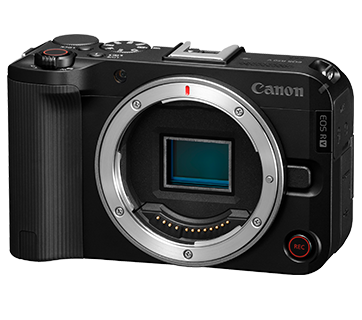
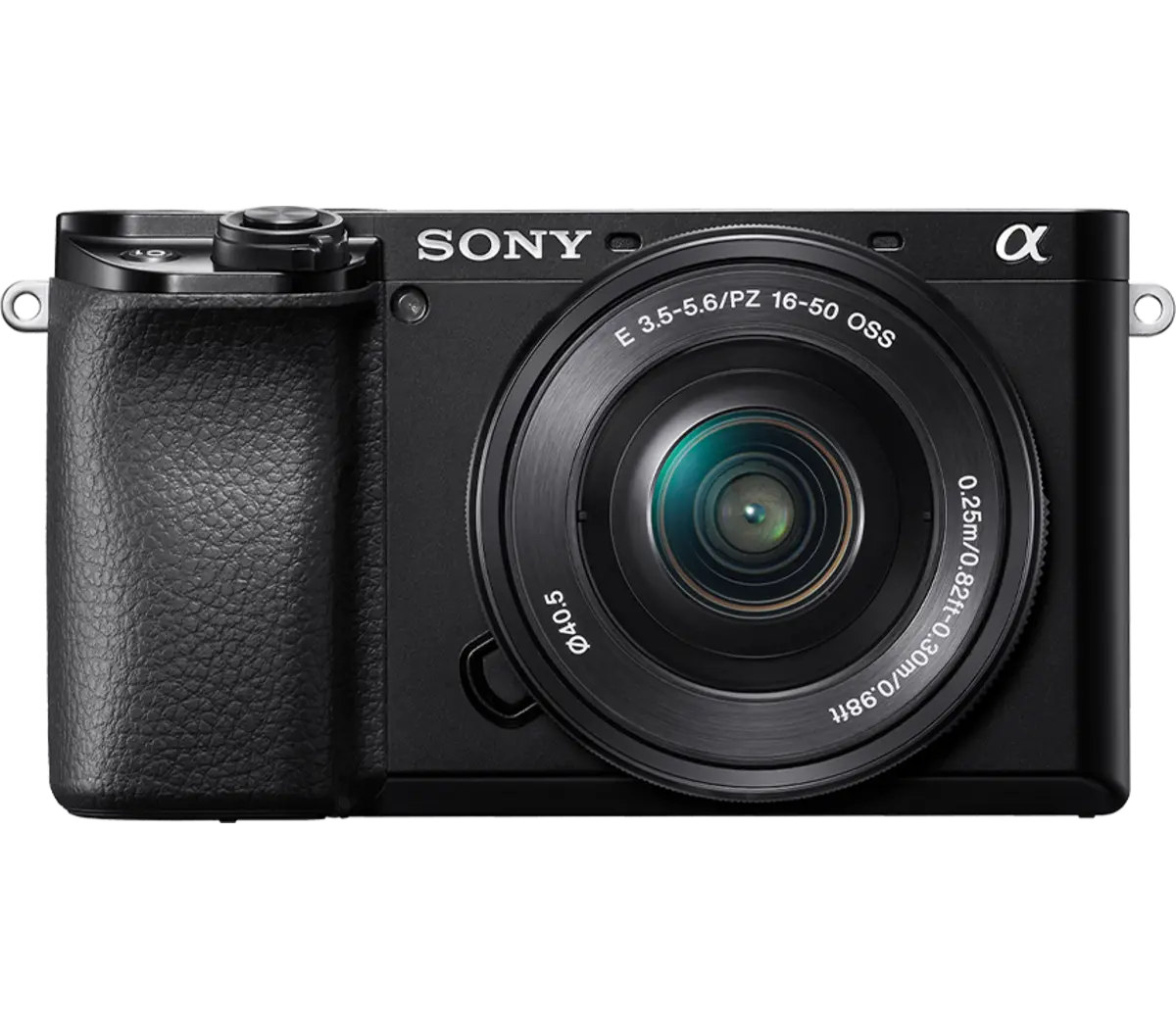
The Canon EOS R50 V and Sony A6100 are two of the most popular mirrorless APS-C cameras targeted at enthusiast photographers, vloggers, and content creators who desire a compact, lightweight system with strong imaging and video features. Both models sit at similar price points and serve as entry-level options within their respective ecosystems—Canon’s RF mount and Sony’s E-mount—making them direct competitors in the market.
These cameras are commonly compared because they feature similar sensor sizes and resolutions (both sporting 24MP APS-C sensors), fast continuous shooting capabilities, and robust video options in compact bodies. However, their distinctions—such as video frame rates, autofocus sophistication, stabilization options, viewfinder presence, and ecosystem maturity—often sway decisions based on the user's main priorities. Buyers will find key differentiators when looking at feature sets important for photography, video creation, and day-to-day usability.
Specifications Comparison
Detailed Comparison
Image Quality
Both the Canon EOS R50 V and Sony A6100 utilize 24MP APS-C sensors, delivering comparable resolution and similar levels of detail. The Sony A6100’s sensor is marginally larger at 23.5 x 15.6 mm versus the Canon’s 22.3 x 14.9 mm, though in practical use, this doesn’t translate into a significant real-world difference in image quality.
Where the A6100 pulls ahead is in its extended ISO range; it offers a native maximum ISO of 32000, expandable to 51200, while the Canon’s ISO details are unspecified but typically fall short of Sony’s in this segment. This means Sony may handle low light and high-ISO conditions with slightly less noise. On the other hand, Canon’s color science is praised for natural skin tones out of camera, which is a plus for portraits and everyday photography.
Dynamic range and RAW file performance are highly competitive, with neither camera offering a clear win in the real world for most users. Both produce excellent JPEGs and RAW files for editing, though enthusiasts and pros may appreciate Sony’s historically stronger RAW dynamic range.
Ultimately, these cameras are evenly matched in image output for most users, with minor distinctions that will only matter in specialized use cases.
Autofocus System
The Sony A6100 boasts a highly sophisticated autofocus system with 425 phase- and 425 contrast-detection points, giving it quick, accurate subject tracking across nearly the entire frame. Real-time Eye AF for both humans and animals is a standout feature, renowned for its reliability in photos and video.
Canon’s EOS R50 V, while not listing a specific number of AF points, uses Dual Pixel CMOS AF, which is also fast and accurate, excelling particularly in live view and video modes. However, its tracking and subject recognition are not considered as advanced as Sony’s, and it lacks features such as real-time animal eye detection—an area where Sony’s algorithm is industry-leading for this price point.
For fast-moving subjects, such as sports or wildlife, the A6100 maintains better subject lock. Canon is competent for vlogging and everyday casual use, but Sony’s AF system is more robust in challenging conditions.
Given these considerations, Sony has a definite edge in versatile autofocus performance.
Video Capabilities
Canon EOS R50 V is better equipped for video enthusiasts, especially vloggers. It offers 4K video at up to 60p (progressive), enabling smooth slow-motion effects and more creative flexibility in editing. The camera uses digital stabilization, providing a moderate boost to handheld shooting, which is an advantage for on-the-go content creation, though it can't match true sensor-shift stabilization.
The Sony A6100 records 4K video at up to 30p. While its output is detailed and the oversampling produces crisp footage, the lack of higher frame rates restricts slow-motion creativity. Furthermore, it offers no in-body or digital stabilization, meaning users will need stabilized lenses or gimbals to minimize shake.
Both cameras have flip screens, but Canon’s higher resolution display (1,040,000 dots vs. Sony’s 921,600) offers a slightly more detailed preview. Audio input options and video autofocus are strong on both, but Canon’s overall feature set is better for modern creators who prioritize 4K60p and smoother handheld operation.
For video-centric users, Canon’s R50 V is more compelling, especially for those looking to future-proof their workflows.
Build & Ergonomics
The Canon EOS R50 V is impressively compact and lightweight, weighing just 370g with a slim body design (119 x 74 x 45 mm), which makes it extremely portable and appealing to vloggers, travelers, and anyone wanting a minimal carry kit. The touchscreen is high quality and fully articulating, great for selfie shooting and creative angles. However, the absence of an electronic viewfinder is notable; users must compose shots using the rear screen exclusively, which can be challenging in bright sunlight.
The Sony A6100 is slightly heavier at 396g but has a deeper grip, which may be more comfortable for users with larger hands or when mounting bigger lenses. Critically, it includes a 1.44M-dot OLED electronic viewfinder, making it easier to shoot in all lighting conditions, and adding to its versatility for photographers. Its flip-up screen is also useful, though it has marginally less resolution than Canon’s.
Materials and build quality are entry-level on both, with neither offering weather-sealing. Sony’s controls and physical dials are more traditional, while Canon opts for a streamlined, beginner-friendly interface. The presence of a viewfinder on the Sony will sway many serious photographers.
Overall, for users who value an EVF and more substantial body, Sony wins. For portability and vlogging, Canon is preferable.
Battery & Storage
Battery life plays an important role for creators who shoot all day. The Sony A6100 is rated at approximately 420 shots per charge, giving it a clear real-world advantage for long outings or full-day shoots. This is a significant benefit for travelers or event photographers who want fewer interruptions.
The Canon EOS R50 V’s battery performance is not specified here, but in practice, similar Canon entry-level mirrorless models often deliver fewer shots per charge, especially since the absence of a viewfinder means the LCD is always on (typically resulting in faster drain). This might require users to carry extra batteries if shooting extensively.
Both use standard SD card slots, which are convenient and affordable, but Sony’s superior battery longevity is a practical edge for many users.
For users prioritizing long shooting sessions, Sony is the preferred choice.
Value for Money
At $649, the Canon EOS R50 V is notably more affordable than the $750 Sony A6100, despite bringing newer technology and advanced video features like 4K60p. The price difference is especially appealing to content creators or beginners looking to maximize their investment.
Canon’s lower price, combined with features such as digital stabilization and a high-resolution flip screen, means buyers get more for less, especially for video shooting or vlogging applications. Sony, while more expensive, justifies its price with a better autofocus system, longer battery life, and the inclusion of an electronic viewfinder.
Considering what both cameras offer for their price, Canon delivers stronger value for users who need cutting-edge video and portability, while Sony provides excellent value for those needing a photographer-centric, all-day-shooting tool. Still, for those on a tighter budget or prioritizing video, Canon is the clear winner on pure price-performance ratio.
Lens Ecosystem
When considering lenses, Sony’s E-mount ecosystem has a significant head start. Over many years, it has amassed a wide variety of high-quality, native lenses from both Sony and third-party manufacturers (Sigma, Tamron, etc.), covering everything from ultra-wide to super-telephoto, at a range of price points. This extensive lens selection allows photographers and videographers to grow with their system for years to come.
Canon’s RF-S mount, while rapidly expanding, remains more limited—especially for APS-C specific lenses. EF/EF-S lenses can be adapted with full functionality, but this slightly compromises compactness and sometimes autofocus speed. More dedicated native RF-S lenses are being announced, but for now, Sony holds an advantage for users who value having a wide and affordable lens selection right away.
For system flexibility and future-proofing, Sony's lens ecosystem remains the superior choice.
Our Verdict
Both the Canon EOS R50 V and Sony A6100 are outstanding entry-level APS-C mirrorless cameras that will suit many creators, but each excels in different areas. The Canon EOS R50 V represents amazing value for money and is especially appealing for video creators due to its 4K60p recording and digital stabilization, all wrapped in a lightweight, compact package ideal for vlogging and everyday carry. However, when considering the broader picture, the Sony A6100 edges out as the overall winner. Its advantages—superior autofocus, longer battery life, inclusion of an electronic viewfinder, and access to a mature, extensive lens ecosystem—give it greater versatility for photographers and hybrid shooters. The higher price is justified by a more rounded feature set better suited to ambitious creators who need reliable performance in more demanding scenarios, especially for action, wildlife, and general photography. Ultimately, if you prioritize value, portability, and video, go with Canon. For photographers wanting flexibility, superior focus, and a better long-term investment in lenses, Sony is the better choice.
Canon EOS R50 V
Sony A6100
Also Compare
Frequently Asked Questions
Which camera is better for vlogging or YouTube?
The Canon EOS R50 V is generally better for vlogging and YouTube, thanks to its lighter weight, flip-out touchscreen, digital video stabilization, and 4K60p recording. These features make it easier to create smooth, high-quality content for online platforms.
Do both cameras have a viewfinder?
No. The Sony A6100 features an electronic viewfinder (EVF), which is useful for shooting in bright light or for more traditional photography. The Canon EOS R50 V does not have a viewfinder and relies solely on its rear LCD for composition.
Which camera has better autofocus?
The Sony A6100 has the edge in autofocus performance, with 425 phase-detection points and class-leading eye-tracking for both humans and animals. It's more reliable for fast-moving subjects and challenging focus scenarios.
What about lens options for each system?
Sony's E-mount system offers a far greater number of native and third-party lenses, covering a wide range of focal lengths and budgets. Canon’s RF-S mount is rapidly growing, but is still limited compared to Sony, especially for cost-effective APS-C lenses.
Which is the better value for money?
The Canon EOS R50 V offers exceptional value, coming in at a lower price with advanced video capabilities and a compact design. However, the Sony A6100 justifies its higher price with more photographic versatility and system flexibility.
Which camera is better for low light photography?
The Sony A6100 may have a slight advantage in low-light situations due to its higher native and expanded ISO sensitivity, as well as stronger RAW dynamic range. However, image quality in most conditions is very similar between the two.