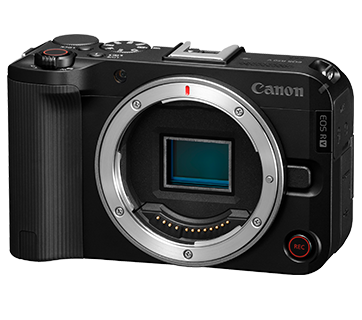
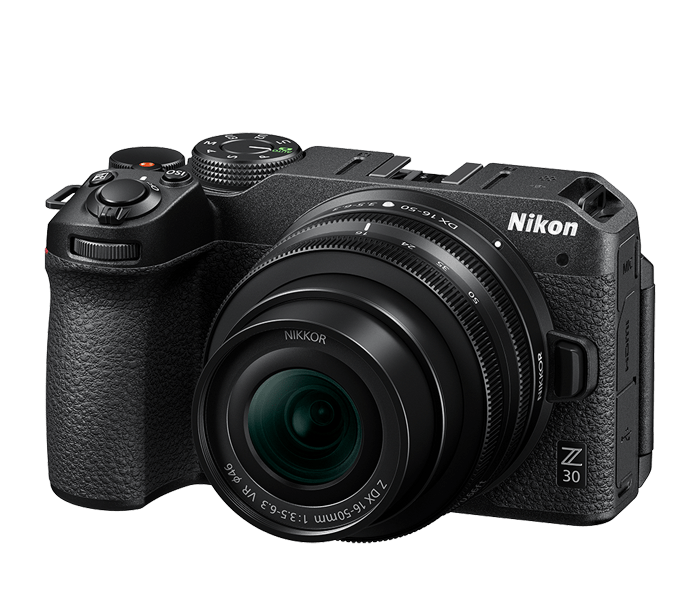
The Canon EOS R50 V and Nikon Z30 are two of the most popular entry-level mirrorless cameras aimed at vloggers, content creators, and photography enthusiasts. Both feature APS-C sized sensors and compact designs, appealing to those seeking lightweight, interchangeable lens solutions for both stills and video creation. Given their similar price points and core specifications, these models are often compared by buyers deciding between the Canon RF-S and Nikon Z ecosystems.
Shoppers usually weigh factors such as image quality, autofocus performance, video options, and overall system value when choosing between these cameras. While both aim for versatility, the specifics-like burst rate, stabilization features, and native lens support-set them apart. Understanding where each model excels helps buyers make the right choice based on their own needs and creative ambitions.
Specifications Comparison
Detailed Comparison
Image Quality
Both cameras use APS-C sensors, but the Canon EOS R50 V offers a slightly higher resolution at 24 megapixels compared to Nikon Z30's 21 megapixels. This difference may yield marginally greater detail and cropping flexibility with the Canon, though practical differences are often subtle for most web and print uses.
Nikon's sensor is marginally larger (23.5 x 15.7 mm vs. 22.3 x 14.9 mm), which may give it a slight advantage in high-ISO noise performance. Furthermore, the Z30 offers an expanded ISO range up to 204,800, while the R50 V's ISO range is unspecified here. In practice, most users will not use the highest ISO settings due to significant noise, but the Z30's wider native ISO range can provide extra flexibility in low light situations.
Both produce pleasing color and dynamic range, with Canon favoring warmer, vibrant tones and Nikon leaning towards more neutral color science. For most users, the differences will be minor, but those needing maximum pixel count for cropping or large prints may prefer Canon.
Overall, each delivers excellent image quality for its class, but Canon's higher resolution gives it a slight edge for detail-oriented shooters.
Autofocus System
The Nikon Z30 features a 209-point hybrid autofocus system with excellent coverage and good subject tracking, an important asset for both static photography and video recording. Fast face and eye detection make the Z30 a strong performer, particularly for self-shooting and vlogging scenarios.
Canon does not specify the number of autofocus points for the EOS R50 V in the given data, but Canon's recent entry-level RF bodies typically leverage advanced Dual Pixel CMOS AF, renowned for fast and accurate subject detection. Eye and face tracking are also robust on Canon, making it highly suitable for the target audience.
While both systems are reliable and accurate, Nikon holds a quantifiable advantage with a larger number of selectable autofocus points (209 vs. unspecified) and broad on-sensor coverage, which can benefit advanced users who want precise AF point selection. In real-world use, however, both will perform exceptionally well for most use cases, including moving subjects and vlogging.
With its higher specification and proven performance in Nikon's Z system, the Z30 narrowly takes the lead in this category.
Video Capabilities
For creators prioritizing 4K video, the Canon EOS R50 V pulls ahead with the ability to shoot in 4K at up to 60p, enabling smoother motion for action scenes or slow-motion in post. Nikon Z30 is limited to 4K at 30p, which, while adequate for most vloggers, doesn't offer the same flexibility for advanced video projects.
Neither camera has in-body image stabilization; the Canon offers digital stabilization, which helps reduce shake but may crop the image and degrade quality somewhat. The Nikon Z30 lacks stabilization entirely, leaving users reliant on stabilized lenses or additional equipment for steady footage.
Both cameras feature fully articulating 3-inch rear touchscreens with identical resolution, making self-filming easy. Audio input for external microphones is available on both, appealing to vloggers and content creators alike.
Overall, the R50 V's superior 4K frame rates and digital stabilization make it the preferred choice for users who prioritize advanced video capabilities, especially those seeking future-proofing and flexibility.
Build & Ergonomics
Build quality is similar in terms of overall robustness and portability, but the Nikon Z30 has several noteworthy design advantages. It is slightly heavier (405g vs. 370g for Canon) and larger, which gives it a more substantial grip-helpful for stability, especially when paired with larger lenses. The Z30 is also weather-sealed, offering better protection for outdoor and travel shooters where dust and moisture could be concerns. The Canon EOS R50 V does not advertise weather sealing.
Neither camera features a built-in electronic viewfinder (EVF), which may disappoint photographers coming from DSLR-style shooting. Both rely on their 3-inch, 1,040,000 dot LCDs for framing and playback. The cameras are similarly slim and highly portable, easily fitting into small bags or even large jacket pockets.
For those who prioritize durability and a more comfortable grip-especially for extended use-the Nikon has the edge. Meanwhile, photographers prioritizing absolute lightness or the most compact profile may prefer the R50 V.
Given the Z30's weather sealing and ergonomics, it emerges as the winner in build quality and handling.
Battery & Storage
Battery life is an important factor for creators on the go. The Nikon Z30 is rated for 330 shots per charge, which is about average for a camera in its class. Canon does not specify CIPA battery life for the EOS R50 V here, but based on its close relatives, it is likely to be in the same range or possibly slightly less, given its lighter weight and compact size.
Both cameras use ubiquitous SD cards for storage. There are no major differences in storage capacity or speed support based on the provided information. Video recorders especially might want to drop down to lower resolutions or carry extra batteries for longer sessions.
In practice, real-world battery performance will depend heavily on usage-frequent video recording, Wi-Fi usage, and LCD reliance can significantly reduce expected shots per charge. Both cameras support USB charging, which is convenient for travel and vlogging.
Given the concrete CIPA rating and Nikon's slightly larger body (potentially housing a larger battery), the Nikon Z30 holds a marginal advantage in this area.
Value for Money
At $649, the Canon EOS R50 V undercuts the Nikon Z30, which retails for $710. Both are positioned in the entry-level segment but Canon's lower price-coupled with newer release (2025 vs. 2022), higher megapixel count, and stronger video specifications-offers more advanced technology for less financial outlay.
Feature-for-feature, you get higher resolution images and better video frame rates with the Canon, both important for users seeking maximum creative flexibility as technology advances. The price difference could allow extra budget for accessories or a starter lens.
Nikon Z30 justifies its slightly higher price with weather sealing, a slightly larger sensor, and a more ergonomic grip. Some users may be willing to pay extra for these aspects, particularly outdoor shooters or those who value a rugged build.
For most budget-conscious buyers-especially those attracted to videography-the Canon EOS R50 V wins for its superior feature-to-price ratio.
Lens Ecosystem
Both Canon RF-S and Nikon Z mounts are relatively new compared to established DSLR counterparts, but they have been quickly expanding. The Canon RF-S system offers a growing range of affordable lenses aimed at APS-C users, but as of 2025, still lags behind the full RF mount in native APS-C lens options. However, full-frame RF lenses can be used without adaptation, providing excellent quality albeit at a higher cost and size.
The Nikon Z mount has a broader third-party lens selection, particularly in the affordable segment, as major manufacturers like Sigma and Tamron produce compatible APS-C options. Nikon's full-frame Z lenses are fully compatible, though they can be larger and more expensive. As of 2024, the gap between Canon and Nikon in native affordable APS-C mirrorless lenses is narrowing, but Nikon maintains the lead due to greater third-party openness and availability.
For beginners, both systems offer a few good kit zooms, but those wanting to build a diverse lens collection at lower cost may appreciate the Nikon Z ecosystem's breadth. Adaptation from DSLR lenses is easier with Nikon Z thanks to a widely available FTZ adapter.
For flexibility, third-party support, and system scalability, the Nikon Z30 has a slight advantage.
Our Verdict
Overall, the Nikon Z30 emerges as the winner in this head-to-head comparison, edging out the Canon EOS R50 V by offering better weather sealing, more robust autofocus coverage, a longer-lasting battery, and a more mature, flexible lens ecosystem. While the Z30 is slightly more expensive, it justifies this with added durability and greater adaptability, making it ideal for those who plan to shoot outdoors frequently, value system growth, or prioritize ergonomic handling. That said, the Canon EOS R50 V remains a compelling option, particularly for creators focused on 4K video at high frame rates or those seeking the best feature set at a lower price. Beginners and budget-conscious buyers may lean towards Canon for its excellent image quality, compact size, and aggressive pricing. In summary, the Z30 is the more versatile and all-round performer, but the R50 V is an exceptional value-buyers should choose based on their specific priorities.
Canon EOS R50 V
Nikon Z30
Also Compare
Frequently Asked Questions
Which camera is better for vlogging and YouTube?
The Canon EOS R50 V offers 4K video at 60p and digital image stabilization, making it slightly better suited for dynamic content creation and smoother motion. Nikon Z30, while limited to 4K 30p, offers a stronger grip and weather sealing, which may be beneficial for outdoor vlogging.
Does either camera have in-body image stabilization?
Neither model has in-body (mechanical) stabilization. The Canon R50 V provides digital stabilization for video, while the Nikon Z30 relies solely on lens-based or external stabilization.
Which system has better and more affordable lenses?
The Nikon Z mount currently offers better third-party support and a slightly broader selection of affordable APS-C lenses. Canon's RF-S lens lineup is growing, but many options are still in the premium full-frame segment.
Do they have electronic viewfinders (EVFs)?
No, neither the Canon EOS R50 V nor the Nikon Z30 includes an electronic viewfinder. Users rely on the rear articulating LCDs for framing and playback.
Which is more suitable for outdoor or travel photography?
The Nikon Z30 is better suited for outdoor or travel use due to its weather-sealed build, more comfortable grip, and longer battery life. The Canon R50 V's compactness also makes it a fine travel companion, but it lacks weather sealing.
Which offers better value for beginners?
The Canon EOS R50 V is more affordable and provides advanced video features and higher resolution, making it an excellent starting point for beginners prioritizing value and modern tech.