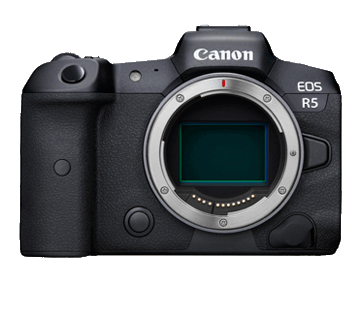
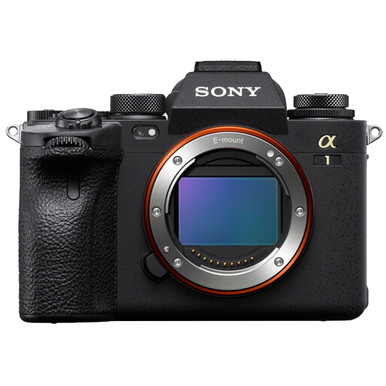
The Canon EOS R5 and Sony A1 are two of the most highly regarded mirrorless cameras in the professional photography and videography world, often compared by photographers and videographers who need top-tier performance and image quality. Both capture stunning images and video, appealing to professionals across various genres such as landscapes, portraits, and sports. The choice between the two often depends on specific use cases, budget constraints, and personal preferences regarding brand ecosystems and ergonomics. Key differentiators include sensor resolution, autofocus capabilities, video performance, and overall value for money.
Specifications Comparison
Detailed Comparison
Image Quality
When it comes to image quality, both cameras feature full-frame sensors and deliver remarkable performance; however, the Sony A1 allows for slightly higher resolution at 50 megapixels compared to the Canon EOS R5's 45 megapixels. This extra resolution can be advantageous for large prints and cropping capabilities. The Canon EOS R5 excels with its Dual Pixel CMOS AF, which provides fast and accurate focusing that is particularly effective in low-light situations within its ISO range of 100-51200, expandable to 102400. The A1, on the other hand, maintains excellent color accuracy across its ISO range from 100-32000, and its capability for lower noise at high ISO settings is commendable. Both cameras perform exceptionally well in optimal lighting conditions, yet the A1's slightly higher megapixel count gives it a slight edge in detail retention in situations with ample light.
Autofocus System
The autofocus systems in both cameras are advanced, but they excel in different aspects. The Canon EOS R5 features 1053 autofocus points, offering a wide coverage area, which is particularly advantageous for tracking moving subjects, especially in sports and wildlife photography. In contrast, the Sony A1 utilizes 759 autofocus points, and with its Real-Time Eye AF technology, it provides exceptional accuracy and speed, especially for capturing moving subjects' eyes in portrait photography. This makes the A1 a strong contender for photographers needing precise focus in dynamic scenes. Overall, while both systems are impressive, the Canon's comprehensive point coverage provides flexibility, making it more versatile for various shooting circumstances.
Video Capabilities
Both the Canon EOS R5 and Sony A1 shine in video capabilities, offering 4K recording at up to 120 frames per second, making them suitable for professional video production. However, the EOS R5 has received praise for its superior image quality in video mode, primarily due to its unique oversampling capabilities, which can yield sharper, cleaner footage. The stabilization offered by the R5 is also noteworthy, providing up to 8 stops of stabilization, allowing for smoother handheld shooting in rapid movements or unstable conditions. The A1, while offering excellent video functionality, features only 5.5 stops of stabilization, which could be a drawback for those looking to create dynamic footage. In terms of video features and ease of use, the R5 has slightly more to offer, particularly in slow-motion content.
Build & Ergonomics
In terms of build quality, both cameras are weather-sealed and designed to withstand challenging shooting conditions, which is crucial for professional use. The Canon EOS R5 weighs slightly more than the A1 at 738 grams versus 737 grams respectively, and has a larger grip, which many users find more comfortable for extended use. The display on the R5 is also larger, featuring a 3.2-inch screen with 2,100,000 dots, compared to the A1's 3-inch screen with 1,440,000 dots, offering better clarity and visibility. The electronic viewfinder in both cameras is excellent, but the differences in size and resolution of the LCD screens can influence user experience significantly. In this category, the Canon EOS R5's ergonomics and display capabilities provide experiences that many professional users prefer.
Battery & Storage
Battery life is a vital aspect for photographers and videographers who shoot extensively. The Sony A1 has a superior battery life, able to capture approximately 530 shots on a single charge, compared to the Canon EOS R5's 320 shots. This can be a significant factor for users who often shoot in environments where charging opportunities are limited. Additionally, both cameras utilize dual card slots; however, the Canon EOS R5 supports CFexpress Type B and SD UHS-II cards, allowing for fast write speeds essential for high-resolution video. The Sony A1 uses CFexpress Type A and SD UHS-II cards, which is beneficial as well. While both have competitive storage capabilities, the overall battery performance of the A1 makes it more favorable for long-duration shoots.
Value for Money
The Canon EOS R5 is priced at $3,899, significantly lower than the Sony A1, which retails for $6,500. For many photographers, the EOS R5 offers a compelling proposition considering its superb image quality, video capabilities, and overall functionality for the price. While the A1 delivers top-notch performance, particularly in its resolution and autofocus in specific scenarios, the price differential might be a deal-breaker for budget-conscious buyers, especially those who may not utilize all of the A1's advanced features. The R5 provides a robust mix of performance and features that can meet the needs of most professionals without the premium price tag.
Our Verdict
Overall, the Canon EOS R5 comes out on top in this comparison. While both cameras are exceptional in their own right, the R5's combination of excellent image quality, superior video capabilities, ergonomics, and competitive pricing make it more attractive for many users. Those who prioritize high resolution and battery life might lean towards the Sony A1, especially for specialized applications. Nonetheless, for a well-rounded camera that meets the needs of a majority of photographers and videographers, the Canon EOS R5 is highly recommended.
Canon EOS R5
Sony A1
Also Compare
Frequently Asked Questions
Which camera has better autofocus?
The Canon EOS R5 offers 1053 autofocus points and excels in point coverage, making it versatile for various shooting situations. However, the Sony A1's Real-Time Eye AF is particularly effective for portraits and moving subjects.
Is video quality better on the Canon EOS R5 or Sony A1?
While both can shoot 4K at 120p, the Canon EOS R5 is generally praised for its superior video quality due to better oversampling and image stabilization.
Which camera has a longer battery life?
The Sony A1 significantly outperforms the Canon EOS R5 in battery life, delivering about 530 shots compared to the R5's 320 shots.
What is the price difference between the two models?
The Canon EOS R5 is priced at $3,899, while the Sony A1 costs around $6,500, making the R5 a more budget-friendly option.
Which camera is better for low-light photography?
Both cameras perform well in low light, but the Canon EOS R5's wider ISO range and Dual Pixel autofocus can provide an edge in low-light focusing accuracy.