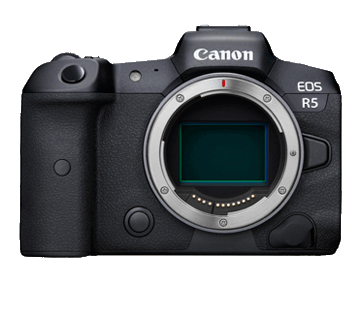
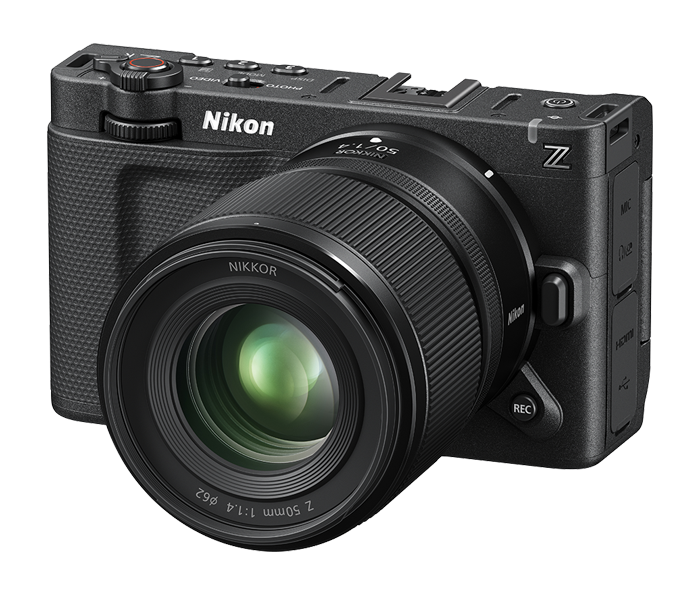
The Canon EOS R5 and Nikon ZR are two highly regarded full-frame mirrorless cameras that cater to both professional photographers and serious enthusiasts. Often compared, these models target users seeking exceptional image quality, advanced autofocus systems, and robust video capabilities. The R5, released in 2020, has established itself as a powerhouse, while the newer ZR, launched in 2025, offers competitive features, especially for those prioritizing image and video standards at a lower price point. Key differentiators include resolution, autofocus capabilities, and video specifications, each influencing the decision-making process for potential buyers.
Specifications Comparison
Detailed Comparison
Image Quality
The Canon EOS R5 boasts a remarkable 45 megapixel sensor, providing a higher resolution that is advantageous for detailed landscape photography and large prints. In comparison, the Nikon ZR features a 25 megapixel sensor, which, while ample for general use, may not satisfy those requiring the utmost detail. Both cameras feature full-frame sensors, ensuring excellent low-light performance and dynamic range; however, the R5's extended ISO range (100-51200, expandable to 102400) surpasses the ZR's (100-64000), enabling cleaner images in low-light conditions. Ultimately, while both cameras excel in image quality, the R5's higher resolution gives it an edge in detail-oriented applications.
Autofocus System
Canon has equipped the EOS R5 with an impressive autofocus system featuring 1053 points, vastly outnumbering the Nikon ZR's 273 points. This extensive coverage enhances the ability to track fast-moving subjects and focuses effectively across the frame. Both systems utilize Dual Pixel technology, providing phase detection for quick focusing; however, real-world tests often show the R5 excelling in more complex lighting situations. On the other hand, while the ZR's autofocus system is competent, it may not match the responsiveness and versatility found in the R5, particularly for action photography. Hence, for photographers relying heavily on autofocus, the R5 is the preferred choice for its superior capability.
Video Capabilities
When it comes to video specifications, the Canon EOS R5 significantly outshines the Nikon ZR, particularly with its ability to shoot in 4K at up to 120 frames per second. This feature is highly sought after for professional videography, offering more creative flexibility in slow-motion shots. In contrast, the ZR also provides robust video features but lacks the same level of frame rate options, which may limit dynamic filming scenarios. Additionally, the R5 includes in-body image stabilization rated at 8 stops, compared to the ZR's 7.5 stops, further enhancing steady footage capture. As such, for videographers, the R5 presents superior options and capabilities for advanced video production.
Build & Ergonomics
Both cameras exhibit weather-sealed designs, making them robust for outdoor photography. The Canon EOS R5 weighs 738 grams, while the Nikon ZR is slightly lighter at 630 grams. Each camera is ergonomically designed, but the dimensions differ, with the R5 being larger at 138 x 98 x 88 mm compared to the ZR's more compact 133 x 81 x 49 mm. Users may prefer the R5's more substantial grip, which can provide better handling with larger lenses, while others might appreciate the ZR's portability. Both have electronic viewfinders, but the lack of a viewfinder in the ZR might be a deal breaker for traditional photographers accustomed to optical viewing. Hence, the choice here will often align with user preference for handling and feature set under various shooting conditions.
Battery & Storage
The Canon EOS R5 offers a battery life rated for approximately 320 shots, which is respectable but may sometimes fall short during extended shoots. The ZR, while newer, has not specified a higher battery life rating that significantly outshines the R5. Regarding storage options, both models offer dual card slots, enhancing workflow and potential fail-safes. However, the R5's capability to save both stills and video at high resolutions on different formats can be a deciding factor for professional users. Overall, while both provide decent solutions, the R5 excels slightly in flexibility for demanding usage scenarios.
Value for Money
The Canon EOS R5 is priced at approximately $3899, contrasting with the Nikon ZR's price point of around $2200, making the ZR a more accessible option for budget-conscious buyers. However, the R5 justifies its higher cost through superior image quality, advanced autofocus capabilities, and exceptional video features. Those who are serious about photography and videography may find the extra investment worthwhile for the advanced features that the R5 offers, while enthusiasts and casual users might find the ZR provides an excellent balance of performance for its value. This difference in pricing and features establishes a clear delineation between the two models, with the ZR catering more towards consumers entering the full-frame market.
Our Verdict
Overall, the Canon EOS R5 secures the title of the superior camera for photographers and videographers seeking high performance in image quality and versatility. While the Nikon ZR offers a compelling package, particularly with its more affordable pricing and user-friendly features, it cannot match the comprehensive capabilities witnessed in the R5. Professionals requiring maximum resolution, autofocus precision, and advanced video features will find the R5 fits their needs perfectly. In contrast, the ZR presents a great opportunity for those entering the full-frame mirrorless realm or for casual users looking for exceptional performance without breaking the bank.
Canon EOS R5
Nikon ZR
Also Compare
Frequently Asked Questions
What are the key differences in photo resolution between the R5 and ZR?
The Canon EOS R5 features a 45 megapixel sensor, significantly higher than the Nikon ZR's 25 megapixels, offering better detail in large prints and cropping.
How do their autofocus systems compare?
The R5 has 1053 autofocus points versus the ZR's 273 points, providing greater coverage and more effective tracking for moving subjects.
What are the video recording capabilities of both cameras?
The R5 can record 4K video at up to 120p, while the ZR lacks such high frame rates, making the R5 ideal for videographers looking for advanced options.
Is one camera more durable than the other?
Both cameras are weather-sealed and built to withstand challenging conditions, though the R5's larger grip may provide slightly better handling in rigorous environments.
Which camera offers better battery performance?
Both cameras have similar battery lives, but the R5's dual card slots give it a slight advantage for professional workflows, despite similar overall shot ratings.