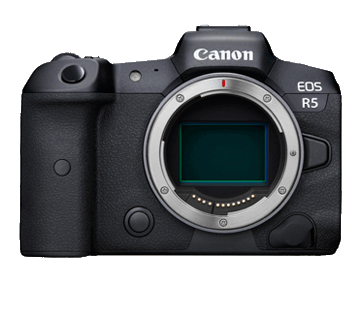
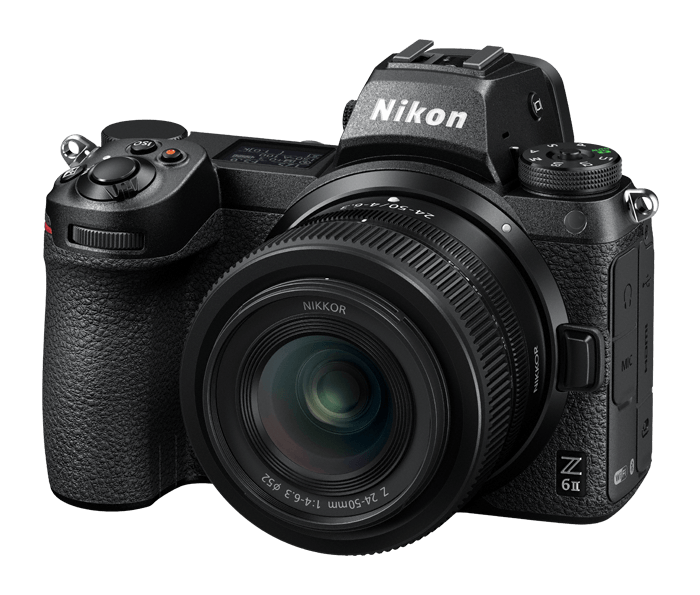
The Canon EOS R5 and the Nikon Z6 II are two of the most sought-after full-frame mirrorless cameras available today, attracting both professional photographers and enthusiasts alike. Commonly compared due to their comparable release years and target markets, these cameras offer a combination of high-quality imaging, advanced features, and robust build quality. Buyers often consider the specific features that best meet their needs, particularly in areas like image quality, video capabilities, and autofocus performance.
Specifications Comparison
Detailed Comparison
Image Quality
The Canon EOS R5 stands out in terms of image resolution, boasting a 45-megapixel sensor compared to the Nikon Z6 II's 25 megapixels. This higher resolution allows for greater detail in images, which is essential for large prints and cropping flexibility. Additionally, the EOS R5 features an impressive ISO range extending from 100 to 51200, expanding further to 102400, providing versatility in low-light conditions. In comparison, the Z6 II offers an ISO range of 100 to 51200, expandability to 50-204800 further widens its application in challenging lighting, although with potential compromises in image quality at the highest settings. Both cameras have excellent dynamic range, but the R5's higher resolution often results in an overall sharper image.
Autofocus System
The autofocus capability of the Canon EOS R5 is truly impressive, with a total of 1053 autofocus points providing extensive coverage throughout the frame. This vast number of points allows for highly precise focusing, especially in dynamic shooting environments. The Nikon Z6 II, while equipped with a capable 273 autofocus points, does not match the EOS R5 in terms of coverage or speed. However, the Z6 II features outstanding eye detection for both humans and animals, which may appeal to portrait and wildlife photographers. The R5 excels in tracking subjects, making it ideal for sports and action photography. Overall, while both systems are highly effective, the R5's superior autofocus system gives it a significant edge.
Video Capabilities
When it comes to video recording, the Canon EOS R5 takes the lead with its ability to shoot 4K video at up to 120 frames per second. This high frame rate is excellent for slow-motion footage, catering specifically to videographers looking for creative opportunities. Additionally, the R5 can record 8K video, a significant feature for content creators focused on high-resolution production. In contrast, the Nikon Z6 II offers 4K video shooting, but it is limited to 30 frames per second. While it still delivers excellent video quality, it lacks the same versatility in frame rates. Both cameras have great in-body stabilization, but the R5's eight stops of stabilization outperform the Z6 II's five stops, especially in handheld shooting situations.
Build & Ergonomics
Both the Canon EOS R5 and the Nikon Z6 II possess solid construction quality and weather-sealing, vital for outdoor photography. The R5 weighs slightly more at 738 grams compared to the Z6 II's 705 grams but is fairly compact for a full-frame system, highlighting a balanced ergonomic design that many users find comfortable. Each camera sports a 3.2-inch screen with 2.1 million dots, providing excellent resolution for image review and shooting. The control layout on both cameras is intuitive, but photographers with existing systems may prefer the feel and navigation of one over the other based on familiarity. The R5's size may suit photographers with larger hands, while the Z6 II may appeal to those looking for a more lightweight option.
Battery & Storage
The Nikon Z6 II excels with a longer battery life, rated at 410 shots compared to the Canon EOS R5's 320 shots. This advantage can be significant for photographers who frequently shoot in remote areas without easy access to power. Both models utilize similar lithium-ion batteries, but Nikon's efficiency with power consumption gives it an edge. Regarding storage, both cameras support CFexpress Type B and SD cards, but the EOS R5's higher recording rates and image quality may require faster cards, emphasizing a need for robust storage solutions for optimal performance.
Value for Money
Price-wise, the Nikon Z6 II is significantly more affordable, retailing at $1995 compared to the Canon EOS R5's $3899 price tag. For many photographers, particularly those who are just starting or have a tight budget, the Z6 II provides an excellent balance of performance and price, making it a sensible choice for enthusiasts. On the other hand, the R5 justifies its higher price point with a broader feature set and superior performance in several areas, particularly for professional users needing high-resolution images and advanced video capabilities. Ultimately, potential buyers must weigh their budget against their specific needs, determining which camera offers the most value for their shooting style.
Lens Ecosystem
Lens availability is another critical consideration when choosing between the Canon EOS R5 and the Nikon Z6 II. Canon's RF mount has been expanding rapidly since the R5's release, with a solid lineup of high-quality lenses available, including fast primes and versatile zooms. Nikon's Z mount also offers an expanding selection of lenses, but historically, Nikon had a more extensive F-mount lens library that can be adapted to their mirrorless system. For photographers who already possess a selection of glass for either system, the ability to use existing lenses can heavily influence the decision. As of now, both ecosystems provide the essentials for most shooting needs, but Canon's more recent addition of high-performing RF lenses gives it a slight advantage.
Our Verdict
In summary, the Canon EOS R5 emerges as the overall winner, particularly for those who need high-resolution images, superior autofocus performance, and advanced video features. It's an exceptional choice for professionals and serious enthusiasts willing to invest in high-quality gear. Meanwhile, the Nikon Z6 II proves its worth as a fantastic value option, offering excellent battery life, solid performance, and a more budget-friendly price for those starting in photography or videography. Ultimately, the choice between the two should align with individual priorities, whether it be advanced features and image quality with the R5 or a more economical and versatile solution with the Z6 II.
Canon EOS R5
Nikon Z6 II
Also Compare
Frequently Asked Questions
Is the Canon EOS R5 worth its higher price?
Yes, if you require high-resolution images, superior autofocus capabilities, and advanced video features, the extra investment in the EOS R5 is justified for its performance.
Can I use older Nikon lenses on the Z6 II?
Yes, you can use F-mount Nikon lenses on the Z6 II with the FTZ adapter, providing access to a wider range of existing glass.
What is the difference in video capabilities between the two cameras?
The EOS R5 supports 8K video recording and up to 120 fps in 4K, while the Z6 II is limited to 4K at 30 fps, making the R5 the better option for high-end videography.
Which camera is better for low-light photography?
Both cameras perform well in low-light conditions, but the EOS R5's higher resolution may lead to more detail retention at lower light levels, although the Z6 II can achieve lower ISO settings.
Are both cameras weather-sealed?
Yes, both the EOS R5 and Z6 II are weather-sealed, designed to withstand challenging shooting environments.