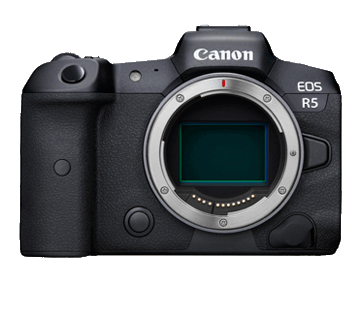
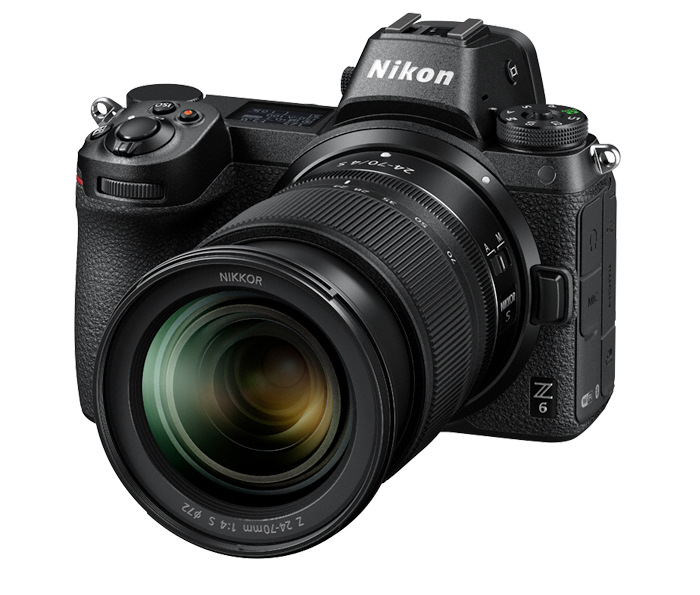
The Canon EOS R5 and the Nikon Z6 are two popular full-frame mirrorless cameras that cater to both professional and enthusiast photographers. They are often compared due to their exceptional performance in image quality, autofocus capabilities, and video functionalities, making them attractive for a wide range of photography styles, including landscape, portrait, and sports photography. Photographers must consider their specific needs and priorities, such as resolution for large prints, video frame rates for filmmaking, and handling in various weather conditions when choosing between these two models.
Specifications Comparison
Detailed Comparison
Image Quality
The Canon EOS R5 boasts a 45-megapixel sensor, offering higher resolution compared to the Nikon Z6's 25 megapixels. This advantage allows the R5 to capture finer details, making it ideal for landscape and commercial photographers who require high-quality images for large prints. Additionally, the R5 performs exceptionally well in low-light situations, with an ISO range of 100-51200 (expandable to 102400), providing more versatility for various shooting conditions. In contrast, the Nikon Z6, while lower in resolution, offers a clean and dynamic range up to ISO 204800, making it a solid choice for low-light events like weddings or concerts. Hence, the Z6 can produce impressive results in high ISO conditions despite its lower megapixel count, often yielding less noise and a smoother texture in high-ISO images. Overall, while both cameras deliver excellent image quality, the R5 offers more resolution and versatility, making it the clear winner in this aspect.
Autofocus System
The autofocus systems of these two cameras demonstrate their technological advancements, with the Canon EOS R5 featuring an impressive 1053 autofocus points. This extensive point coverage allows for precise focusing across the frame, particularly beneficial in fast-paced shooting environments. Dual Pixel CMOS AF technology enhances the R5's focus speed and accuracy, ensuring quick acquisition of moving subjects. The Nikon Z6 has 273 autofocus points, which provides decent coverage but falls short of the R5 in terms of total points and advanced tracking capabilities. However, the Z6's autofocus system is reliable and performs well in various scenarios, particularly with its eye-detection feature. For photographers who prioritize fast, precise autofocus, the R5's more comprehensive system secures its status as the winner.
Video Capabilities
When it comes to video capabilities, the Canon EOS R5 is the clear frontrunner. It supports 4K video recording at up to 120 frames per second, allowing for stunning slow-motion capabilities and high-quality footage. Coupled with advanced video features like 10-bit 4:2:2 internal recording and the ability to shoot in Canon Log, it's a strong choice for videographers seeking cinematic quality. In contrast, the Nikon Z6 also offers 4K recording but limits it to 30 frames per second. While it does provide a robust video performance, especially for regular videography tasks, it lacks the advanced specs and versatility that the R5 provides for high-end video production. Therefore, for a photographer or videographer who prioritizes exceptional video specifications, the R5 takes the win.
Build & Ergonomics
Both the Canon EOS R5 and the Nikon Z6 exhibit solid build quality and weather-sealed constructions, which are essential features for professionals working in various environments. The R5 is slightly heavier, weighing 738g compared to the Z6's 675g, which may be a consideration for photographers looking to minimize weight. In terms of ergonomics, both cameras have well-placed controls, but many users report that the larger grip on the R5 provides a more secure hold during extended shooting sessions. Furthermore, both cameras feature a 3.2-inch LCD touchscreen with 2,100,000 dots, ensuring easy navigation and review. Although the R5 edges out slightly in comfort due to ergonomics, the differences are subtle, making it a tie in this aspect.
Battery & Storage
The Canon EOS R5 offers a battery life of approximately 320 shots, while the Nikon Z6 closely trails with a battery life of around 310 shots. In practice, both cameras utilize the same type of battery, and differences in shot count may be negligible depending on the photographer's usage patterns. However, the EOS R5 requires CFexpress cards for its higher speed and video capabilities, which can add to the overall cost of the system. Meanwhile, the Z6 supports both XQD and SD cards, offering more budget-friendly storage options. This consideration might influence buyers as they weigh the long-term investment for storage. One might argue that the storage flexibility of the Z6 earns it the win in terms of overall practicality.
Value for Money
In terms of pricing, the Canon EOS R5 is positioned at $3899, making it a premium offering in the mirrorless market. While it justifies this price with advanced technology and features, the cost may deter budget-conscious photographers. On the other hand, the Nikon Z6, with an attractive price point of $1995, presents a more accessible option for enthusiasts and semi-professionals looking for a capable full-frame camera without breaking the bank. While the R5 offers significantly higher resolution and advanced video capabilities, those who do not need these features may find the Z6 to be a better investment. Thus, when considering overall value, the Z6 stands out for those who seek a balance of quality and affordability.
Our Verdict
Overall, the Canon EOS R5 clearly excels in image quality, autofocus capabilities, and video functionalities, making it an ideal choice for professional photographers and advanced users looking for cutting-edge performance. The Nikon Z6, however, offers substantial value, capturing a high-quality image while being significantly more affordable, making it suitable for enthusiasts or those who prioritize budget without compromising too much on features. Ultimately, the decision comes down to the specific needs and budget of the buyer, with the R5 winning in high-end scenarios, while the Z6 offers excellent performance at a lower price point.
Canon EOS R5
Nikon Z6
Also Compare
Frequently Asked Questions
Is the Canon EOS R5 worth the price difference compared to the Nikon Z6?
If you require high resolution, superior autofocus performance, and advanced video capabilities, the EOS R5 may justify its higher cost for professional work. However, for general photography and videography, the Z6's offerings are substantial at a more approachable price.
How do they perform in low-light conditions?
Both cameras perform well in low light, but the R5 has a higher maximum ISO, which can enhance its versatility. Meanwhile, the Z6 has a unique capability to expand its ISO range, providing excellent quality in low-light settings with less noise.
Which camera has a better handling experience?
The Canon EOS R5 offers a slightly larger grip, providing more comfort during extended shooting sessions, although personal preference may influence this experience. Both cameras are designed well for ergonomic efficiency.
Can I use my existing lenses on both cameras?
You will need an adapter for your existing lenses from Canon EF or Nikon F mounts to use them on either camera. Both manufacturers provide excellent adapters that allow for compatibility with their respective lens systems.
Are there major differences in video recording features?
Yes, the EOS R5 supports 4K video recording at up to 120fps, offering more creative options for filmmakers compared to the Z6's 4K at 30fps. If video performance is critical, the R5 has the edge.