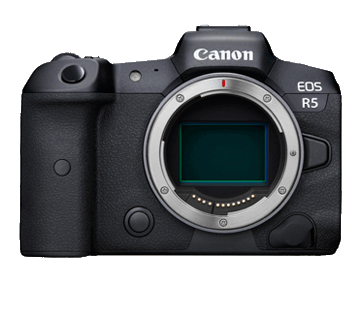
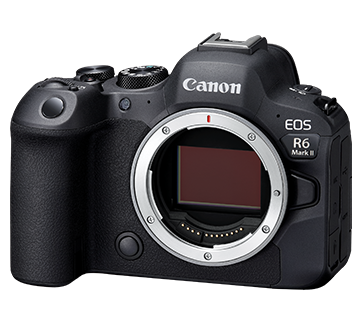
The Canon EOS R5 and Canon EOS R6 Mark II are two of Canon's flagship mirrorless cameras, both part of the RF mount system. They are frequently compared by professional photographers and enthusiasts who are looking for high-performance options for various photography needs, ranging from landscape to sports and wildlife. While both models share a full-frame sensor and a robust build, the key differentiators lie in their specifications, autofocus capabilities, and intended use cases. Understanding these nuances can help buyers make informed decisions about which camera best suits their specific requirements.
Specifications Comparison
Detailed Comparison
Image Quality
The Canon EOS R5 boasts a high-resolution 45-megapixel sensor, which allows for detailed, large prints and enables cropping flexibility without compromising image quality. This is particularly beneficial for landscape and studio photographers seeking maximum detail. In contrast, the Canon EOS R6 Mark II features a 24-megapixel sensor, which, while lower in resolution, still captures impressive images with excellent dynamic range. The R6 Mark II's sensor excels in low-light conditions, especially with its extended ISO range up to 204800, allowing photographers to shoot in darker environments more effectively.
Additionally, noise performance is crucial in image quality, with the R5 holding an edge when it comes to high-ISO performance without introducing significant noise, while the R6 Mark II manages to maintain image quality well up to its maximal ISO range. Both cameras deliver exceptional image quality, but the R5 is poised for applications that require detail perfection, while the R6 Mark II is ideal for practical, responsive photography in less than ideal conditions.
Overall, if maximum detail and resolution are the priority, the Canon EOS R5 is the clear choice, while the R6 Mark II's balanced approach suits a broader range of shooting scenarios.
Autofocus System
The autofocus capabilities of the Canon EOS R6 Mark II are exceptional, featuring an impressive 4897 autofocus points, providing incredible coverage across the frame. Its Dual Pixel AF II technology enables fast and accurate tracking of subjects, which is particularly advantageous when shooting fast-moving subjects such as in sports or wildlife photography. The camera excels in tracking people's eyes, even in challenging conditions.
On the other hand, the Canon EOS R5 utilizes 1053 autofocus points, which, while robust, does not cover as densely as the R6 Mark II. However, it still performs admirably with Dual Pixel AF, particularly for still subjects and does provide reliable eye and face detection. Both systems are equipped with advanced features, including subject detection and tracking.
Given the R6 Mark II's higher number of autofocus points and the speed at which it can adjust while tracking subjects, it earns the edge in dynamic situations.
Video Capabilities
In terms of video performance, the Canon EOS R5 is a powerhouse, offering 4K video recording up to 120 frames per second, which is a significant advantage for filmmakers seeking high frame-rate recordings. Additionally, it supports 8K video recording, allowing for extremely high resolution and cropping options during post-production. The R5 also features in-body stabilization, ensuring smooth footage even with handheld shooting.
Conversely, the R6 Mark II supports 4K video up to 60 frames per second, also with impressive in-body stabilization. While it can produce excellent video quality, it falls short of the high frame rates achievable by the R5. Users focused on high-resolution video will find the R5 more suitable due to its advanced capabilities.
Overall, while the R6 Mark II offers great video quality for most applications, the R5 stands out as the superior option for videographers needing cutting-edge features.
Build & Ergonomics
Both the Canon EOS R5 and R6 Mark II feature sturdy construction with weather sealing, making them suitable for use in challenging conditions. Design-wise, both cameras are relatively similar in their dimensions, with only slight variations in weight. The R5 is slightly heavier at 738 grams compared to the R6 Mark II's 670 grams, making the latter a bit more comfortable for extended use.
In terms of screen, the EOS R5 has a slightly larger 3.2-inch display with 2,100,000 dots, providing better detail for composing images and reviewing shots. The R6 Mark II, although it sports a well-built 3-inch screen at 1,620,000 dots, may not provide the same viewing experience as the R5.
In a practical sense, the slightly enhanced ergonomics of the R6 Mark II could lead some photographers to prefer it for all-day shooting. Nevertheless, both cameras feel solid and responsive in hand, capable of serving professional users well.
Battery & Storage
The battery life of the Canon EOS R6 Mark II is a notable advantage, providing approximately 580 shots per charge, compared to the R5's 320 shots. This difference can significantly impact shooting sessions, especially for event photographers who typically require extended usage without changing batteries.
Both cameras utilize the same battery type, but the R6 Mark II's refined power efficiency offers a clear operational benefit for longer assignments. In addition, both support dual card slots, which is essential for professional workflows, allowing users to save images simultaneously for redundancy or utilize different media formats (CF Express in R5 and SD in R6 Mark II).
In terms of practical use, the R6 Mark II is more conducive for extended shooting periods without interruption, thereby giving it the upper hand when evaluating efficiency and convenience.
Value for Money
The Canon EOS R5 is positioned at a price point of $3,899, reflecting its high resolution, advanced video capabilities, and overall premium features. This makes it an investment more suited for professionals who require top-tier performance and quality for high-stakes work.
Conversely, the Canon EOS R6 Mark II, priced at approximately $2,499, offers a more attractive option for enthusiasts and semi-professionals who might not require the extensive capabilities of the R5 but still want a full-frame camera with excellent performance. Given the lower price tag and impressive features, many buyers might find it an appealing choice that balances performance with cost.
Considering the overall feature set relative to pricing, the R6 Mark II delivers excellent value for photographers looking to maximize their investment without compromising on quality or essential features.
Our Verdict
Overall, the Canon EOS R5 excels in image quality, particularly for those prioritizing high resolution and advanced video requirements, making it ideal for studio and high-end landscape work. However, the Canon EOS R6 Mark II offers a multitude of advantages, particularly in autofocus performance, battery life, and overall value for money, enhancing its appeal for event and wildlife photographers. Those needing high performance on a budget or focusing on versatility may favor the R6 Mark II, while the R5 remains the better choice for users who demand the utmost in detail and 8K video capabilities.
Canon EOS R5
Canon EOS R6 Mark II
Also Compare
Frequently Asked Questions
Which camera is better for wildlife photography?
The Canon EOS R6 Mark II is generally better for wildlife photography due to its superior autofocus capabilities and higher continuous shooting speed.
Can both cameras shoot in low light?
Yes, both cameras perform well in low-light conditions, but the R6 Mark II offers a broader ISO range, making it more versatile in such situations.
Is the extra resolution of the R5 worth it?
If you require high-resolution images for large prints or extensive cropping, the R5's extra resolution is beneficial. For general use, the R6 Mark II's resolution is often sufficient.
How do the video features compare?
The R5 supports 4K at 120fps and 8K recording, while the R6 Mark II is limited to 4K at 60fps. The R5 is the better option for high-resolution video work.
Which camera has better battery life?
The Canon EOS R6 Mark II provides better battery life, allowing for approximately 580 shots per charge compared to the R5's 320 shots.