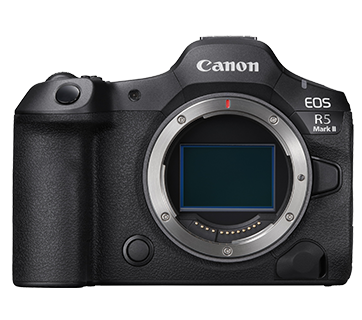

The Canon EOS R5 Mark II and Sony A9 III are two flagship mirrorless cameras that frequently come up in discussions among professional photographers and serious enthusiasts. Both cameras target users who demand high performance, whether for action photography, videography, or general versatile usage. The comparison between these two models is often catalyzed by their advanced features, including high-resolution sensors, superb autofocus systems, and impressive video capabilities. Buyers often find themselves torn between Canon's more comprehensive image quality and stabilization system and Sony's speed-focused performance, especially in fast-paced scenarios like sports or wildlife photography.
Specifications Comparison
Detailed Comparison
Image Quality
The Canon EOS R5 Mark II boasts a robust 45-megapixel full-frame sensor, providing an extensive amount of detail ideal for large prints and cropping. This sensor allows for impressive color accuracy and dynamic range, excelling in diverse lighting conditions thanks to its ISO range of 100-51200. On the other hand, the Sony A9 III features a 25-megapixel sensor, which, while still capable of delivering high-quality images, may fall short when fine details are critical. Although the A9 III's lower megapixel count can lead to slightly less image detail, it compensates with a great performance in low light due to its industry-leading frequency of processing and speed of shooting. Both systems excel in capturing vibrant colors and sharp images, but the R5 Mark II has an edge in overall resolution and image depth due to its higher megapixel count.
Autofocus System
The autofocus systems of both cameras showcase cutting-edge technology, making them highly efficient for capturing moving subjects. The Canon EOS R5 Mark II has a staggering 5850 autofocus points, allowing for precise tracking of subjects, while also leveraging Dual Pixel CMOS AF for fast, reliable focusing even in challenging lighting conditions. The A9 III, while boasting a lesser number of autofocus points, is known for its incredible speed and responsiveness, offering up to 120 frames per second continuous shooting. This advantage already puts it ahead in situations where split-second timing is crucial. Both systems deliver impressive performance, but depending on the user's focus needs-speed versus coverage-one may suit better than the other.
Video Capabilities
For video creators, both camera options present substantial strengths, yet they cater to different needs. The Canon EOS R5 Mark II offers exceptional video performance, enabling 8K shooting alongside 4K at up to 120p, allowing for significant flexibility in post-production. The 10-bit 4:2:2 internal recording enhances color grading capabilities as well. Alternatively, the Sony A9 III is specifically designed for action and high-speed video recording, providing up to 4K 120p as well but focusing heavily on functionality that caters to sports and event shooters. Its capabilities shine in fast-paced environments, benefiting from its high frame rate features and efficient heat management during long shoots. Though the A9 III arguably excels with its frame rate, the R5 Mark II edges ahead with versatility, especially for those who want a wider range of video quality options.
Build & Ergonomics
In terms of build quality, both models offer weather-sealed bodies designed to withstand demanding shooting conditions. The Canon EOS R5 Mark II weighs 746 grams and has a more substantial feel in hand, suitable for prolonged use, while the lighter Sony A9 III at 617 grams may seem more agile, especially during extended shooting sessions. Both cameras come with electronic viewfinders and a responsive touch screen, but the R5 Mark II's slightly larger screen provides higher resolution for critical focusing and framing decisions. The ergonomic design of both models allows for comfortable usage, but many users may lean towards the R5 for balance and tactile controls. However, the A9 III's design is more streamlined for high-speed shooting.
Battery & Storage
Battery performance plays a critical role for professionals during lengthy shoots, and here the Canon EOS R5 Mark II shines with a battery life of approximately 540 shots compared to the A9 III. The A9 III is designed for speed and can quickly deplete its energy reserves during its high-speed recording modes, although it still performs admirably in real-world scenarios. In terms of storage, both cameras feature dual card slots, enhancing shoot reliability, especially for those working with large files often seen in high-resolution imagery and 4K video. Yet the substantial battery life advantage of the R5 Mark II makes it more reliable for extended shoots in varied conditions.
Value for Money
When considering value for money, the Canon EOS R5 Mark II is priced at $4299, positioning it as a premium offering that favors photographers looking for a high-resolution system. Its robust 45-megapixel sensor, superior stabilization, and versatile video capabilities indicate a higher value for those focusing on versatile applications in both photography and videography. However, the Sony A9 III, released in 2023, is marketed towards fast-action shooters with a price point that may better suit sports or event photographers, as it excels at rapid shooting and has a high-speed performance focus. Thus, depending on the user's specific requirements-whether it be versatility or speed-the best value proposition will vary significantly.
Our Verdict
Overall, while both the Canon EOS R5 Mark II and the Sony A9 III offer outstanding features in the world of mirrorless cameras, the Canon EOS R5 Mark II takes the crown due to its superior image quality, lower light performance, and extensive customizable features. It is an ideal choice for photographers who require versatility and detail in both photography and videography. However, for professionals placed in high-speed dynamic environments, the Sony A9 III delivers unparalleled performance, making it equally valuable in action-oriented photography. Ultimately, the best choice hinges on the specific needs of the photographer, with the R5 appealing to those needing detailed images and versatile video capabilities, while the A9 III is perfect for high-speed action sequences.