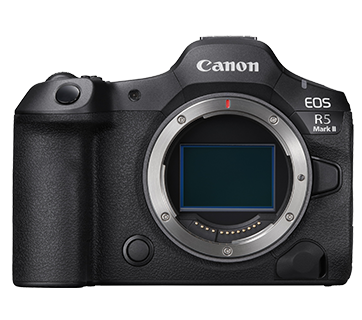

The Canon EOS R5 Mark II and the Sony A9 II are two powerhouse mirrorless cameras that appeal to professional photographers and enthusiasts alike. They are often compared due to their full-frame sensors, expansive autofocus systems, and robust performance capabilities. Photographers specializing in sports, wildlife, or fast-paced environments may find themselves choosing between these two models, as both offer impressive continuous shooting speeds and advanced autofocus features. The key differentiators between the two include image resolution, autofocus technology, and video capabilities, which can heavily influence the decision depending on a photographer's specific needs and shooting style.
Specifications Comparison
Detailed Comparison
Image Quality
The Canon EOS R5 Mark II boasts a remarkable 45 megapixels, providing exceptionally detailed images, which can be crucial for landscape photography or large prints. In contrast, the Sony A9 II, with its 24 megapixels, still delivers impressive image quality and dynamic range, albeit at a lower resolution. Both cameras excel in low-light performance, with the Canon's ISO range extending from 100-51200, while the Sony's ISO range is also impressive, extending from 100-51200 but capable of reaching up to 204800 with its expanded settings.
In practical terms, the higher megapixel count of the R5 Mark II can be beneficial for cropping and allows for more detail in large prints, making it a preference for many photographers needing high-resolution outputs. However, the lower resolution of the A9 II allows for faster processing times and storage efficiency, which can be significant for high-speed shooting scenarios. Therefore, while both cameras deliver excellent image quality, the choice fundamentally comes down to the need for resolution versus efficiency and speed.
Autofocus System
Autofocus performance is a critical consideration for many shooters, especially in fast-paced environments. The Canon EOS R5 Mark II features an impressive 5850 autofocus points, significantly outpacing the Sony A9 II's 693 points. This means that the R5 Mark II provides better coverage and tracking capabilities across the frame, making it well-suited for capturing moving subjects with precision.
On the other hand, the Sony A9 II is known for its exceptional Real-Time Eye AF and overall responsiveness, which has made it a popular choice among sports and wildlife photographers. Despite having fewer points, the A9 II's autofocus system is highly acclaimed for its speed and accuracy, particularly in challenging lighting conditions. Both systems offer advanced tracking and face detection, but the sheer number of autofocus points in the Canon can provide more flexibility for different shooting scenarios. While each has its strengths, the Canon's superior autofocus coverage gives it an edge in versatility.
Video Capabilities
The Canon EOS R5 Mark II excels with its advanced video features, offering 8K video recording, which is a significant upgrade for filmmakers. With its capability to shoot 4K at up to 120 fps and high-quality internal recording options, the R5 Mark II stands out as a versatile tool for videographers looking for high-resolution and high-frame-rate options.
In comparison, the Sony A9 II is limited to 4K at 30p maximum. While it provides excellent video quality, the lack of 8K and lower frame rates means it may not meet the needs of high-end cinematographers as effectively as the Canon. Nevertheless, the A9 II's video performance remains solid, and its ability to capture smooth footage is commendable.
Overall, for videographers who prioritize high-resolution capabilities, the R5 Mark II is the clear winner in this category, but those who primarily shoot in 4K will find both options satisfying.
Build & Ergonomics
Both cameras feature durable, weather-sealed bodies suitable for professional use, but there are some differences in ergonomics. The Canon EOS R5 Mark II weighs 746g and its dimensions (138 x 98 x 88 mm) provide a slightly larger grip, which may appeal to users who prefer a more substantial camera feel. This can enhance comfort during long shooting sessions.
In contrast, the Sony A9 II is slightly lighter at 678g and has a more compact design (129 x 96 x 76 mm), which could be advantageous for traveling photographers needing to minimize weight. The layout of controls is similar, but some users might find the Canon's interface and touchscreen display more intuitive and user-friendly.
Ultimately, both designs feature strong build quality and allow for efficient operation in various conditions, but the choice comes down to personal preference regarding size, weight, and grip style.
Battery & Storage
Battery life is crucial, especially for those engaged in long shooting sessions. The Canon EOS R5 Mark II offers a battery life of approximately 540 shots, which is respectable for a camera of its capability. Meanwhile, the Sony A9 II boasts a longer battery life of about 690 shots, giving it an edge for users who often shoot in the field or do not want to change batteries frequently.
Both cameras use different battery formats: Canon RF for the R5 Mark II and Sony E for the A9 II, and users should consider the availability and price of spare batteries for their preferred system. In terms of storage, both cameras support CFexpress cards, providing fast writing speeds necessary for high-resolution and high-speed shooting modes. However, the R5's support for dual card slots enhances workflow options significantly, particularly when working with large files and faster transfer rates.
While both cameras perform adequately in this aspect, the longer battery life and improved storage options of the R5 Mark II seem to offer a slight advantage for versatility in demanding shooting scenarios.
Value for Money
The Canon EOS R5 Mark II is priced at $4299, while the Sony A9 II is slightly higher at $4500. Considering the feature sets, the R5 Mark II offers more advanced capabilities, such as higher resolution, superior autofocus, and advanced video options, which may justify its price tag for many photographers.
The A9 II, on the other hand, while less expensive, still provides great value with its emphasis on speed, excellent build quality, and reliable performance. It remains a strong candidate for those primarily focused on sports and action photography, where its strengths lie.
Ultimately, for buyers looking for the latest features in high-resolution photography and videography, the R5 Mark II may be the more appealing option. However, for those who prioritize performance and are prepared to work strictly in the 24MP range, the A9 II's cost may offer better value depending on individual needs.
Our Verdict
Overall, the Canon EOS R5 Mark II emerges as the winner of this comparison, excelling in image quality, autofocus performance, and advanced video capabilities. Its higher megapixel count, impressive stabilization, and robust feature set make it an ideal choice for photographers and videographers looking for top-tier performance. However, the Sony A9 II does not fall short in areas like speed and battery life, providing commendable performance for action and sports photographers. Ultimately, your choice should hinge on whether you value the high-resolution capture of the R5 Mark II or the speed and agility of the A9 II.
Canon EOS R5 Mark II
Sony A9 II
Also Compare
Frequently Asked Questions
Which camera is better for sports photography?
The Sony A9 II is generally preferred for sports photography due to its quick autofocus response and continuous shooting capabilities. However, the Canon EOS R5 Mark II also offers excellent performance and additional resolution, which may be beneficial for cropping.
Is the Canon EOS R5 Mark II better for video than the Sony A9 II?
Yes, the Canon EOS R5 Mark II supports 8K video recording and higher frame rates in 4K, making it a more versatile option for videographers compared to the 4K limit of the Sony A9 II.
How do the lenses compare for both systems?
Both systems have expanding lens options. Canon's RF lenses are modern and high-performing, while Sony's E-mount has a vast array of lenses catering to various needs, benefiting from years of development.
Which camera has better low-light performance?
Both cameras perform well in low-light conditions, but the Canon EOS R5 Mark II's higher megapixels with excellent ISO performance may provide more detail and flexibility in shadows.
How does the battery life affect shooting time?
The Sony A9 II offers longer battery life, making it a solid choice for events where changing batteries frequently is impractical, while the Canon R5 Mark II's battery life is slightly shorter but may suffice for most shooting sessions.