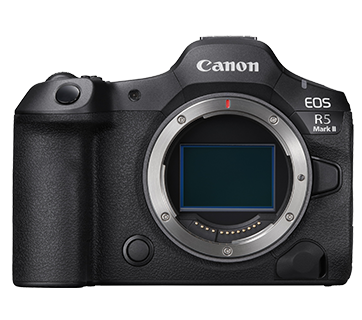

The Canon EOS R5 Mark II and the Sony A7S III are two of the most talked-about full-frame mirrorless cameras available on the market today. Both are designed for professionals and serious enthusiasts, offering advanced features that cater to both photography and videography. Those choosing between these two cameras are often looking for a versatile platform to handle everything from high-resolution stills to high-quality video capture. As each model caters to slightly different needs, understanding their specifications and performance nuances is essential for informed decision-making.
The key differentiators between these two cameras lie in their image sensor specifications, autofocus capabilities, video functionalities, and buffer performance. While the Canon EOS R5 Mark II boasts a higher megapixel count and a more advanced stabilization system, the Sony A7S III excels in its low-light performance and videography features, making it a preferred choice for videographers and content creators. This comparison will delve into various aspects to understand where each model shines and which one would better meet potential buyers' needs.
Specifications Comparison
Detailed Comparison
Image Quality
The Canon EOS R5 Mark II features a 45-megapixel sensor that delivers exceptional detail and dynamic range, making it ideal for landscape and portrait photography where resolution is critical. Its ISO range extends from 100 to 51200, allowing photographers to capture images in a variety of lighting situations effectively. The higher pixel count results in finer detail, enabling large prints without sacrificing quality.
On the other hand, the Sony A7S III uses a 12-megapixel sensor, which is notably lower than that of the R5 Mark II. However, this camera is designed primarily for low-light performance and video applications. The ISO range can be expanded up to 409600, providing remarkable noise control and sensitivity in dimly lit environments, which is a significant advantage for videographers working in challenging lighting.
In practical terms, if high-resolution images and versatility across various conditions are priorities, the Canon EOS R5 Mark II wins. However, if low-light capabilities are critical for your work, particularly in video, the A7S III's design philosophy focuses precisely on those requirements, providing clear images in situations where others falter.
Autofocus System
The Canon EOS R5 Mark II offers an impressive 5850 autofocus points with reliable face and eye detection, providing fast and accurate focus across the frame. This extensive coverage is particularly advantageous for fast-moving subjects in still photography, including wildlife and sports. The camera's advanced autofocus algorithms, combined with dual pixel technology, ensure smooth transitions and consistent tracking performance.
Conversely, the Sony A7S III has 759 autofocus points, and despite having fewer than the R5 Mark II, it uses a highly effective hybrid autofocus system that has been praised for its speed and precision. The A7S III features real-time eye autofocus for both humans and animals, ensuring that the subject's eyes are always in focus, a crucial feature in portrait and wildlife photography.
Overall, while both cameras provide solid autofocus performance, the Canon EOS R5 Mark II holds a numerical advantage, making it the winner in scenarios requiring extensive tracking capabilities across a wider area. However, the A7S III's tracking efficiency and real-time detection would still serve many users well, especially in video applications.
Video Capabilities
The video prowess of the Canon EOS R5 Mark II is formidable, offering capabilities of shooting at 8K 30p and 4K up to 120p, catering to a wide range of production needs. Adding to its appeal, it features advanced color profiles and in-camera processing options, aiming to satisfy professional filmmakers looking for post-production flexibility. The camera's internal 8K recording requires significant processing power, but its performance remains balanced and credible across resolutions.
In contrast, the Sony A7S III shines brightest in video applications with its ability to record 4K at up to 120 frames per second, along with 10-bit 4:2:2 color and advanced codecs. The A7S III's low-light performance complements its video capabilities, allowing creators to work in situations where other cameras struggle. Moreover, the A7S III supports a wide array of frame rates and resolutions, making it a flexible option for various content creation scenarios.
While both cameras have compelling video features, the depth and specialized capabilities geared towards videographers position the Sony A7S III more favorably for video-centric users. The R5 Mark II has a more varied feature set for high-resolution stills and video, making it ideal for hybrid users.
Build & Ergonomics
The Canon EOS R5 Mark II embodies a robust and ergonomic design, weighing in at 746 grams with dimensions of 138 x 98 x 88 mm. Its weather-sealed body provides enhanced durability for outdoor photography, and the superior grip allows for more comfortable extended usage. The large 3.2-inch screen with 2,100,000 dots creates an engaging interface, further complemented by an electronic viewfinder that delivers a seamless shooting experience.
Similarly, the Sony A7S III has a compact design, weighing 699 grams and measuring 129 x 97 x 81 mm. This lighter build offers ease of handling, especially for extended shoots or travel photography. Sony also features weather sealing, and the ergonomics, while functional, have been noted to be a bit less graceful compared to Canon's more pronounced grip.
In terms of build quality, both cameras are compelling. However, the Canon R5 Mark II slightly leads due to its larger and more user-friendly interface designed for demanding use cases, while the A7S III is optimal for users prioritizing a lightweight and compact camera for mobility. This translates to a tie in terms of practicality on a day-to-day basis.
Battery & Storage
The Canon EOS R5 Mark II boasts a rated battery life of approximately 540 shots, which is decent for a camera featuring such high-resolution capabilities. It supports dual card slots, allowing for flexibility between storage types (CFexpress and SD UHS-II) - a major advantage for photographers needing extensive storage for high-resolution image files or lengthy video clips.
On the other hand, the Sony A7S III edges ahead with a slightly better battery life, managing about 600 shots on a single charge. It also features dual card slots supporting CFexpress Type A and SD UHS-II, ensuring ample room for video data and fast write speeds, which are essential for high-resolution video recording.
While both cameras offer dual card slots, the A7S III's marginally better battery life positions it in a favorable light especially for video users who may be frequently shooting lengthy clips. Therefore, it offers a small but persuasive advantage over the Canon R5 Mark II in this aspect.
Value for Money
The Canon EOS R5 Mark II comes with a price tag of $4299, reflecting its high-resolution capabilities and versatile performance across both stills and video. For photographers who need the highest pixel count and versatility in one package, the investment can be justified, especially for professionals and those focusing on detailed commercial work.
In contrast, the Sony A7S III is priced at $3499, significantly lower than its Canon counterpart. Given its specialized features tailored for videographers, the A7S III offers tremendous value for filmmakers who prioritize performance in low-light situations and need high-quality 4K footage with minimal noise.
Ultimately, for buyers looking for an all-around powerhouse, the Canon EOS R5 Mark II may represent an excellent investment. However, videographers looking for optimal performance while saving costs may find more value in the Sony A7S III, thereby making it a more attractive proposition for them.
Lens Ecosystem
The Canon RF mount used by the EOS R5 Mark II has a rapidly growing selection of lenses that are designed to take advantage of the camera's advanced features. Canon has been aggressive in expanding the RF lineup, producing a multitude of high-quality prime and zoom lenses, catering to various photographic styles. This makes the R5 Mark II a very appealing camera for those invested in the Canon ecosystem or those who wish to create stunning imagery using RF optics.
Sony's E-mount system has been around longer and is more established, with an extensive selection of native lenses available. This includes a wide variety of third-party options, making it easier for shooters to find suitable lenses for their individual needs. The breadth and depth of the Sony lens ecosystem provides flexibility for videographers and photographers alike.
In conclusion, while the Canon RF mount is gaining traction with innovative options, the well-established Sony E-mount system provides broader choices at the moment, making it easier for photographers to find the right lens for their specific requirements. Thus, the Sony A7S III has a slight edge in this category due to the established selection of lenses.
Our Verdict
In the overall comparison, the Canon EOS R5 Mark II takes the crown for its superior image quality, autofocus capabilities, and ergonomic design, making it a compelling choice for hybrid photographers who require excellent performance in both stills and video. In scenarios demanding high-resolution images with fast autofocus tracking, the R5 Mark II outshines its competitor. On the flip side, the Sony A7S III excels in video performance, low-light capabilities, and value for videographers, making it the perfect camera for content creators looking for stellar performance in challenging lighting conditions. Ultimately, both cameras serve distinct purposes, and the choice boils down to whether the buyer prioritizes still photography or videography, with the Canon leaning towards the former and Sony excelling in the latter.
Canon EOS R5 Mark II
Sony A7S III
Also Compare
Frequently Asked Questions
Which camera is better for low-light photography?
The Sony A7S III is specifically designed for low-light performance, featuring a higher ISO range and exceptional noise management at high ISOs, making it the better choice for low-light scenarios.
Is the Canon EOS R5 Mark II worth the higher price?
If you prioritize high-resolution images, enhanced autofocus, and significant flexibility in both photography and videography, the Canon EOS R5 Mark II's higher price can be justified for professional use.
Which camera is best for video production?
The Sony A7S III stands out for video production, offering better low-light performance, a variety of frame rates, and excellent video-focused features, making it more suitable for videographers.
Do both cameras have weather sealing?
Yes, both the Canon EOS R5 Mark II and Sony A7S III feature weather-sealed bodies to protect against adverse outdoor conditions, ensuring durability for outdoor shooting.
How does battery life compare between the two cameras?
The Sony A7S III offers approximately 600 shots per charge, slightly surpassing the Canon EOS R5 Mark II's 540 shots, which can be a consideration for extended shooting sessions.