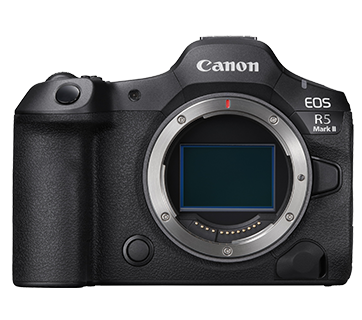
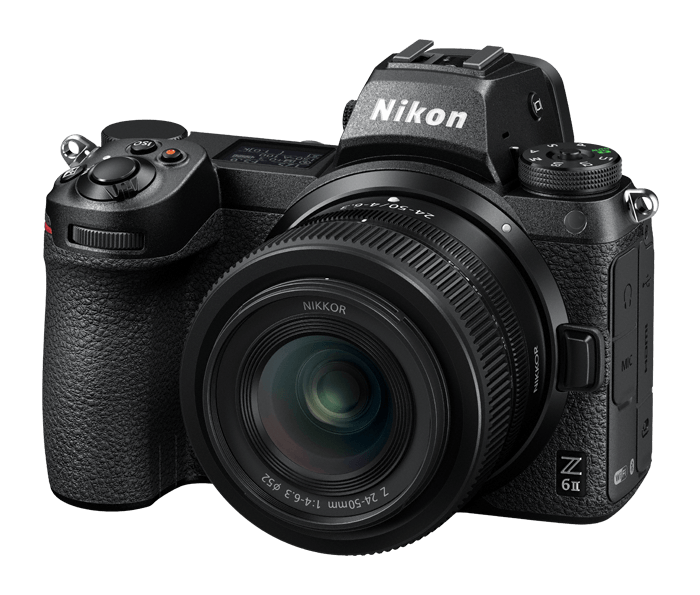
The Canon EOS R5 Mark II and Nikon Z6 II are both powerful full-frame mirrorless cameras that have garnered attention from enthusiasts and professionals alike. With the growing competition in the mirrorless segment, these two models often become the focus of comparison among photographers and videographers who are seeking high performance, image quality, and advanced features. The choice between the two boils down to the specific needs of the user, including factors like resolution, autofocus capabilities, and video performance, which are largely dictated by their respective specifications and advancements in technology.
Specifications Comparison
Detailed Comparison
Image Quality
The Canon EOS R5 Mark II boasts a 45-megapixel sensor, providing superior resolution and detail over the Nikon Z6 II, which features a 25-megapixel sensor. This makes the R5 Mark II a more suitable option for photographers needing large prints or considerable cropping flexibility. Additionally, both cameras have an ISO range that reaches up to 51200, but the Z6 II can extend its range to 204800 in Auto mode, offering more versatility in extreme low-light situations.
In terms of color science, Canon is often praised for its skin tones and vibrant colors, while Nikon has a reputation for producing natural and neutral tones, which can be advantageous for certain styles of photography. Ultimately, the choice between the two will depend on personal preference, but the Canon's higher resolution is a standout advantage for detailed work.
Overall, while both cameras can deliver excellent image quality, the sheer pixel count and detail retention of the Canon EOS R5 Mark II provide a substantial edge in this category.
Autofocus System
The Canon EOS R5 Mark II features an impressive autofocus system with 5850 AF points, enabling high precision across the frame, making it a great option for capturing fast-moving subjects. In contrast, the Nikon Z6 II, while slightly limited with 273 AF points, still performs well for most users, particularly in dynamic environments.
The R5 Mark II incorporates advanced subject detection capabilities, making it easier to track eyes in both humans and animals, which is crucial for portrait and wildlife photography. The Z6 II has a competent AF system but lacks some of the advanced tracking features found in its Canon counterpart.
Given the technical advantages and the sheer number of autofocus points available in the R5 Mark II, it's clear that it provides a more sophisticated and effective autofocus performance, particularly beneficial for fast-paced shooting scenarios.
Video Capabilities
For video enthusiasts, the Canon EOS R5 Mark II sets a high standard, offering impressive video capabilities with resolutions up to 8K video at 30p, alongside 4K video options at higher frame rates. This makes it an excellent choice for filmmakers who require top-tier video performance.
On the other hand, the Nikon Z6 II supports 4K video at 30p and is a solid option, particularly for those who don't need resolutions beyond 4K. However, it lacks the high frame rates available in 4K on the Canon, such as 120p for super slow motion, which may limit creative flexibility.
Both bodies provide good audio inputs and stabilization, but the enhanced resolution and frame rate capabilities of the Canon, alongside its advanced stabilization of up to 8.5 stops, position it as the go-to camera for serious video production.
Build & Ergonomics
Both the Canon EOS R5 Mark II and Nikon Z6 II feature durable weather-sealed bodies designed for outdoor use, making them reliable tools for professionals. The Canon's dimensions are slightly larger at 138 x 98 x 88 mm compared to the Nikon's 134 x 101 x 70 mm, with the R5 Mark II also having a bit more weight at 746g vs. 705g.
In terms of ergonomics, both cameras have a similar 3.2-inch touchscreen with 2,100,000 dots, which is responsive and allows for easy operation. User opinion often varies based on grip feel and control layout, but overall, both systems have been designed with professional usability in mind.
While the overall build quality and ergonomics are exceptional for both cameras, the slightly more compact design of the Nikon Z6 II may appeal to those looking for a lighter setup without compromising functionality.
Battery & Storage
When it comes to battery life, the Canon EOS R5 Mark II offers impressive longevity with a rated battery life of about 540 shots, surpassing the Nikon Z6 II's 410 shots on a single charge. This can be a significant consideration for users engaged in longer shoots.
Both cameras use different storage options; the R5 Mark II features dual card slots for CFexpress and SD UHS-II, providing speedy writing capabilities that support its high-resolution files. The Z6 II also includes dual slots (one for CFexpress and one SD UHS-II), but depending on the cards used, the data handling might differ during more demanding shoots.
Overall, the longer battery life and advanced storage solutions in the R5 Mark II give it an edge in usability for extensive shooting periods without the constant interruptions of changing batteries.
Value for Money
Price-wise, the Canon EOS R5 Mark II comes in at $4299, positioning it firmly in the premium segment of its category. It delivers high-end features that may justify the price for professional photographers and videographers requiring the latest technology and performance.
Meanwhile, the Nikon Z6 II, at a more accessible price point of $1995, provides substantial capabilities but lacks some of the cutting-edge features found in the R5 Mark II. For enthusiasts or those who do not require the absolute best specifications, the Z6 II represents significant value.
Ultimately, while the R5 Mark II justifies its cost with features, performance, and resolution, those on a budget or who prioritize strong performance without the need for top-tier specifications may find the Z6 II a more sensible investment.
Lens Ecosystem
Canon's RF mount has been rapidly expanding with a diverse range of native lenses that cater to various photography styles. The ecosystem includes high-performance prime and zoom lenses, with robust support for both stills and video content creation. Canon also offers a range of adapters for users who wish to utilize existing EF lenses.
Nikon's Z mount also has seen an impressive growth in its available lenses, boasting a lineup that includes fast primes and practical zooms. Like Canon, Nikon provides adapters for F-mount lenses, thus easing the transition for existing Nikon users.
Both lenses systems are becoming more competitive, but Canon's broader selection at launch provides a slight advantage for those seeking varied options. However, Nikon's lenses often deliver competitive performance and can fill most user needs effectively.
Our Verdict
Overall, the Canon EOS R5 Mark II emerges as the compelling choice for those who prioritize high image quality, advanced autofocus, and exceptional video capabilities, justifying its premium price point. Meanwhile, the Nikon Z6 II excels in value, providing strong performance for a lower cost, making it ideal for enthusiasts and those who may not require the latest technology. Each camera has its merits, but the R5 Mark II's capabilities make it a clear leader in this comparison.
Canon EOS R5 Mark II
Nikon Z6 II
Also Compare
Frequently Asked Questions
Which camera has better image quality?
The Canon EOS R5 Mark II offers a higher resolution of 45 megapixels compared to 25 megapixels in the Nikon Z6 II, making it superior for detailed photography.
How does low-light performance compare?
Both cameras perform well in low-light, but the Nikon Z6 II can extend its ISO range to 204800, providing more flexibility in challenging conditions.
Which camera is better for video work?
The Canon EOS R5 Mark II outshines the Nikon Z6 II with its 8K recording capabilities and enhanced video features, making it ideal for professional videographers.
Is the longer battery life worth it?
Yes, the longer battery life of the R5 Mark II makes it more practical for extended shoots, while the Z6 II's can be limiting in longer sessions.
Which camera offers a better lens ecosystem?
Both Canon and Nikon have a good selection of native lenses, but Canon's RF lens ecosystem is slightly more extensive at this time.