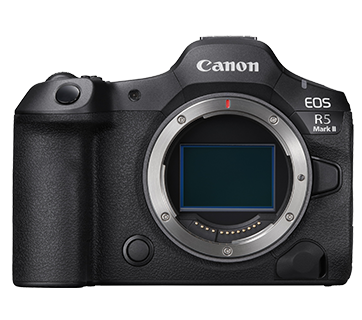
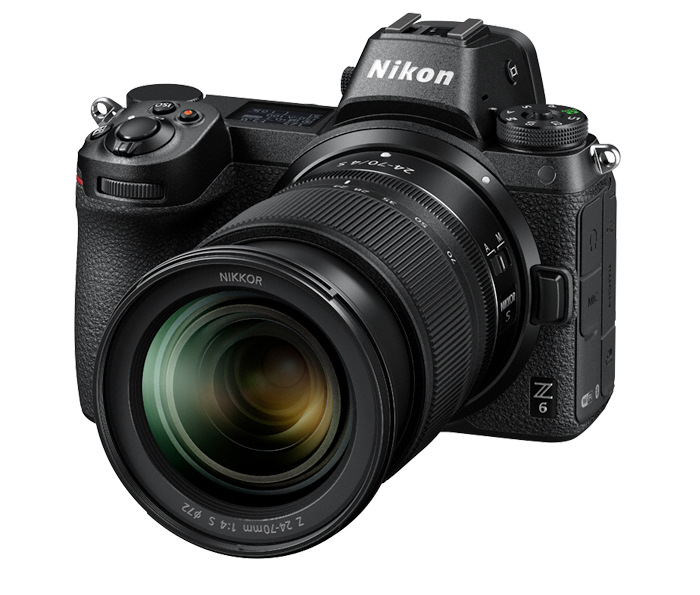
The Canon EOS R5 Mark II and the Nikon Z6 are two prominent full-frame mirrorless cameras that cater to different segments of photographers and videographers. The EOS R5 Mark II, released in 2024, boasts cutting-edge technology, high-resolution imaging, and advanced features that appeal to professionals and serious enthusiasts alike. In contrast, the Nikon Z6, launched in 2018, is regarded as a versatile and value-oriented choice, attracting those who seek reliable performance without breaking the bank. As both cameras target similar audiences but at significantly different price points, decision-making comes down to specific needs and preferences, making their comparison vital for potential buyers.
Specifications Comparison
Detailed Comparison
Image Quality
The Canon EOS R5 Mark II features a 45-megapixel full-frame sensor that delivers remarkable detail and clarity, making it an ideal choice for landscape, portrait, and studio photography. Its ISO range of 100-51200 ensures excellent performance in low-light conditions, which further enhances its ability to capture fine details across various lighting environments. The higher pixel count enables more cropping flexibility, making it a favorite among photographers who prioritize image resolution and quality.
On the other hand, the Nikon Z6, with its 25-megapixel sensor, while offering lower resolution, still excels in delivering vibrant images with outstanding dynamic range. The Z6 has an ISO range that also starts at 100 and extends up to 51200, but it can be expanded to 204800 for extreme low-light situations. While the lower resolution means less detail than the R5 Mark II, the Z6's images have been praised for their excellent color rendition, especially in natural scenes.
In practical terms, if maximum image detail and large print capabilities are required, the Canon EOS R5 Mark II emerges as the clearer winner. However, for photographers prioritizing performance in challenging lighting conditions with a focus on dynamic range, the Z6 may still hold its ground effectively.
Autofocus System
Canon's EOS R5 Mark II boasts a staggering 5,850 autofocus points, utilizing the advanced Dual Pixel AF system, which provides fast and highly accurate focusing across the entire frame. This extensive AF coverage is well-suited for capturing fast-moving subjects, making it ideal for sports and wildlife photographers. The R5 Mark II also incorporates improved subject tracking capabilities, enhancing its performance in dynamic scenarios.
In comparison, the Nikon Z6 features a more modest autofocus system with 273 points. While this is sufficient for most photography situations and can lock onto subjects quickly, it lacks the expansive coverage of the Canon. Nevertheless, the Z6's autofocus system is effective and user-friendly, providing reliable performance in various lighting conditions and monitoring faces and eyes effectively.
Considering the numbers and real-world performance, the Canon EOS R5 Mark II's autofocus system offers superior capability and flexibility. Photographers who rely on utmost precision, especially in fast-paced environments, will find the R5 Mark II to be the better option.
Video Capabilities
Videographers will appreciate the Canon EOS R5 Mark II's extensive video capabilities, offering 8K recording at up to 30fps, along with support for 4K at 120fps. This broad range of high-resolution video options caters to professionals looking for quality and flexibility in video production. Additionally, the advanced image stabilization (8.5 stops) significantly reduces the impact of camera shake, making handheld shooting much more manageable.
In contrast, the Nikon Z6 supports 4K video recording at 30fps, with solid performance but lacking the higher resolutions available with the R5 Mark II. Its 5-stop stabilization, while effective, is not as robust as Canon's offering. However, the Z6 is still favored for its great color science and video profiles, which deliver pleasing results for many content creators.
Overall, Canon's R5 Mark II outshines the Z6 in sheer video capabilities, especially for those aiming for 8K content and high frame rates. Therefore, it is the preferable choice for filmmakers who require top-tier options.
Build & Ergonomics
Both the Canon EOS R5 Mark II and Nikon Z6 feature weather-sealed bodies, making them suitable for outdoor and challenging shooting conditions. The R5 Mark II weighs 746g and is slightly larger than the Z6 at 675g, which weighs less and might appeal to those looking for a lighter setup. In terms of button layout and control accessibility, Canon's design is ergonomically sound, providing a comfortable grip, especially in prolonged shooting sessions.
Nikon's Z6 also provides a solid grip and logical button placement but may feel bulkier to some users, despite its lighter weight. The electronic viewfinders in both cameras offer similar resolution and performance, providing a good user experience. The displays on both systems are flexible and allow for touch functionality, making them intuitive to use.
Ultimately, while both options are well-built, the Canon EOS R5 Mark II's added weight and dimensions provide a more professional feel, while users seeking a more compact and lightweight camera may lean toward the Nikon Z6.
Battery & Storage
Battery life is an important consideration for both videographers and photographers. The Canon EOS R5 Mark II has a battery life of approximately 540 shots, which is impressive given its high-performance capabilities. It utilizes a dual card slot system supporting CFexpress and SD cards, providing flexibility and high-speed options for storage.
In comparison, the Nikon Z6 offers a battery life of around 310 shots, which is significantly less, limiting its shoot time between charges. However, the Z6 also supports dual card slots but with only SD cards, which could be a drawback for those requiring the faster write speeds of CFexpress cards.
Overall, the Canon EOS R5 Mark II provides better battery life and more flexibility with storage options, making it the favorable choice for users who require extended shooting sessions.
Value for Money
When considering value for money, the Nikon Z6 stands out due to its significantly lower price of $1,995 compared to the Canon EOS R5 Mark II's $4,299. The Z6 offers an excellent performance-to-price ratio, especially for enthusiasts and semi-professionals who want a capable full-frame camera without a hefty investment. Its image quality and performance make it one of the best entry points into full-frame mirrorless photography.
Conversely, the Canon EOS R5 Mark II is designed for professionals who can leverage its premium features, ranging from high-resolution performance to advanced video capabilities. For those whose work demands the highest standards in image quality and versatility, the price may be justifiable.
In this aspect, while the Nikon Z6 offers exceptional value, the overall features and technological advancements of the Canon EOS R5 Mark II may appeal to serious users and professionals who are willing to invest more for superior performance.
Our Verdict
While both cameras have their strengths, the Canon EOS R5 Mark II prevails overall due to its superior image quality, autofocus capabilities, and advanced video features. It is best suited for professional photographers and videographers who require high performance and are willing to make the investment. The Nikon Z6, however, remains a strong contender for those seeking exceptional value and versatility at a lower price, particularly for enthusiast photographers or those just starting in full-frame mirrorless systems.
Canon EOS R5 Mark II
Nikon Z6
Also Compare
Frequently Asked Questions
Which camera has better low-light performance?
Both cameras perform well in low-light conditions, but the Canon EOS R5 Mark II benefits from a higher resolution sensor, which can capture more detail. The Z6 can expand its ISO range to 204800, possibly offering slightly better performance at extreme levels.
Is the Canon EOS R5 Mark II worth the higher price?
The R5 Mark II offers substantial improvements in resolution, autofocus performance, and video capabilities, which may justify its price for professional users. However, for casual shooters, the Nikon Z6 provides excellent performance at a much lower cost.
How do the lenses differ between the two systems?
Canon's RF lens lineup is more expansive in terms of ultra-wide and specialized lenses, given its newer platform. Nikon's Z-mount also has a growing selection of high-quality lenses, but some users may find Canon's options more enticing for specific needs.
Can the Nikon Z6 shoot in 8K?
No, the Nikon Z6 is limited to 4K resolution, while the Canon EOS R5 Mark II can shoot in 8K, which may be a critical factor for those focused on high-resolution video work.
Which camera is better for sports photography?
The Canon EOS R5 Mark II is the better choice for sports photography due to its faster burst rate and superior autofocus system, which can track moving subjects more reliably than the Nikon Z6.