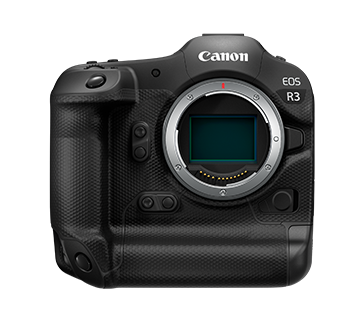
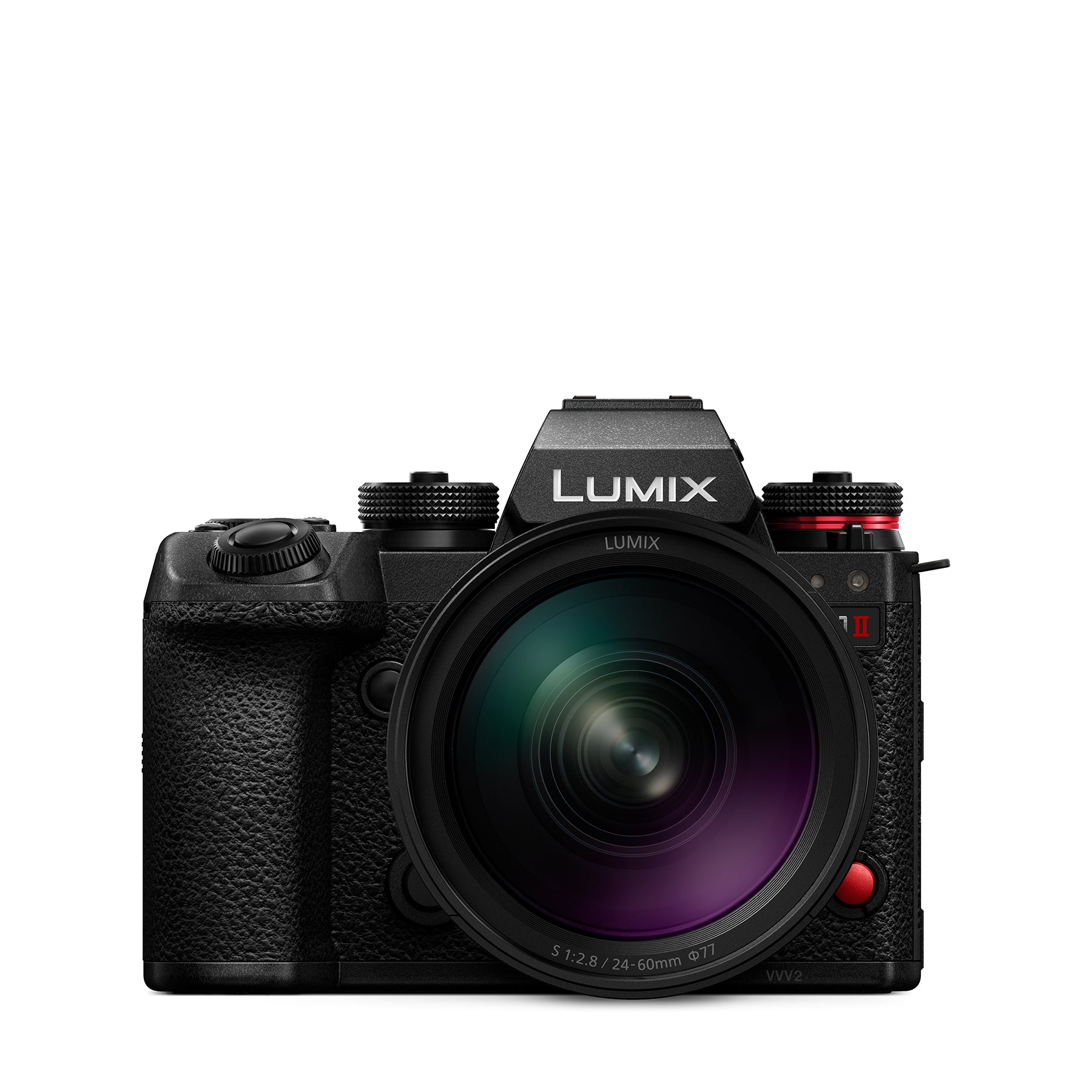
The Canon EOS R3 and the Panasonic S1 II are two prominent full-frame mirrorless cameras that target professional photographers and videographers. They offer distinct features tailored to different styles of photography, making them commonly compared among those looking for high-performance equipment. Photographers might choose between these two models based on their specific needs, such as fast shooting in dynamic environments, videography capabilities, and overall build quality. Key differentiators include the autofocus performance of the EOS R3 compared to the video capabilities of the S1 II, making this comparison invaluable for buyers.
Specifications Comparison
Detailed Comparison
Image Quality
Both the Canon EOS R3 and the Panasonic S1 II feature full-frame sensors but with slight differences in megapixels. The R3 has a 24-megapixel sensor, while the S1 II is marginally higher at 24.1 megapixels. In practice, the difference in megapixels is negligible and both cameras can produce stunning images. However, the EOS R3 has an impressive ISO range extending to 204800, allowing for exceptional low-light performance. The S1 II also offers good low-light capabilities, but the wider usable ISO range of the R3 gives it an edge in challenging lighting conditions.
In terms of dynamic range and color accuracy, both cameras perform well, yet Canon's color science is often praised for producing vibrant and natural hues, particularly favored in portraiture and landscape photography. The S1 II, with its 14-stop dynamic range, holds its ground ensuring excellent detail in shadows and highlights, making it an excellent choice for video makers seeking depth and nuance.
Given the R3's superior low-light capability and Canon's industry reputation for color science, the image quality section slightly leans in favor of Canon.
Autofocus System
The autofocus systems of both cameras are impressive, but the Canon EOS R3's performance is remarkable. With 1053 autofocus points covering a wide area, it excels in tracking moving subjects, making it ideal for sports and wildlife photography. The dual-pixel CMOS AF II technology enhances focus accuracy and speed, even in low-light situations. Additionally, the R3 features advanced modes like Eye AF that work well for both human and animal subjects.
In contrast, the Panasonic S1 II provides a robust autofocus experience as well, but with a lesser number of AF points compared to the R3. Its Depth from Defocus (DFD) technology ensures reliable focus acquisition but may lag slightly behind the speed and tracking performance offered by the R3's dual-pixel technology. The S1 II is still more than capable for most photographic needs.
Considering the superior autofocus capabilities of the R3, this category clearly favors Canon.
Video Capabilities
The video capabilities of both cameras are impressive, yet they serve different audiences. The Panasonic S1 II leads with its ability to capture video in 5.1K at 60p, a feature that appeals highly to professional videographers seeking exceptional resolution and frame rate. The S1 II's video tools such as V-Log and HLG profiles provide creators with greater flexibility in post-production.
The Canon EOS R3, while supporting impressive 4K video at 120p, lacks in raw resolution compared to the S1 II. Nonetheless, its 4K capabilities are sufficient for most professional applications, and the camera's overall video quality and autofocus make it an attractive option for hybrid shooters.
Given the higher resolution and enhanced video tools of the S1 II, this section is won by Panasonic.
Build & Ergonomics
Both the Canon EOS R3 and the Panasonic S1 II feature robust weather-sealed bodies, designed for use in challenging environments. The EOS R3 weighs in at 1015g, offering a solid feel in hand, which is crucial for extended use. Its layout is intuitive, with a fully articulating touch screen, providing flexibility in shooting angles.
On the other hand, the S1 II, while slightly bulkier, also provides an ergonomic design. Though some users might prefer the heavier and larger feel of the S1 II owing to its better control layout for videography, the R3's more compact design might appeal to photographers seeking portability without sacrificing durability. The S1 II does have a slightly larger grip, which can provide comfort during long shoots.
Given their comparable weather resistance and ergonomics, this category results in a tie.
Battery & Storage
The Canon EOS R3 boasts a commendable battery life of 760 shots, which is advantageous for prolonged photography sessions without needing a recharge. Additionally, the R3 supports dual card slots compatible with CFexpress cards, enhancing both performance and storage capacity for high-speed shooting.
In contrast, the Panasonic S1 II's battery life is not explicitly stated but is aligned with the typical performance of other Panasonic cameras, usually lasting less than the R3. The S1 II also features dual card slots but with SD cards, which are slightly slower in write speeds than CFexpress. This difference is crucial for photographers who need rapid data writing for high-resolution images and burst rates.
Based on the superior battery life and storage capabilities of the R3, this section tilts in favor of Canon.
Value for Money
The Canon EOS R3 is priced at $5999, making it a significant investment for those committed to pursuing professional-quality photography and videography. It incorporates a wide array of advanced features catering to sports and action photography, thus delivering substantial value for those specific use cases.
On the other hand, the Panasonic S1 II, being more contemporary and featuring enhanced videography specs, may deliver higher perceived value for video-focused creators, especially considering its price point and advanced features tailored for that audience. The S1 II may appeal more to professionals who require a hybrid solution without the full price tag of the R3.
Taking both perspectives into account, in terms of pure photography capabilities, the R3 provides excellent value, making it the preferred option for imaging professionals.
Our Verdict
Overall, while both the Canon EOS R3 and Panasonic S1 II have their strengths, the Canon EOS R3 emerges as the winner due to its superior autofocus system, battery life, and overall image quality. The R3 is particularly well-suited for photographers primarily focused on capturing action or those who thrive in low-light scenarios. On the flip side, the S1 II excels in video capabilities and is a compelling choice for videographers seeking high resolution and advanced video features. While each has its niche, the Canon EOS R3 offers a more well-rounded performance for professional photographers.