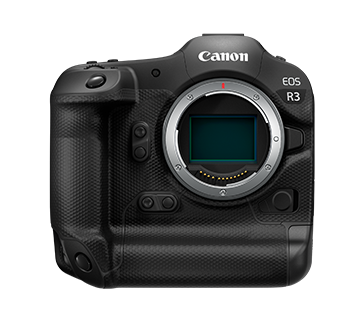
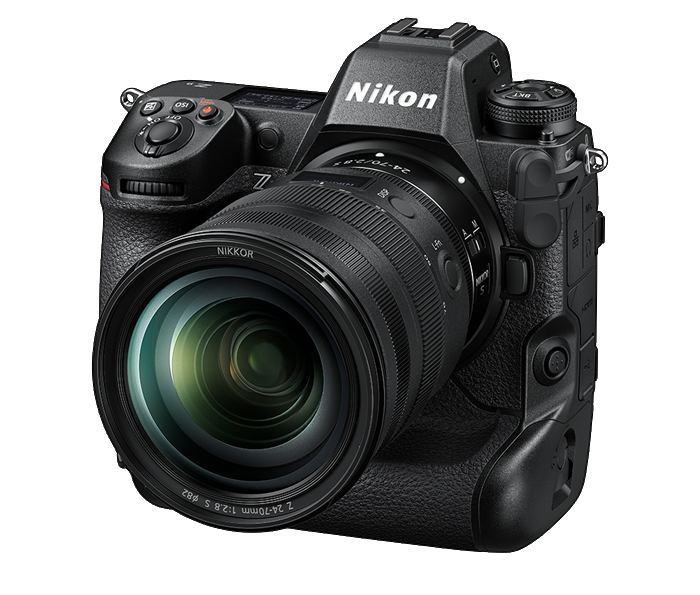
The Canon EOS R3 and Nikon Z9 are two flagship mirrorless cameras that exemplify the advancements in digital photography technology. Both are often compared by professional photographers, sports shooters, and enthusiasts looking for high-performance options in the full-frame segment. Choosing between these two models can be challenging due to their impressive specifications and capabilities, making them appealing for different types of shooting environments. Key differentiators include resolution, autofocus systems, and image stabilization features, each of which can significantly impact shooting experience and outcomes.
Specifications Comparison
Detailed Comparison
Image Quality
When it comes to image quality, the Nikon Z9 takes the lead with its 46 megapixels compared to the Canon EOS R3's 24 megapixels. The higher resolution of the Z9 allows for more detail to be captured, which is especially beneficial in landscape photography and for large prints. However, the Canon's full-frame sensor is still exceptional, particularly at high ISO settings. With an ISO range that extends from 100 to 102400 (expandable to 204800), the R3 offers great low-light performance, which can be critical in fast-paced shooting scenarios. Furthermore, photographers often note the color science and skin tone rendering of Canon cameras as being particularly pleasing, offering a unique quality that some users may prefer over the Nikon's output.
Both cameras perform remarkably well in terms of dynamic range, though some tests suggest that the Nikon Z9 may have a slight edge in capturing more detail in highlights and shadows, thanks to its advanced sensor technology. Overall, for those prioritizing sheer resolution and superior detail capture, the Z9 emerges as the winner.
Autofocus System
The autofocus capabilities of the Canon EOS R3 are noted for their speed and accuracy. Featuring 1053 AF points, the R3 can track subjects adeptly, making it particularly suitable for fast-paced action photography such as sports or wildlife. Additionally, the Canon's Eye AF technology is highly praised for its reliability in keeping track of eyes, enhancing portrait and event photography.
In contrast, the Nikon Z9 has 493 autofocus points, which might seem fewer compared to the R3, but it compensates with advanced algorithms and tracking capabilities. While both systems perform exceptionally well, the Canon EOS R3's autofocus is generally regarded as slightly more versatile given its wider coverage and faster acquisition times in varying lighting conditions. Thus, while the Nikon Z9 performs admirably, especially for static subjects, the R3 edges ahead in dynamic environments.
Video Capabilities
Both the Canon EOS R3 and Nikon Z9 offer impressive video specifications, with the capability to shoot 4K video at 120 frames per second. This makes either camera suitable for high-quality video production, including those needing slow-motion playback. The R3 supports Canon's Log recording, which can appeal to videographers looking for extensive post-production flexibility.
However, the Nikon Z9 stands out with its ability to record in 8K, a feature that can be advantageous for those looking to future-proof their video work or capture ultra-high-definition footage. The Blackmagic RAW capability on the Z9 is also a significant benefit for video professionals, as it provides an excellent trade-off between quality and file size. Given these advantages in video resolution and flexibility, the Nikon Z9 takes the lead in video capabilities.
Build & Ergonomics
Build quality is critical for professional use, and both the Canon EOS R3 and Nikon Z9 feature robust designs. They are both weather-sealed, making them suitable for challenging environments. The R3 has a slightly lighter weight at 1015 grams versus the Z9's 1340 grams, which may be a consideration for photographers who carry their gear for extended periods. The dimensions are relatively similar, but the R3 has a slightly more ergonomic grip, which many users find comfortable during long shooting sessions.
On the other hand, the Nikon Z9 offers an impressive LCD screen with an additional photochemical view, enhancing usability in various conditions. While both cameras boast excellent ergonomics, the choice may come down to personal preference regarding weight and feel. Therefore, while both cameras are well-built and durable, they cater to different user expectations in terms of ergonomics.
Battery & Storage
When it comes to battery life, the Canon EOS R3 boasts a modest 760 shots on a single charge, while the Nikon Z9 closely follows with 740 shots. Both are relatively good for high-performance cameras and suitable for extended shooting sessions. However, the R3 can offer slightly better performance in real-world conditions, especially during continuous shooting where efficient power management retracts usage over longer periods.
In terms of storage, both cameras utilize dual card slots which enable fast write speeds and backup options. The superior card compatibility of the Z9 supports both the CFexpress Type B and XQD formats providing flexibility, while the R3 supports CFexpress Type B as well. Overall, while battery life is similar, the potential for more efficient power usage and better overall performance in real conditions gives the Canon a slight edge.
Value for Money
The Nikon Z9 is priced at $5500, offering a higher resolution and features that cater expertly to videographers and professional photographers. This feature set combined with the additional resolution may justify its price point for those requiring the utmost in image fidelity and future-proofing.
On the other hand, the Canon EOS R3 priced at $5999 presents a compelling offer as well, particularly for those focused on event and sports photography. Its superior autofocus performance and ergonomics present good value when considering the nature of use. While the price difference isn't immense, the slight premium for capturing fast action and dynamic content might be worth it for certain users. Hence, when evaluating value for money based on user needs, both options provide strong offerings, but the Z9's advanced features for a lower price give it an edge.
Our Verdict
In summary, the Canon EOS R3 and Nikon Z9 both have their distinct strengths, making them suitable for different types of photography and videography. The R3 excels in autofocus performance and ergonomics, making it ideal for fast-paced shooting, while the Z9 offers higher resolution and superior video capabilities, appealing to a broad spectrum of professional needs. If you prioritize action photography or need an agile camera with impressive low-light handling, the EOS R3 stands out. Conversely, if your work leans more toward high-resolution images or requires strong video performance, the Z9 is an exceptional choice, making the decision ultimately dependent on the specific requirements of the user.