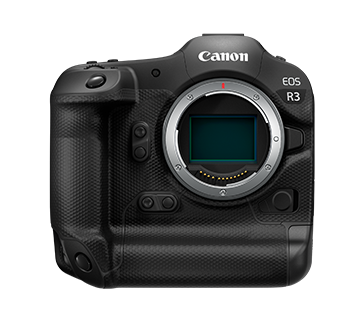
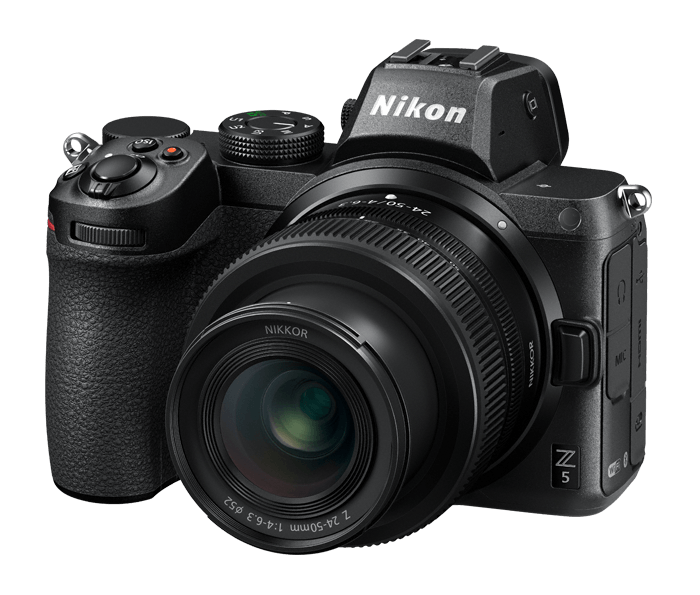
The Canon EOS R3 and Nikon Z5 are two impressive full-frame mirrorless cameras that cater to different segments of the photography market. The EOS R3 is aimed at sports and action photographers who require high-speed performance and advanced autofocus capabilities, while the Z5 offers a more accessible entry point to full-frame photography, appealing particularly to enthusiasts and beginners looking for quality without overwhelming complexity. With both cameras sharing the same megapixel count and general ergonomics, the distinctions lie in their performance metrics, build quality, and pricing, making them a focal point of comparison for informed buyers.
Specifications Comparison
Detailed Comparison
Image Quality
Both the Canon EOS R3 and Nikon Z5 feature a full-frame sensor with a resolution of 24 megapixels, resulting in excellent image quality with plenty of detail for most applications. However, the EOS R3 has a wider ISO range (100-102400, expandable to 204800), which allows for better control in low-light situations compared to the Z5's range (100-51200, expandable to 102400). This broader range on the R3 can result in cleaner images at higher ISO settings.
In real-world scenarios, photographers may find that the EOS R3 can produce cleaner images under challenging lighting, benefiting those who shoot at night or in dim environments. Meanwhile, while the Z5 performs admirably, it may struggle with noise more readily than the R3 when pushed to high ISO levels. The Canon's overall image processing may provide an edge here, particularly for those seeking to shoot in varied lighting conditions.
Overall, both systems deliver great color accuracy and dynamic range, but the superior low-light performance and flexibility of the EOS R3 make it the stronger competitor in terms of image quality.
Autofocus System
When it comes to autofocus capabilities, the Canon EOS R3 has a staggering 1053 autofocus points, compared to the Nikon Z5's 273 points. This vast number of focus points in the R3 allows for more accurate tracking of moving subjects, which is essential for sports photography or action shots.
The R3 also features advanced eye-detection technology and real-time tracking, making it easier to keep subjects in sharp focus even during the most dynamic situations. In contrast, while the Z5's autofocus system is reliable and performs well for general photography, especially with still subjects, it lacks the effectiveness needed for fast-paced environments.
Photographers focused on high-speed action will find the EOS R3's autofocus system indispensable, elevating its ranking in this area significantly compared to the Z5's capabilities.
Video Capabilities
In terms of video performance, the Canon EOS R3 offers 4K recording at an impressive 120 frames per second, which is ideal for high-speed footage and slow-motion playback. This level of capability is a considerable advantage for videographers, particularly those in sports or action filmmaking.
On the other hand, the Nikon Z5 provides 4K video recording, but at a lower frame rate of 30 frames per second. Although it supports 4K video, the limitation in frame rates may make it less desirable for those interested in dynamic video creation. Furthermore, the R3 also has advanced video features such as C-Log and 10-bit recording, which provide greater flexibility in post-production compared to the Z5.
Overall, while both cameras are equipped for video recording, the EOS R3 significantly outpaces the Z5 in terms of video capabilities, making it the clear choice for videographers.
Build & Ergonomics
Both the Canon EOS R3 and Nikon Z5 boast a robust design with weather-sealed bodies, allowing them to handle challenging environments. However, the R3 is larger and heavier, weighing 1015 grams compared to the Z5's 675 grams. This heft provides a solid feel and a professional touch to the EOS R3, which some photographers prefer, especially for stability during handheld shooting.
The R3's larger dimensions also accommodate a larger battery, resulting in longer shooting sessions and higher battery life (760 shots versus 470 for the Z5). Moreover, the R3 features a higher-resolution electronic viewfinder and a more responsive touch screen, which enhances the overall user experience.
While the Z5 is more compact and lightweight, suitable for casual or travel photography, those needing durability and extended usability with advanced features will likely favor the EOS R3.
Battery & Storage
A crucial aspect for many photographers is battery life, and the Canon EOS R3 excels in this category, boasting a battery life of 760 shots. This offers a significant advantage over the Nikon Z5, which can manage about 470 shots on a full charge. This higher battery efficiency can lead to less downtime for photographers engaged in extensive shooting sessions.
Moreover, both cameras utilize dual card slots, but the R3's slots support faster UHS-II cards, providing improved write speeds essential for high-resolution photos and 4K video. This feature is particularly beneficial for professional use, allowing quicker transfer rates and less risk of missing important shots due to buffer limitations.
In sum, for users who prioritize an extended battery lifespan and faster data handling, the Canon EOS R3 offers noteworthy benefits.
Value for Money
When it comes to pricing, the Nikon Z5 represents a substantial financial advantage at $1399, making it an appealing choice for photography enthusiasts and those new to full-frame systems. For this price, the Z5 provides good build quality and image performance without breaking the bank, making it a smart choice for budget-conscious buyers.
In comparison, the Canon EOS R3 commands a premium price of $5999, justifying its cost through advanced specifications geared toward professional photographers and videographers needing high-speed performance and reliability. This higher investment reflects its extensive feature set, but it may be out of reach for many casual users.
Ultimately, while the Nikon Z5 provides excellent value for money, particularly for those starting with full-frame photography, the EOS R3's features may justify the cost for professionals who can fully leverage its capabilities.
Our Verdict
Overall, the Canon EOS R3 wins this comparison due to its superior performance in critical areas such as autofocus, video capabilities, image quality, and build quality. It's designed for professionals who need high-speed performance and reliability in various shooting conditions. Conversely, the Nikon Z5 emerges as an exceptional value choice for amateurs and enthusiasts who desire a capable full-frame camera at a significantly lower price point. Each camera has distinct strengths, but the EOS R3's features cater to a demanding user base that requires the best performance available.
Canon EOS R3
Nikon Z5
Also Compare
Frequently Asked Questions
Which camera is better for sports photography?
The Canon EOS R3 is better suited for sports photography due to its superior autofocus system, higher frame rates, and better overall performance in challenging conditions.
Is the Nikon Z5 good for video?
While the Nikon Z5 can record 4K video, it does so at lower frame rates and lacks the advanced video features found in the R3, making it less ideal for serious videography.
How do the ISO performances compare?
The Canon EOS R3 has a wider ISO range and better low-light performance compared to the Nikon Z5, making it more versatile in varying light conditions.
Which camera is more portable?
The Nikon Z5 is more portable due to its lighter weight and compact size, making it easier to carry during travel or long shoots.
What is the battery life like on each camera?
The Canon EOS R3 has a significantly longer battery life at 760 shots, compared to the Z5's 470 shots, making it better for extended shooting sessions.