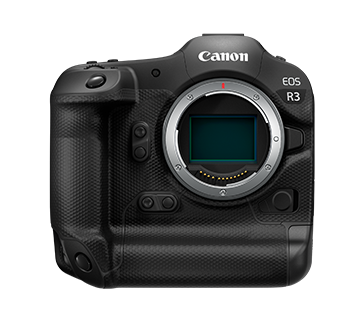
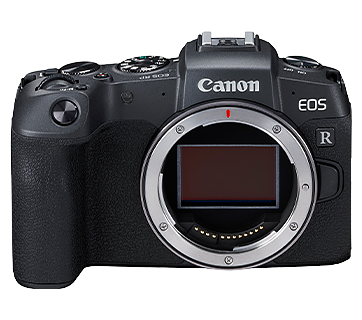
The Canon EOS R3 and Canon EOS RP are both full-frame mirrorless cameras from Canon, but they cater to vastly different audiences within the photography community. The EOS R3 is positioned as a flagship camera, primarily targeting professionals and serious enthusiasts who require superior performance in high-speed and challenging environments. Meanwhile, the EOS RP offers a more approachable option for hobbyists and beginners who seek great image quality without the hefty price tag associated with high-end specifications. These two models are frequently compared due to their shared RF lens mount and full-frame sensor technology, albeit targeting different user needs and budgets.
Specifications Comparison
Detailed Comparison
Image Quality
Both the Canon EOS R3 and RP showcase full-frame sensors, yet their image quality outputs differ somewhat due to megapixel count and ISO capabilities. The EOS R3 features a 24-megapixel sensor while the RP has a slightly higher 26-megapixel resolution. This offers the RP a marginal advantage in terms of capturing slightly more detail in standard imaging conditions. However, the advanced sensor architecture and ISO range on the R3, which expands between 100-102400 and can reach even 204800, give it superior performance in low-light situations. This is a significant factor for professionals who often find themselves shooting in less-than-ideal lighting. Overall, for general photography, the RP holds a slight edge in detail capture, but for low-light or high-dynamic-range scenarios, the R3 shines.
Autofocus System
When it comes to autofocus capabilities, the EOS R3 significantly outperforms the RP with its 1053 autofocus points compared to the RP's 4779. This means that the R3 offers a more comprehensive coverage and faster subject tracking, making it well-suited for sports or wildlife photography where split-second timing is crucial. Furthermore, the R3 features advanced subject detection technology including eye and facial recognition for stills and video, which can be a game changer for portrait photographers. In contrast, the RP, while still competent, lacks the advanced tracking and responsiveness that professional photographers often rely on. Thus, for those prioritizing an extensive and high-performance autofocus system, the winner is clear.
Video Capabilities
On the video front, the EOS R3 again takes the lead with its capability to shoot 4K at 120 frames per second, allowing for stunning slow-motion footage. It also supports various high-frame-rate settings, making it ideal for filmmakers and content creators who want to push the limits of their visual storytelling. In contrast, the EOS RP is limited to 4K at 24 fps, which while adequate for many casual users, lacks the high-performance features found in the R3. This makes the R3 not only a superior choice for stills but also for video-centric projects where higher frame rates and resolutions are desired.
Build & Ergonomics
The EOS R3 boasts a robust build quality with weather sealing, making it suitable for rigorous conditions, while the EOS RP, being more compact and lighter, is designed for portability and ease of use. Weighing in at 1015 grams, the R3 is significantly heavier compared to the 485 grams of the RP, which could be a deciding factor for photographers who prioritize low weight for extended shooting sessions. However, the R3's heft provides a solid grip and balances well with larger lenses. Both cameras feature electronic viewfinders, but the R3's higher resolution and larger screen provide a clearer and more immersive viewing experience, which is critical for serious shooting.
Battery & Storage
Battery life is another essential aspect that sets these two models apart. The R3 provides an impressive 760 shots per charge, making it far superior for long shoots or events. The RP's battery life, at just 250 shots, may require additional batteries for extended use, especially during travel or outdoor shoots. Furthermore, the R3 supports faster CFexpress Type B cards, offering quicker writing speeds ideal for high-speed photography and video, while the RP uses SD cards which may be slower, particularly in burst shooting scenarios. This makes the R3 the clear winner for those needing longevity and performance from their camera's storage and battery capabilities.
Value for Money
When it comes to value for money, the EOS RP is hard to beat at its price point of $1299. It offers outstanding image quality, full-frame performance, and a lightweight design, making it an excellent choice for entry-level full-frame users. The R3, priced at $5999, incorporates a host of advanced features and superior performance but comes at a premium that may be prohibitive for many casual photographers. For someone on a budget or just starting out, the RP provides essential capabilities without overspending. However, for a professional seeking top-tier features, the R3's price may be justified given its performance benefits.
Lens Ecosystem
Both cameras share the Canon RF lens mount, which means users have access to a growing range of high-quality lenses designed specifically for these models. This is a significant plus for both systems, though the R3 may be paired more often with professional-grade glass, including Canon's extensive line of L-series lenses that cater to high-end usage. The RP, while still usable with the same lenses, may encourage users to opt for more affordable options, especially to keep within budget constraints. Thus, while both systems are versatile, the high-end options available for the R3 give it an edge for those looking to maximize their investment.
Our Verdict
In summary, while both the Canon EOS R3 and RP have their strengths, the R3 emerges victorious in most categories that matter to professional photographers, including image quality in low light, autofocus capabilities, video performance, build quality, and battery life. However, the RP offers exceptional value for entry-level users and those shooting primarily in well-lit environments or as hobbyists. The choice ultimately hinges on the user's needs: the R3 is suited for professionals who require advanced features and performance, whereas the RP appeals best to those seeking affordability without sacrificing the benefits of a full-frame system.
Canon EOS R3
Canon EOS RP
Also Compare
Frequently Asked Questions
Is the Canon EOS R3 worth the investment?
For professionals or serious enthusiasts needing top-notch performance and features like high-speed shooting, advanced autofocus, and superior video, the R3 is a worthy investment. Its capabilities justify the price, particularly for demanding shooting conditions.
Which camera is better for beginners, the EOS RP or EOS R3?
The EOS RP is more suitable for beginners due to its user-friendly design, lower price, and sufficient performance that covers most basic photography needs. It's a great way to enter full-frame photography without a large financial commitment.
How does the low-light performance compare?
The EOS R3 excels in low-light conditions due to its wider ISO range and better sensor technology. While the RP provides decent performance, the R3's capabilities are significantly superior, making it better suited for challenging lighting scenarios.
Can the EOS RP shoot 4K video?
Yes, the EOS RP can shoot 4K video, but at only 24 fps. This limitation makes it less versatile than the R3, which offers 4K at up to 120 fps, providing much greater creative options for video shooters.
Do both models support the same lenses?
Yes, both the EOS R3 and RP use the Canon RF lens mount, so they can utilize the same range of lenses. However, pairing them with higher-end lenses will typically align with the R3's professional capabilities.