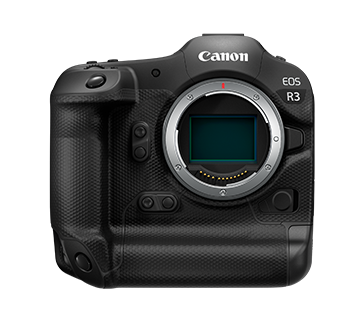
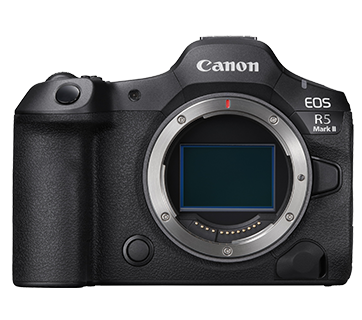
The Canon EOS R3 and Canon EOS R5 Mark II are two of Canon's flagship full-frame mirrorless cameras, each catering to professional photographers and serious enthusiasts. The R3, launched in 2021, is particularly geared towards sports and wildlife photography with its impressive burst shooting speed and robust autofocus system. Meanwhile, the R5 Mark II, released in 2024, focuses on high-resolution imagery and video capabilities, making it an ideal choice for those in need of detailed captures and creative flexibility. Buyers often find themselves weighing the advantages of lower resolutions and high-speed shooting against higher megapixel counts and advanced video features, leading to a close examination of each model's strengths and weaknesses.
Specifications Comparison
Detailed Comparison
Image Quality
In terms of image quality, the Canon EOS R5 Mark II boasts a substantial advantage with its 45 megapixels, allowing for highly detailed images suitable for large prints and cropping. The higher resolution is especially beneficial for landscape and studio photographers who prioritize detail and flexibility in post-processing. The R3, while featuring a lower resolution of 24 megapixels, still delivers exceptional image quality, particularly in low-light situations due to its broader ISO range that stretches up to 204800, compared to the R5 Mark II's maximum of 51200. This means that for scenarios requiring steep ISO adjustments, such as indoor sports events or concerts, the R3 will likely provide cleaner images with less noise.
However, the color depth and dynamic range of both cameras are commendable, making them capable of producing stunning images. Photographers who shoot JPEGs may find the R3's color rendering appealing, especially under varied lighting conditions, while those favoring RAW formats will enjoy the greater flexibility of the R5 Mark II for high-resolution edits.
Overall, both cameras provide excellent image quality but cater to different needs based on resolution versus performance in challenging conditions.
Autofocus System
The Canon EOS R3 excels in its autofocus system with an impressive 1053 autofocus points, allowing for incredibly precise tracking of fast-moving subjects - a crucial feature for sports and wildlife photographers. It also includes Canon's Dual Pixel CMOS AF technology and advanced subject recognition, which ensures that focus is maintained on subjects even amidst challenging scenarios.
On the other hand, the R5 Mark II offers a whopping 5850 autofocus points, which aids in achieving accuracy and reliability. While it provides solid performance, especially in a still-life or landscape setting, the R3's system is specifically engineered for rapid tracking, giving it an edge during fast-paced shoots. The R3's autofocus system is incredibly responsive with features like eye detection, which is vital for portrait and wildlife photography.
In conclusion, while both autofocus systems are designed to meet high expectations, the R3 clearly dominates with its out-of-this-world capabilities tailored for high-speed photography.
Video Capabilities
The Canon EOS R5 Mark II is a powerhouse when it comes to video capabilities, offering 8K footage at 30p and 4K at up to 120p, allowing videographers to experiment with high-resolution video and slow-motion effects. Its advanced heat management system further ensures extended filming times in high-resolution formats, making it favorable for filmmakers engaging in serious video work. In addition, the R5 Mark II supports Canon Log 3, which provides extended dynamic range, essential for color grading in post-production.
The R3, while it can also shoot 4K at a maximum of 120p, lacks 8K video capabilities, making it less adaptable to filmmakers looking for the highest resolutions. However, professionals focused on high-speed sports videos will appreciate the R3's ability to record continuously at 30 fps and its impressive autofocus during video recording, which ensures subjects remain sharp and in focus.
Ultimately, the R5 Mark II stands out as the superior choice for video professionals, while the R3 provides excellent specifications for those prioritizing high-speed, action-oriented footage.
Build & Ergonomics
Both the Canon EOS R3 and R5 Mark II are built to withstand tough conditions, featuring weather sealing that ensures durability in adverse weather. However, the R3 is heftier at 1015 grams compared to the more lightweight R5 Mark II at 746 grams, which may impact portability when carrying for extended periods. Despite its heavier weight, the R3 offers a larger grip that many professionals find comfortable during long shoots, especially in portrait orientation.
The dimensions of the R3 (150 x 143 x 87 mm) contribute to its robust feel, while the R5 Mark II is more compact (138 x 98 x 88 mm), making it easier to handle in tight spaces. Both cameras feature a fully articulating touchscreen; however, the R3 has a higher resolution screen with 4,150,000 dots compared to the R5 Mark II's 2,100,000 dots. This difference allows for clearer previews and better usability, particularly when shooting in bright conditions.
In terms of ergonomics, the R3 may suit professionals who prioritize grip and usability during extended sessions, while the R5 Mark II appeals to those who favor a lighter, more compact design.
Battery & Storage
Battery life is an important feature for both models, and the Canon EOS R3 leads in this aspect with a rated capacity of approximately 760 shots. This extended battery life makes the R3 particularly appealing for photographers venturing into long events, such as weddings or multi-day fieldwork. The R5 Mark II, while still respectable, has a lower capacity at 540 shots, which may necessitate carrying extra batteries for extended use, especially in precarious situations.
Both cameras utilize the Canon RF mount and support dual card slots, which allow for high-speed storage and redundancy, essential for professional workflows. The R3 supports CFexpress Type B cards, optimizing it for high-speed continuous shooting, while the R5 Mark II also caters to fast storage solutions, although users should ensure compatibility based on the card used.
Overall, the R3 is a better choice for endurance in the field, while the R5 Mark II's battery life may be adequate for more casual shooters who don't require extensive shooting sessions.
Value for Money
In terms of price, the Canon EOS R5 Mark II appeals to those on a tighter budget at $4299, while the R3 is positioned at $5999, reflecting its professional-grade features tailored for high-speed photography. This price difference makes the R5 Mark II an attractive option for hobbyists and those more interested in high-resolution imaging combined with solid performance.
Our Verdict
Ultimately, while both the Canon EOS R3 and R5 Mark II are outstanding cameras, the Canon EOS R3 emerges as the overall winner due to its autofocus performance, build quality, and battery life, which are critical for professionals engaged in dynamic environments. It is particularly well-suited for sports and action photographers. Meanwhile, the R5 Mark II's advantages in resolution and video features make it highly appealing for those focusing on detailed imagery and high-quality video production. Buyers should choose based on their specific needs; the R3 for speed and responsiveness, and the R5 Mark II for its versatility in high-resolution and video capabilities.
Canon EOS R3
Canon EOS R5 Mark II
Also Compare
Frequently Asked Questions
Which camera is better for sports photography?
The Canon EOS R3 is better suited for sports photography due to its superior autofocus system, fast burst shooting, and excellent battery life, allowing you to shoot continuously without interruptions.
Is the R5 Mark II worth the extra cost over the R3?
The R5 Mark II is not necessarily a better value unless you require high-resolution images and advanced video features. For those who prioritize speed and durability, the R3 offers better performance for the price.
How do the video features compare?
The R5 Mark II has a significant edge in video capabilities with 8K recording and better thermal management for prolonged shoots, while the R3 offers 4K 120p and features targeted more towards high-speed recording.
Which camera has better image stabilization?
While both cameras feature outstanding stabilization, the R5 Mark II has a slight edge with 8.5 stops compared to the 8 stops on the R3, making it slightly better for handheld shots.
Are both cameras weather-sealed?
Yes, both the Canon EOS R3 and R5 Mark II are weather-sealed, ensuring durability in a variety of shooting conditions.