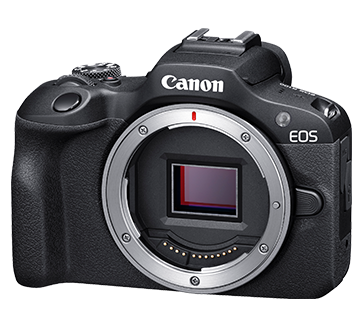
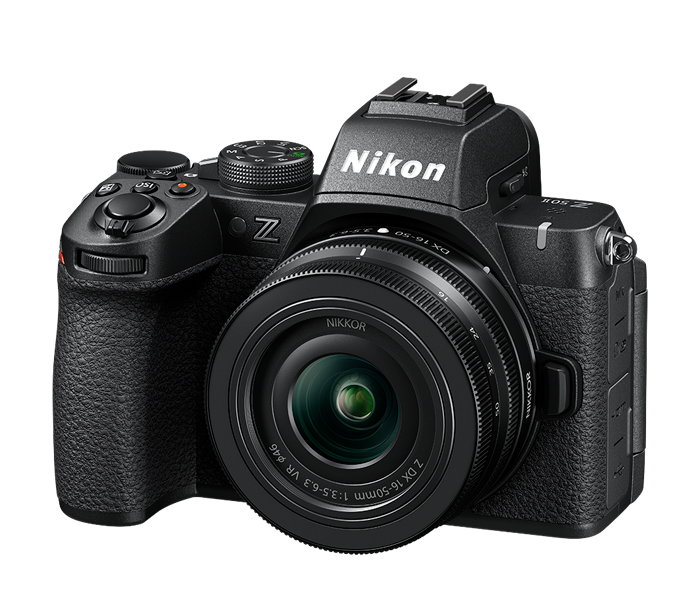
The Canon EOS R100 and Nikon Z50II are two compelling options for enthusiasts and beginner photographers looking to venture into the world of mirrorless cameras. With both models offering APS-C sensors and similar price points, they often find themselves in the same consideration set for users seeking lightweight, versatile systems for photography and light video work. Choosing between the two can come down to specific features such as image quality, autofocus performance, and overall usability, which can greatly influence a buyer's photographic experience.
Key differentiators between the two include the megapixel count, the autofocus capabilities, and the design and ergonomics. While both cameras provide robust features ideal for beginners to semi-professionals, understanding these differences can make it easier for buyers to identify which camera aligns best with their personal needs and shooting styles.
Specifications Comparison
Detailed Comparison
Image Quality
The Canon EOS R100 features a 24-megapixel APS-C sensor which offers a slight edge over the Nikon Z50II's 21-megapixel sensor. This higher resolution can be particularly beneficial for landscape and architectural photography, where capturing fine details is essential. Both cameras deliver impressive image quality at their native ISOs, but the extended ISO range of the Z50II, which goes as high as 204800, provides greater flexibility for low-light situations, making it an advantageous option for users who frequently shoot in challenging lighting.
Additionally, both cameras utilize electronic viewfinders and LCDs with identical dot counts (1,040,000), but the R100's screen is slightly smaller at 3 inches, while the Z50II offers a larger 3.2-inch display. The larger screen may enhance the shooting experience by providing a more comfortable viewing area. It is also worth noting that both cameras lack in-body stabilization, which can affect the overall sharpness of handheld shots at slower shutter speeds.
In summary, while the R100 has a higher megapixel count, the Z50II compensates with its superior ISO range and larger screen, offering practical benefits that can influence image quality in real-world scenarios.
Autofocus System
The autofocus system is crucial for capturing sharp and well-timed images, and here the Nikon Z50II shines with its 231 autofocus points compared to the Canon EOS R100's 143 points. The Z50II's more extensive coverage aids in tracking moving subjects and improves overall accuracy, which can be particularly advantageous for sports and wildlife photography.
Both cameras employ phase-detection autofocus technology, and while both systems perform well in decent lighting conditions, the Z50II is likely to offer a more consistent experience in challenging environments due to its greater number of autofocus points. Canon does have a reputation for delivering user-friendly systems, but in head-to-head autofocus scenarios, the Z50II's performance typically excels.
Furthermore, the improved autofocus features of the Nikon may appeal to enthusiasts looking for responsive focus tracking when photographing fast-moving subjects, which further solidifies its advantage in this category.
Video Capabilities
Both the Canon EOS R100 and Nikon Z50II offer solid video recording features, making them appealing choices for hybrid shooters. The R100 provides video recording capabilities up to Full HD resolution, which is adequate for casual users. However, for users seeking higher frame rates and resolutions, the Z50II supports 4K recording, which significantly elevates its appeal for those interested in high-quality video production.
In terms of frame rates, the Z50II can shoot at up to 11 frames per second, making it suitable for capturing fast-moving subjects in video as well. In contrast, the R100's max frame rate of 6.5 fps may limit its capabilities in dynamic shooting unless processing speed is less of a concern.
Both cameras lack in-camera stabilization, meaning users seeking smooth video will need to invest in stabilized lenses or external gimbals. Overall, for video enthusiasts or those looking to create content, the Nikon Z50II offers superior capabilities not just in resolution but also in performance.
Build & Ergonomics
In terms of build quality, the Nikon Z50II features weather sealing, providing added durability and protection against the elements. This can be a significant advantage for outdoor photographers or those who often shoot in varying weather conditions. The Canon EOS R100, while lightweight and compact, lacks this weather sealing which may deter those looking for a robust camera for outdoor conditions.
From an ergonomic standpoint, the Nikon Z50II is slightly larger and heavier at 550g, but this additional weight can enhance stability, particularly when using larger lenses. Conversely, the R100's smaller, lighter design makes it highly portable and easier to handle for longer shooting sessions, which can be appealing for travel photographers.
Both models sport electronic viewfinders, but the comfort of handling is subjective based on personal preferences. Users may prefer the sturdier feel of the Z50II, while others might appreciate the R100's lighter weight for portability. Understanding individual usage scenarios will help buyers lean towards the option that suits their shooting style best.
Battery & Storage
When it comes to battery life, the Nikon Z50II offers a rating of approximately 250 shots per charge, which is relatively standard for mirrorless cameras. On the other hand, the Canon EOS R100 has not disclosed an explicit battery rating, but it has been reported to perform reasonably when considering its smaller size and energy consumption, ideal for casual shooting.
Both cameras utilize their respective proprietary battery systems, and while the R100 is compact, users may find themselves needing to carry extra batteries for extended shooting periods. Both systems support SD card storage, which is common in this segment, but particularly high-performance cards are advised for video recording with the Z50II to accommodate its 4K capabilities.
In practical use, those who require longer shooting sessions without frequent recharging might lean towards the Nikon Z50II, especially combined with its performance during high-frame-rate video shots, as this can deplete battery life faster. Thus, understanding one's shooting style will be key in determining the better choice for battery needs.
Value for Money
At a price of around $480, the Canon EOS R100 represents a solid entry point into full-frame mirrorless photography without breaking the bank. Its comprehensive features and ease of use make it a great choice for budding photographers or anyone seeking a lightweight camera for casual use. However, while it may come with fewer advanced features than its counterpart, it delivers good image quality and performance for its price point.
On the other hand, the Nikon Z50II, being more expensive than the R100, with price details often aligning around $800-$900, provides enhanced capabilities in autofocus, video quality, and build quality, which can justify the higher cost for dedicated photography enthusiasts and content creators focused on versatility.
Ultimately, for those prioritizing a budget-friendly, straightforward camera for casual photography, the R100 is exceptional. For users who foresee a need for high-resolution video capabilities, resilient build, and better autofocus performance, the Z50II's higher price point presents a valuable investment. The choice boils down to what features a user values most in their photographic journey.
Our Verdict
Overall, while both the Canon EOS R100 and Nikon Z50II have their respective strengths, the Nikon Z50II emerges as the winner for its superior autofocus system, 4K video capabilities, and rugged build quality. Photographers who frequently shoot in dynamic or challenging environments, or those looking to expand into more advanced photography or videography, will find the Z50II to be a more suitable choice. Conversely, the Canon EOS R100 presents excellent value for casual photographers or beginners who want a lightweight and user-friendly camera for everyday capturing purposes, making it a strong candidate for those not requiring advanced features. Each model has distinct advantages, and the selection ultimately falls on the buyer's specific needs and budget.
Canon EOS R100
Nikon Z50II
Also Compare
Frequently Asked Questions
Which camera has better low-light performance?
The Nikon Z50II has a higher extended ISO range of 100-51200 (expandable to 204800), making it better suited for low-light photography compared to the Canon EOS R100, which ranges from 100-12800.
Is the Nikon Z50II worth the extra money?
If you prioritize features like better autofocus, 4K video, and weather sealing, the Nikon Z50II's higher price is justified. However, for casual shooting, the Canon EOS R100 represents great value.
Can both cameras shoot 4K video?
No, only the Nikon Z50II supports 4K video recording. The Canon EOS R100 is limited to Full HD 1080p recording.
How do the sizes of the two cameras compare?
The Canon EOS R100 is smaller and lighter at 356g and dimensions of 116 x 86 x 69 mm, while the Nikon Z50II is heavier at 550g and measures 127 x 97 x 67 mm.
Which camera has a better autofocus system?
The Nikon Z50II has a more advanced autofocus system with 231 points compared to the Canon EOS R100's 143 points, providing better subject tracking and accuracy.