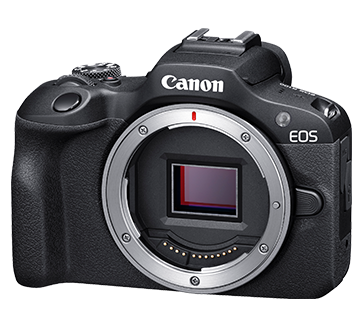

The Canon EOS R100 and the Fujifilm X100VI represent two very different approaches to modern photography, making them popular choices for enthusiasts and professionals alike. The Canon EOS R100 is a budget-friendly mirrorless camera aimed at beginners and those seeking a lightweight option, while the Fujifilm X100VI appeals to advanced users who prioritize high image quality and extensive features. These cameras are often compared due to their similar target demographics but markedly different specifications and capabilities, creating a dilemma for potential buyers in deciding which system best meets their photographic needs.
Key differentiators include sensor resolution, autofocus capability, video performance, and overall design. The R100 offers a more accessible price point with respectable performance for casual shooting, whereas the X100VI, with its exciting retro design and advanced features, caters to those willing to invest in quality for superior operational and imaging outcomes. In this comparison, we will delve into multiple aspects to determine how these cameras stack up against one another.
Specifications Comparison
Detailed Comparison
Image Quality
Image quality is primarily determined by sensor performance and resolution. The Canon EOS R100 sports a 24-megapixel APS-C sensor, which is capable of delivering excellent general image quality for everyday photography. Its iso range stretches from 100 to 12800, providing decent low-light performance for various shooting conditions. However, compared to the Fujifilm X100VI, the R100 may not perform as well in challenging lighting situations due to its lower maximum ISO capability and resolution.
On the other hand, the Fujifilm X100VI features a 40-megapixel APS-C sensor with an expanded ISO range of 64 to 51200. This allows for significantly higher detail capture and improved low-light performance. The X100VI is recognized for its exceptional dynamic range and color rendering, typical of Fujifilm's filmic approach to image processing. The higher resolution also offers more flexibility for cropping, making it a superior option for detailed landscape or portrait photography.
Taking all this into account, the Fujifilm X100VI excels in image quality, especially in diverse lighting conditions, while the Canon EOS R100 provides good quality for casual use.
Autofocus System
Autofocus performance can significantly impact a photographer's experience, particularly in capturing fast-moving subjects or in difficult lighting conditions. The Canon EOS R100 features 143 autofocus points, which is a promising number for a beginner-level camera. However, it lacks advanced autofocus technology such as Dual Pixel AF, which can hinder its focus speed and accuracy compared to more sophisticated systems.
Conversely, the Fujifilm X100VI boasts a robust autofocus system with 425 points that utilizes both phase detection and contrast detection. This combination provides quicker and more reliable focusing, especially beneficial for dynamic scenes. The X100VI also includes features like face and eye detection, making it a preferred choice for portrait photographers.
Thus, for those prioritizing fast, reliable autofocus performance, the Fujifilm X100VI emerges as the clear winner in this category.
Video Capabilities
In the realm of video recording, the Canon EOS R100 allows for recording 4K video at 24fps and 1080p at 60fps. While this provides versatility for video creators, its lack of in-body stabilization can lead to shaky footage, especially during handheld shooting.
On the other hand, the Fujifilm X100VI offers superior video capabilities by capturing 4K resolution at up to 30fps and supports F-Log capture for enhanced post-production flexibility. Additionally, with 6 stops of in-body stabilization, the X100VI ensures smoother footage, a crucial factor for videographers who frequently shoot handheld. These enhancements position the X100VI as a more well-rounded choice for video enthusiasts.
For videography, the Fujifilm X100VI clearly offers more advanced features and capabilities compared to the Canon R100.
Build & Ergonomics
Build quality and ergonomics are essential for practical usability. The Canon EOS R100 is lightweight and compact, weighing in at 356 grams and having dimensions catering well to portability. Its design emphasizes simplicity, which is ideal for beginners who want a straightforward user interface.
In contrast, the Fujifilm X100VI is slightly heavier at 521 grams but features a more premium construction with weather sealing. Its vintage-inspired design offers a tactile experience, including physical dials for settings adjustments. The controls are designed for intuitive access, making it appealing to those who appreciate manual photography.
Overall, while the lightness of the R100 may be preferable for casual shooters, the X100VI's superior build quality and user ergonomics make it a champion for serious photographers.
Battery & Storage
When it comes to battery life, the Canon EOS R100 can capture approximately 300 shots on a single charge, which is adequate for casual usage. However, for more extensive shooting sessions, the lower battery capacity might become a concern.
The Fujifilm X100VI significantly outperforms the R100 with a battery life rated at around 450 shots. This extended battery life allows for longer shoots without the need for frequent recharging or changing batteries, especially beneficial for travel and events.
In terms of storage, both cameras accept SD cards, though the X100VI may benefit from faster read and write speeds due to its signaling capabilities. This means the X100VI is less likely to suffer from slow write times when using burst mode features for continuous photography.
Thus, the Fujifilm X100VI clearly stands out with its superior battery life, making it more suitable for lengthy shooting outings.
Value for Money
Value for money is often a deciding factor for potential buyers. The Canon EOS R100 is priced at around $480, which makes it highly accessible for newcomers to photography. It offers a good entry point into the Canon system, allowing users to explore the RF lens ecosystem without a substantial financial commitment.
The Fujifilm X100VI's price of $1599 places it firmly in the premium segment. However, this camera provides advanced features, superior image quality, and the benefits of an established brand known for its exceptional color science and film emulation capabilities. While it may be seen as expensive, many photographers find its performance and build quality justifies the price.
In terms of overall value, the Canon EOS R100 serves well as a budget-friendly option for beginners, while the Fujifilm X100VI offers a more long-term investment for serious enthusiasts or professionals looking for high-quality results.
Our Verdict
Overall, while both the Canon EOS R100 and the Fujifilm X100VI serve distinct market segments, the Fujifilm X100VI emerges as the winner in this comparison due to its advanced imaging capabilities, superior autofocus performance, and excellent build quality. The additional investment in the X100VI is justified for serious photographers who value image quality and robust features. In contrast, the Canon EOS R100 is an excellent entry-level camera that offers substantial value for casual photographers or those new to the craft, making it an ideal choice for those on a tighter budget who prioritize ease of use without demanding advanced capabilities.
Canon EOS R100
Fujifilm X100VI
Also Compare
Frequently Asked Questions
Which camera is better for beginners?
The Canon EOS R100 is tailored for beginners due to its affordable price and user-friendly interface.
Is the Fujifilm X100VI worth the price?
Yes, the Fujifilm X100VI offers advanced features and superior image quality that many photographers find justifies the investment.
Can the Canon EOS R100 do 4K video?
Yes, the Canon EOS R100 can record 4K video, but it lacks stabilization which may affect the video quality.
Does the X100VI have in-body stabilization?
Yes, the Fujifilm X100VI features 6 stops of in-body stabilization, which helps produce smoother video and sharper images.
How do the viewfinders compare?
The Canon EOS R100 has an electronic viewfinder, while the Fujifilm X100VI offers both electronic and optical viewing options, giving more flexibility in different shooting environments.