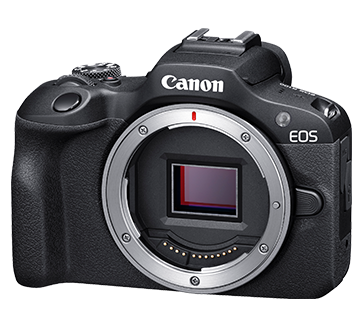

The Canon EOS R100 and Fujifilm X-H2S are two popular mirrorless cameras that often come up in discussions among photography enthusiasts and professional content creators. Both are designed for users seeking high-quality imaging in a compact form factor, but they cater to slightly different audiences. The Canon EOS R100 targets entry-level photographers and those looking for ease of use at an affordable price, while the Fujifilm X-H2S edges towards more advanced users with its rapid shooting capabilities and enhanced features. Key differentiators include sensor specifications, autofocus capabilities, video performance, and ergonomics, which play a pivotal role in a buyer's choice between the two models.
Specifications Comparison
Detailed Comparison
Image Quality
In terms of image quality, the Fujifilm X-H2S provides a slight edge with its 26 megapixels compared to the Canon EOS R100's 24 megapixels. Although both cameras utilize APS-C sensors, the larger sensor size in the X-H2S (23.5 x 15.6 mm) can lead to better light capture and dynamic range, especially in challenging lighting conditions. The Fujifilm model also has an extended ISO range, allowing photos to be taken in lower light conditions with reduced noise. The Canon's ISO performance is good, but it caps at ISO 12800 without the expanded range that Fujifilm offers, which can be advantageous for photographers who frequently shoot in variably lit environments. Ultimately, while both can produce excellent images, the enhanced specifications of the X-H2S make it superior for demanding shoots.
Autofocus System
The Fujifilm X-H2S boasts an impressive autofocus system with 425 autofocus points, significantly outmatching the Canon EOS R100's 143 points. This dense autofocus grid, combined with the advanced algorithms Fujifilm utilizes, provides faster and more accurate focusing, particularly beneficial for fast-moving subjects, making it ideal for sports and wildlife photography. The Canon, while competent for casual and portrait photography, may struggle in demanding focus scenarios, leading to missed opportunities. Furthermore, the X-H2S also offers enhanced tracking features and face/eye detection, providing a more professional edge in autofocus capabilities.
Video Capabilities
When it comes to video capabilities, the Fujifilm X-H2S stands out with its ability to record 4K video at 60 frames per second (fps), catering well to videographers looking for high-frame-rate options for smooth motion recording. The Canon EOS R100, on the other hand, lacks advanced video recording features and primarily targets still photography. The absence of significant stabilization in the Canon camera could result in shaky footage, while the X-H2S comes with in-body stabilization rated at 7 stops, which greatly enhances handheld shooting. For anyone whose primary focus is video performance, the X-H2S is the clear choice.
Build & Ergonomics
The Canon EOS R100 is lighter and more compact, weighing in at 356 grams and featuring dimensions of 116 x 86 x 69 mm, making it an excellent choice for travel and everyday carry. However, the Fujifilm X-H2S, which weighs 660 grams with a more substantial build at 136 x 93 x 95 mm, offers a tougher, more ergonomic design that feels more stable in hand, with ergonomics tailored for long shooting sessions. Furthermore, the X-H2S is weather-sealed, providing protection against light rain and dust, making it suitable for outdoor photography under varying conditions. While portability may favor the Canon, the build quality and robustness of the Fujifilm position it as a dependable tool for outdoor enthusiasts.
Battery & Storage
The battery life on the Fujifilm X-H2S is notable, offering around 580 shots per charge, which is advantageous for prolonged shooting sessions or when traveling without access to power sources. In contrast, the Canon EOS R100's battery performance may not be as robust, although specific numbers have not been detailed. Furthermore, both cameras utilize SD card storage, but the X-H2S supports higher-speed UHS-II cards, making it better suited for fast continuous shooting and 4K video recording. This slight edge in battery life and storage capabilities in the Fujifilm adds to its overall appeal for serious photographers and videographers.
Value for Money
In terms of pricing, the Canon EOS R100 is outstandingly affordable at around $480, making it accessible for beginners or casual photographers. It offers a solid entry point into the mirrorless category, featuring essential photography and video capabilities. The Fujifilm X-H2S, however, comes at a much higher price point of approximately $2499, reflecting its advanced features, professional build, and superior performance. Therefore, while the Canon is excellent value for entry-level users seeking simplicity, the Fujifilm X-H2S, although pricier, offers a more comprehensive package ideal for those serious about photography and videography. Hence, the best choice in terms of value will vary depending on the user's photographic goals and budget.
Our Verdict
In summary, while both the Canon EOS R100 and Fujifilm X-H2S have their strengths, the X-H2S ultimately prevails as the superior camera, especially for advanced users and those prioritizing video capabilities, autofocus performance, and build quality. However, for those just starting their photography journey or seeking a lightweight and budget-friendly option, the Canon EOS R100 serves as a compelling choice without overwhelming complexity. Therefore, the decision between these models will come down to specific use cases, with each catering well to its target demographic.
Canon EOS R100
Fujifilm X-H2S
Also Compare
Frequently Asked Questions
Which camera is better for beginners?
The Canon EOS R100 is more beginner-friendly due to its lower price point and simplicity of use, making it an excellent choice for those entering the world of photography.
Is the video quality significantly better on the Fujifilm X-H2S?
Yes, the Fujifilm X-H2S offers advanced video capabilities with 4K 60p recording, stabilization, and superior autofocus, making it a better choice for videographers.
How does the autofocus performance compare?
The Fujifilm X-H2S has a significantly superior autofocus system with 425 points and advanced tracking features, compared to the Canon R100's 143 points, making it ideal for fast-moving subjects.
Is the X-H2S worth its higher price?
For serious photographers and videographers, the Fujifilm X-H2S's advanced features, build quality, and performance make it worth the investment; however, casual users might find the Canon R100 sufficient.
Are both cameras weather-sealed?
No, only the Fujifilm X-H2S is weather-sealed, providing additional protection for outdoor shooting, while the Canon EOS R100 lacks this feature.