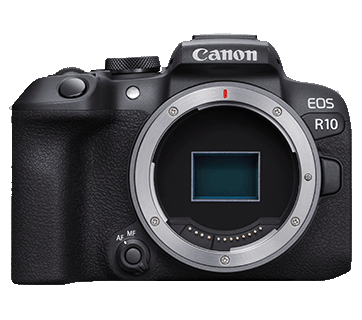
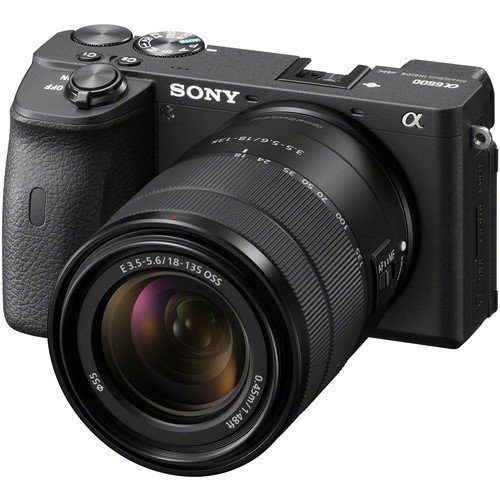
The Canon EOS R10 and the Sony A6600 are two highly regarded mirrorless cameras that often draw the attention of photography enthusiasts and videographers alike. Both target a similar market, appealing to those looking for high-quality APS-C sensor systems that excel in versatility and performance. Canon and Sony are long-standing competitors, and potential buyers frequently find themselves weighing the advantages of each brand's technology, features, and usability for their specific needs. Key differentiators like autofocus systems, stabilization technology, and overall ergonomics play a significant role in these considerations.
Specifications Comparison
Detailed Comparison
Image Quality
Both the Canon EOS R10 and Sony A6600 boast 24-megapixel APS-C sensors, capable of delivering excellent image quality with fine detail and vibrant colors. The EOS R10's ISO range of 100-32000 performs well in a variety of lighting conditions, while the A6600's slightly broader ISO range expands up to 102400, offering more flexibility in low-light scenarios. However, in practical reviews, both cameras produce relatively similar image quality at base ISO, with the A6600 slightly edged out in extreme low-light performance due to its higher expandability. Users seeking clean images at high ISO values in darker environments may appreciate the A6600's capabilities. Consequently, while both cameras perform admirably, the A6600's extended range gives it a slight advantage.
Autofocus System
The autofocus systems of both cameras are impressive, yet they employ different methodologies. The Canon EOS R10 features an advanced Dual Pixel AF system with an astounding 651 autofocus points, capable of tracking even the smallest subjects quickly and accurately. On the other hand, the Sony A6600 utilizes 425 phase-detection points, which, while fewer, still maintains a robust focusing performance. The R10 is particularly appealing for fast-paced photography scenarios, including sports and wildlife, due to its higher number of autofocus points and superior tracking capabilities. Users transitioning from DSLR systems might find the Canon's approach more intuitive. Therefore, when it comes to autofocus, the EOS R10's superior system suits fast-moving subjects better.
Video Capabilities
For video enthusiasts, both the Canon EOS R10 and Sony A6600 support 4K recording at 30 frames per second, providing solid options for filmmakers. The A6600, however, comes equipped with sensor-shift stabilization, which greatly helps reduce camera shake, making it advantageous for handheld shooting. The R10 lacks in-body stabilization, placing it at a disadvantage for videographers who often shoot in dynamic environments. Both cameras support advanced video features like focus peaking and log profiles, but the A6600's stabilization element can be a game-changer for those capturing action sequences or running-and-gunning style footage. Overall, the A6600 offers a more versatile video shooting experience.
Build & Ergonomics
When it comes to build quality and ergonomics, the Sony A6600 has the upper hand with its weather-sealed body, catering to outdoor and inclement condition shooting. Weighing in at 503 grams compared to the Canon's relatively lighter 426 grams, the A6600 feels more substantial and durable, although this added weight may deter some users. Both cameras feature electronic viewfinders and a 3-inch screen, but the A6600's LCD display features a slightly higher resolution, delivering crisp information during shooting. The ease of connectivity and interface preferences also play a role, with many users finding the Sony menu systems more streamlined, while others appreciate the more traditional layout of the Canon. However, for those who regularly shoot in varying weather conditions, the A6600's sturdiness may prove invaluable.
Battery & Storage
The A6600 offers significantly better battery life, rated at 810 shots per charge compared to the R10's 450 shots. This makes the A6600 a better choice for extended shooting sessions, such as events or travel photography, where charging opportunities might be limited. Both cameras utilize SD card storage, which is standard across the mirrorless category, but the Sony A6600's longer battery life can be a deciding factor for many users who prioritize endurance in the field. Therefore, when taking battery performance into consideration, the A6600 stands out remarkably.
Value for Money
The Canon EOS R10, priced at $979, provides an impressive range of features for a lower price point, especially appealing for budding photographers or those upgrading from entry-level models. On the contrary, the Sony A6600, priced at $1400, carries a higher cost, but offers superior features, particularly for users who demand advanced video capabilities, longer battery life, and weather sealing. The price differential is justified for those who require high-performance features in more demanding shooting environments. All things considered, the R10 provides excellent value for its price, while the A6600 appeals to professionals searching for versatility and durability.
Lens Ecosystem
Both Canon and Sony have substantial lens ecosystems. Canon's RF mount is relatively new and still expanding, but it offers a promising selection of high-quality lenses. Conversely, the Sony E mount has been established for a longer period, with a broader array of lenses available for various needs, from wide angles to fast primes. For users seeking extensive options right out of the box, Sony holds the advantage. However, Canon's lineup continues to grow rapidly, catering to new users. A detailed lens system can greatly affect a photographer's final decision, depending on the specific lenses they wish to use with their camera.
Our Verdict
Overall, the Sony A6600 emerges as the winner in this comparison due to its superior video capabilities, robust build, and enhanced battery life. While the Canon EOS R10 excels in autofocus performance and offers great value for those new to serious photography, the A6600's capabilities make it more suitable for advanced users who may be interested in videography and outdoor shooting scenarios. For casual users looking for an affordable option, the R10 is a fantastic choice, but professionals and those seeking a more comprehensive shooting experience would benefit from investing in the A6600.
Canon EOS R10
Sony A6600
Also Compare
Frequently Asked Questions
Which camera is better for beginner photographers?
The Canon EOS R10 may be the better choice for beginners due to its lower price point and intuitive autofocus system, making it accessible and user-friendly.
Which camera does better in low light?
The Sony A6600 has an expandable ISO range up to 102400, allowing for better performance in low-light situations compared to the Canon R10.
Is stabilization important for videography?
Yes, stabilization is crucial for smooth video capture. The A6600's in-body stabilization provides a significant advantage over the R10, making it more suitable for handheld video shooting.
How does the autofocus compare for action photography?
The Canon EOS R10 has a superior autofocus system with 651 points, making it more adept at tracking fast-moving subjects compared to the A6600's 425 points.
What about lens compatibility?
The Sony A6600 has a more extensive lens ecosystem available due to the Sony E mount's maturity, providing users with a greater variety of lens options.