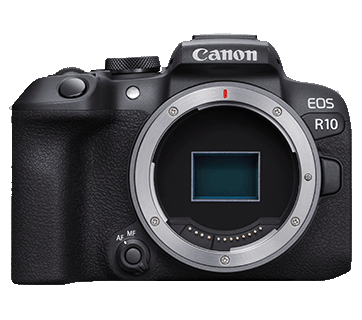

The Canon EOS R10 and the Fujifilm X100VI cater to photographers seeking high-quality images in compact forms, each with their unique strengths. The EOS R10, a mirrorless camera, is an appealing choice for those looking for versatility and a robust autofocus system. Meanwhile, the X100VI, a fixed-lens camera, stands out with its premium build quality and impressive image resolution, making it a favored option for street and travel photographers. Buyers commonly compare these two models to determine which is better suited for their specific photography styles and needs, examining aspects like image quality, autofocus, video capabilities, and overall value.
Specifications Comparison
Detailed Comparison
Image Quality
When it comes to image quality, the Fujifilm X100VI takes the lead with a 40-megapixel APS-C sensor compared to the Canon EOS R10's 24 megapixels. This higher resolution enables the X100VI to capture more detail, making it ideal for larger prints or cropping without losing fidelity. Furthermore, the X100VI has an extended ISO range that goes from 64 to 51,200, allowing for superior low-light performance. In contrast, the R10's ISO range tops out at 32,000, which is still commendable but slightly less versatile in extremely low-light conditions.
Additionally, the X100VI's sensor is paired with Fujifilm's renowned film simulations, providing a unique color rendering that many photographers appreciate for its artistic qualities. Meanwhile, the Canon's color reproduction is also excellent, but it tends to offer a more neutral palette. The overall tonal depth and dynamic range of the X100VI will generally provide a slight edge for advanced users who demand the best possible image quality.
Given these factors, while both cameras can produce stunning images, the superior resolution and low-light performance of the Fujifilm X100VI commend it as the winner in this category.
Autofocus System
The autofocus systems of the Canon EOS R10 and Fujifilm X100VI differ significantly, with the R10 boasting an impressive 651 autofocus points, compared to 425 on the X100VI. This expansive focus point array allows the R10 to more effectively track moving subjects, making it a better choice for action or wildlife photography. Additionally, Canon's Dual Pixel autofocus technology is known for its speed and accuracy, which is especially beneficial in fast-paced shooting scenarios such as sports or candid moments.
The X100VI, while featuring a capable autofocus system, has fewer points and generally operates at a slower frame rate, peaking at 11fps compared to the R10's 15fps burst speed. That said, Fujifilm has made significant advancements in their autofocus technology, offering solid performance for most typical photography needs, such as portraits and street photography.
Overall, the Canon EOS R10's superior autofocus capabilities provide it an edge in this comparison, particularly for users who require fast and reliable subject tracking.
Video Capabilities
In terms of video capabilities, the Canon EOS R10 supports 4K video recording at 30 frames per second, which is suitable for most videography needs. It also provides various frame rate options for Full HD recording, making it versatile for content creators. However, it lacks in-body stabilization, which can result in shaky footage unless used on a tripod or gimbal.
On the other hand, the Fujifilm X100VI excels with its 6-stop in-body stabilization, significantly aiding handheld shooting and providing smoother video footage under various conditions. Despite being primarily a photography-focused device, the X100VI has substantial video features that can cater well to casual videographers, especially those who prioritize stabilized footage in their work.
Thus, while both cameras offer good video quality, the X100VI's stabilization system gives it a distinct advantage for users focused on video, crowning it the winner in this category.
Build & Ergonomics
When it comes to build quality, the Fujifilm X100VI is designed with a premium feel and a traditional rangefinder-style body, appealing to users who appreciate tactile controls and a vintage aesthetic. Its smaller, more compact size (128 x 75 x 55 mm) allows for easy portability, making it an excellent choice for street photographers and travelers. The additional option of an optical viewfinder also offers a unique shooting experience that some users may prefer.
Conversely, the Canon EOS R10 is larger and heavier (426g) than the X100VI (521g), which may make it less appealing for photographers seeking a lightweight solution. However, it does provide a fully articulating touchscreen, beneficial for vlogging and shooting at various angles. The button layout and grip of the R10 are user-friendly, and its electronic viewfinder offers a clear and detailed preview of images.
In terms of ergonomics, both cameras have their strengths, but the X100VI's superior build quality and compact dimensions give it an edge for users looking for a portable option.
Battery & Storage
Both cameras have a similar battery life, rated at approximately 450 shots on a single charge, providing sufficient endurance for everyday shooting. However, the differences emerge in storage options and compatibility. The Canon EOS R10 uses the Canon RF mount, which opens up a wider range of lens options, enabling photographers to expand their creative possibilities. It uses a single SD card slot, compatible with UHS-II cards, maximizing read/write speeds for high-resolution images and 4K video recording.
In contrast, the Fujifilm X100VI features a fixed lens, which is not replaceable, but it has a built-in 23mm f/2 lens that offers excellent performance for street and documentary photography. The X100VI also uses a single SD card slot, albeit without the UHS-II capabilities, which might limit high-speed data transfer in certain scenarios.
While both cameras do offer commendable battery life and storage solutions, the R10's flexibility with its lens mount gives it a slight advantage in this comparison.
Value for Money
The Canon EOS R10 is priced at $979, making it a more budget-friendly option for those seeking a versatile entry-level mirrorless camera. It combines solid image quality, impressive autofocus, and a range of features ideal for various photography styles-all within a relatively accessible price point. Users looking for an entry into the RF mount ecosystem will find the R10 especially appealing, as it allows for future upgrades with interchangeable lenses.
In contrast, the Fujifilm X100VI is priced at $1599, which reflects its premium design and higher performance specs, such as the 40-megapixel sensor and innovative controls. While it is a fantastic camera, the price may deter budget-conscious photographers. The fixed lens nature limits versatility, primarily catering to those specifically looking for a compact, high-quality street shooter.
In summary, for those with budget constraints or those seeking broad functionality and upgrade paths, the Canon EOS R10 represents a superior value for money, making it the clear winner in this category.
Our Verdict
Overall, while the Canon EOS R10 excels in autofocus capabilities, value, and versatility, the Fujifilm X100VI ultimately wins due to its superior image quality, stabilization for video, and premium build quality. The X100VI is ideal for street and travel photographers who prioritize image quality in a compact format. Conversely, the R10 is an excellent choice for those seeking a flexible entry-level mirrorless system with great performance at a lower price. Each camera stands out in different scenarios, making the choice ultimately reliant on the specific needs of the photographer.
Canon EOS R10
Fujifilm X100VI
Also Compare
Frequently Asked Questions
Which camera is better for street photography?
The Fujifilm X100VI is often preferred for street photography due to its compact size, fixed lens, and unique film simulations that add character to images.
Can I change lenses on the R10?
Yes, the Canon EOS R10 has an interchangeable lens system (RF mount), allowing you to choose from a wide range of lenses tailored to your photography needs.
How does low-light performance compare between the two cameras?
The Fujifilm X100VI offers better low-light performance with its higher ISO range and 40-megapixel sensor, resulting in clearer images in challenging lighting conditions.
Is the X100VI worth the higher price?
The higher price of the Fujifilm X100VI is justified by its advanced features, such as superior image quality and in-body stabilization, making it a great choice if those aspects are a priority.
Which camera has a better autofocus system?
The Canon EOS R10 has a superior autofocus system with 651 points compared to the X100VI's 425 points, making it more effective for action and fast-moving subjects.