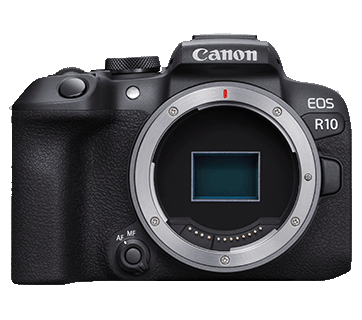
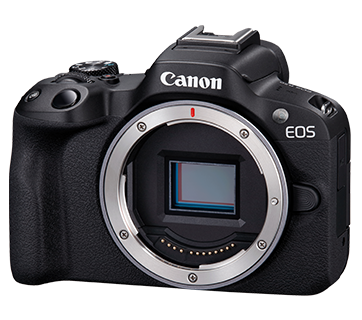
The Canon EOS R10 and Canon EOS R50 are two popular APS-C mirrorless cameras that appeal to both entry-level photographers and enthusiasts alike. Given their similar specifications, including a 24-megapixel sensor and 4K video capability, they are often compared in the context of performance and usability. Buyers tend to choose between these two models based on specific needs such as autofocus performance, ergonomics, and overall value for their investment. \n\nKey differentiators between the R10 and R50 include their design, weight, and battery life, alongside the release year and pricing structure. While both cameras share a lot of technology, subtle differences can greatly impact the user experience, particularly for those who may prioritize features like shooting speed and functionality during photography or videography tasks.
Specifications Comparison
Detailed Comparison
Image Quality
Both the Canon EOS R10 and R50 utilize a 24-megapixel APS-C sensor, promising excellent image quality with good detail and color reproduction. Their ISO ranges also match from 100 to 32,000, offering flexibility in low-light conditions. In practice, both models deliver similar results in terms of dynamic range and color accuracy, making neither model a clear winner in this aspect. \n\nHowever, real-world performance can still vary due to other factors like processing power and image stabilization. While neither camera has built-in stabilization, the EOS R10's slightly larger body may accommodate better cooling during extended shoots, potentially benefitting image quality at higher ISOs when shooting continuous frames. Both cameras perform admirably, and users can expect high-quality images from either option. \n\nIn conclusion, for pure image quality, there is no significant difference between the two cameras; they both deliver sharp, vibrant images suitable for a wide range of photographic styles, from portrait to landscape.
Autofocus System
The autofocus systems in both the Canon EOS R10 and R50 are impressive, featuring 651 autofocus points, providing extensive coverage and accuracy for tracking subjects. The R10 offers a continuous shooting speed of 15 fps, which can be advantageous for fast-action photography, while the R50 has a slightly lower maximum shooting speed of 12 fps. \n\nHowever, the R50 could have the edge in terms of its modern internals and potential for updated autofocus algorithms, given its more recent release in 2023. In practice, both cameras demonstrate fast and reliable autofocus performance for most common scenarios, including portrait, landscape, and action photography. \n\nIn essence, while the R10 offers a slightly faster burst rate, the R50's newer technology could provide more reliable real-time tracking in demanding shooting conditions. Therefore, users need to consider their preferences and typical shooting scenarios.
Video Capabilities
When it comes to video capabilities, both the EOS R10 and R50 can shoot 4K video at 30p, catering well to videographers interested in high-resolution footage. However, neither camera has advanced video features like 10-bit internal recording or higher frame rates, which may limit the potential for more serious video applications. \n\nBoth cameras also lack in-body stabilization, which can make handheld shooting challenging, especially in dynamic environments. Users may need to rely on stable lenses or external gimbals to achieve smooth footage, which can be a common issue for both models. \n\nIn summary, while they both offer solid 4K video options for casual usage and content creation, they do not stand out in terms of advanced capabilities, and there is no winner in this category as they mirror each other closely.
Build & Ergonomics
The Canon EOS R10 is slightly larger and heavier at 426 grams compared to the R50, which weighs 375 grams and has a more compact form factor. The smaller size of the R50 makes it more portable and attractive for travel photography, while the R10 may cater to users who prefer a slightly bulkier grip for stability. \n\nBoth cameras share an electronic viewfinder, but the layout and button placement may differ slightly, affecting how comfortably users can navigate settings while shooting. The R50's more modern design may appeal to those seeking a fresher aesthetic and functional interface. Features like a tilt-screen on both models add convenience for creative angles, although both screens measure 3 inches. \n\nIn conclusion, while both cameras offer ergonomic designs suited for different user preferences, the R50's compact design gives it an advantage for portability. However, the choice between them will depend largely on individual comfort and shooting style.
Battery & Storage
In terms of battery life, the EOS R10 holds a significant advantage with a rating of approximately 450 shots per charge compared to the R50's more modest capacity. This difference could be crucial for users who engage in long shooting sessions without frequent access to power sources. Both models use the same battery type, which means that users switching between the two will not have to invest in different battery solutions. \n\nBoth cameras support SD card storage, ensuring compatibility and convenience for a wide array of users. They also have similar options for transferring images and videos, including through the Canon Camera Connect app. Lens compatibility is also an important consideration; both models can use Canon's RF lenses, expanding their versatility. \n\nUltimately, the better battery performance of the R10 makes it more suitable for users who prioritize longer sessions of video shooting or photography.
Value for Money
Price-wise, the Canon EOS R50 is positioned at $679, while the EOS R10 sits at $979, making the R50 a more attractive option for budget-conscious buyers. Given their similar specifications, the savings could be appealing to novice photographers or those upgrading from smartphones. \n\nHowever, the EOS R10 offers additional benefits such as a higher burst shooting speed and superior battery life, which might justify its higher price point for serious amateur photographers focusing on performance. For those concerned primarily with cost, the R50 offers excellent value for a camera with modern features and reliable performance. \n\nIn weighing value for money, it depends on user priorities: if budget and newer features are the main concern, the R50 is the clear winner, while those prioritizing performance may lean toward the R10 despite the higher price.
Our Verdict
In the end, both the Canon EOS R10 and EOS R50 present excellent options for aspiring photographers and videographers. The R10 stands out with its battery life and shooting speed, which are appealing for users needing extended performance in fast-paced environments. On the other hand, the R50 excels in its modern and compact design as well as its affordability, making it an attractive option for users new to photography or seeking a lightweight solution. Overall, potential buyers need to consider their specific requirements and preferences as each camera has its strengths and caters to differing aspects of photography.