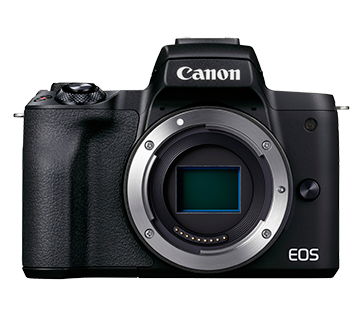

The Canon EOS M50 Mark II and Fujifilm X-T5 are both popular choices among enthusiasts and advanced hobbyists looking for a compact, mirrorless camera. Buyers often compare these two models because they represent different approaches to capturing high-quality images in a portable form factor. The Canon M50 Mark II targets content creators, vloggers, and beginners stepping up from smartphones or compact cameras, while the Fujifilm X-T5 appeals to more advanced users who desire class-leading resolution and robust photographic controls.
There are significant differences between these cameras in terms of sensor technology, features, and price points. Key differentiators include the X-T5's much higher-resolution sensor, in-body image stabilization (IBIS), weather-sealing, and more sophisticated autofocus system. By contrast, the M50 Mark II is smaller, more affordable, and emphasizes simplicity, making it very attractive to newcomers or those on a tight budget. Choosing between these two involves balancing performance, usability, and value based on your needs and priorities.
Specifications Comparison
Detailed Comparison
Image Quality
When it comes to image quality, the Fujifilm X-T5 is clearly ahead. It uses a next-generation 40MP APS-C sensor (23.5 x 15.6 mm), which offers significantly more detail and resolution than the Canon M50 Mark II's 24.1MP APS-C sensor (22.3 x 14.9 mm). In side-by-side comparison, the X-T5 delivers images with crisper detail, smoother gradients, and greater latitude for cropping.
Dynamic range is also superior on the X-T5, helped further by its improved base ISO of 125 (expandable to 64), allowing for cleaner, more nuanced shadows and highlights. In high-ISO shooting, the X-T5 maintains excellent noise control thanks to advances in sensor technology. However, for everyday shooting and sharing at web resolutions, the M50 Mark II's sensor remains capable and satisfactory, especially for users upgrading from point-and-shoots or smartphones.
There is also the matter of color science: Canon is often praised for its pleasing skin tones and reliable colors out-of-camera, while Fujifilm is equally renowned for its unique film simulations and the ability to customize JPEG workflows. Both are excellent but serve slightly different tastes.
The main differentiator, however, is the X-T5's much higher resolution and better dynamic range, making it more suitable for large prints, cropping, and professional use.
Autofocus System
Autofocus performance is a crucial area for modern mirrorless cameras, especially for action, wildlife, and fast-moving subjects. The Fujifilm X-T5 features a sophisticated hybrid AF system with 425 autofocus points, providing fast and accurate subject tracking across virtually the entire frame. Eye and face detection have also improved significantly with Fujifilm's recent advancements.
The Canon EOS M50 Mark II uses Canon's proven Dual Pixel AF system, which is known for its smooth, reliable focus in both stills and video, particularly in good light. It provides eye-detect AF, which is handy for portraits and vlogging. However, its nearly 100 AF points cover less of the frame and don't match the X-T5's advanced tracking performance.
For most casual users and in typical scenarios, the M50 Mark II is competent and user-friendly. However, for continuous autofocus, fast-paced subjects, and coverage breadth, the X-T5 is clearly superior.
Video Capabilities
The Canon EOS M50 Mark II is a favorite among vloggers and YouTube content creators, thanks to its fully articulated touchscreen, intuitive menus, and reliable face tracking in video mode. It offers 4K recording, though it applies a significant crop and disables Dual Pixel AF in 4K, which limits quality and usability. For Full HD (1080p), the experience is much smoother and leverages the excellent Dual Pixel AF for autofocus.
The Fujifilm X-T5 offers more serious video tools: uncropped 4K and 6.2K recording, high bit-rate codecs, flat F-Log profiles for grading, and in-body image stabilization for steadier handheld shots. Autofocus in video is much improved over earlier Fujifilm models, though Canon's tracking in 1080p remains slightly smoother and more beginner-friendly. The X-T5's tilting screen, while high-quality, is less convenient for front-facing shots than the Canon's full articulation.
For casual vloggers and social video, the Canon is simpler and more direct out of the box. However, the X-T5 is clearly aimed at advanced videographers, hybrid shooters, and those wanting professional-grade video specs.
Build & Ergonomics
In terms of build, the Fujifilm X-T5 is a premium, weather-sealed camera constructed with magnesium alloy, offering robust protection from dust and moisture. Its control layout features dedicated dials and a tactile shooting experience beloved by enthusiasts and professionals. The camera is larger and heavier (557g), but the extra heft can aid stability and handling, especially with larger lenses.
The Canon EOS M50 Mark II is much lighter and more compact, making it ideal for travel and everyday carry. Its plastic body is well-made but not weather-sealed, making it less suitable for outdoor or challenging conditions. Its control approach is modern and streamlined; beginners will appreciate the intuitive menus and quick access to basic settings, though advanced users might find the lack of external dials limiting.
Both cameras offer high-resolution electronic viewfinders and responsive touchscreens, but the X-T5's 3" screen with 1.84M dots is slightly sharper. Ultimately, the X-T5 is the more premium and durable of the two, while the M50 Mark II wins on portability.
Battery & Storage
Fujifilm's X-T5 delivers a solid battery life of approximately 580 shots per charge (CIPA standard), benefitting from its newer battery system. In contrast, the Canon EOS M50 Mark II, being a smaller camera, typically manages around 305 shots per charge, which may be limiting for longer shoots or trips without access to charging.
The X-T5 also offers dual SD UHS-II card slots (not detailed in the specs above but standard for its class), supporting redundancy and high-speed writing, which is important for professional workflows and video. The M50 Mark II uses a single SD card slot, suitable for its target audience.
For anyone concerned with shooting for extended periods, event coverage, or high-volume photography, the X-T5's advantages are significant. The Canon suffices for daily and casual use, but frequent shooters may find themselves carrying spare batteries.
Value for Money
Value is relative to budget and performance needs. The Canon EOS M50 Mark II is one of the most affordable entry points to mirrorless photography, delivering solid image quality and user-friendly features at a much lower price point than the Fujifilm X-T5. For those starting out, on a budget, or looking for a compact camera for everyday shooting and vlogging, the Canon is a smart, cost-effective choice.
The Fujifilm X-T5, at $1699 (body only), commands a premium but justifies it with advanced features, professional build, and industry-leading sensor performance in the APS-C segment. For users seeking the best image quality, fast shooting, video flexibility, and system durability, the price premium is reasonable.
If budget is the deciding factor, or if advanced features aren't a necessity, the Canon wins on value. For those who demand high-end specs and performance, the Fujifilm's higher cost is warranted.
Lens Ecosystem (Optional)
The Canon EF-M mount system used by the M50 Mark II is somewhat limited in lens choice, with Canon having produced a relatively small lineup and third-party support being modest. Adapters are available for EF/EF-S lenses, but this compromises compactness.
On the other hand, the Fujifilm X mount has a mature, diverse, and well-regarded range of native lenses, from fast primes to professional zooms, with frequent updates and robust third-party support by brands like Sigma, Tamron, and Viltrox. This gives Fujifilm shooters more options as they progress.
For users interested in creative lens options or long-term system growth, the Fujifilm system is the stronger investment.
Our Verdict
Overall, the Fujifilm X-T5 outperforms the Canon EOS M50 Mark II in nearly every technical and practical area except for entry-level value. The X-T5's higher-resolution sensor, advanced autofocus, in-body stabilization, professional build quality, and superior battery life make it the camera of choice for enthusiast and professional photographers needing a reliable and powerful APS-C mirrorless body. The Canon EOS M50 Mark II, however, remains a great value for beginners, vloggers, or anyone seeking a portable and approachable camera without a large investment. Its user-friendly controls and compact design should not be understated. Ultimately, buyers should assess their needs: those seeking top-tier image quality and system flexibility should look at the X-T5, while those entering the mirrorless world or working with a smaller budget will find the M50 Mark II more than capable for everyday use.
Canon EOS M50 Mark II
Fujifilm X-T5
Also Compare
Frequently Asked Questions
Which camera is better for beginners?
The Canon EOS M50 Mark II is more beginner-friendly due to its intuitive menus, compact size, and lower price point. It's ideal for those new to mirrorless cameras or transitioning from smartphones.
Is the Fujifilm X-T5 worth the higher price for hobbyists?
If you value higher resolution, robust build, in-body stabilization, and a wider lens selection for potential system growth, the X-T5 justifies its premium. Hobbyists invested in photography as a serious pursuit will benefit from its capabilities.
Which is better for vlogging or self-recording?
The Canon EOS M50 Mark II is generally better for vlogging thanks to its fully articulated touchscreen, reliable face/eye autofocus in 1080p, and lightweight design. The X-T5's tilting screen is less suited for self-recording.
How do the lens options compare for each system?
Fujifilm's X mount ecosystem offers a broader and more versatile lineup of native lenses, including high-quality primes and zooms suited for all genres. Canon's EF-M lineup is relatively small, with limited third-party support and expansion prospects.
Is the Canon M50 Mark II a good camera for travel?
Yes, its small size, light weight, and broad feature set make it an excellent travel companion, especially for those wanting DSLR-like quality without bulk.
Does the Fujifilm X-T5 have weather sealing and is it suitable for outdoor photography?
Yes, the X-T5 is weather-sealed and built for challenging conditions, making it highly suitable for outdoor, adventure, and nature photography.