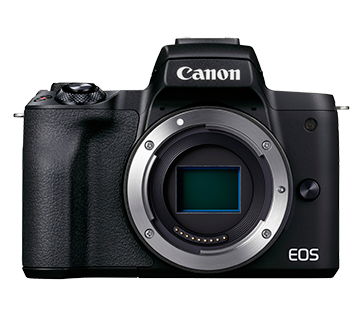
The Canon EOS M50 Mark II and the Fujifilm X-H2S are often compared because they represent two compelling options for photographers and videographers looking for capable APS-C mirrorless cameras. The M50 Mark II is a popular choice for beginners, vloggers, and enthusiasts who need a compact, easy-to-use camera at a relatively affordable price point. In contrast, the Fujifilm X-H2S targets advanced users, hybrid shooters, and professionals who require high-end performance, fast burst rates, advanced autofocus, and robust video features.
Buyers considering these two cameras are typically weighing ease-of-use, portability, and value (represented by the Canon) against cutting-edge performance, rugged build, and advanced tech (offered by the Fujifilm). The key differentiators boil down to speed, autofocus sophistication, video prowess, build quality, and price point. Let's take a deep dive into these critical aspects to help you decide which camera is the right fit for your needs.
Specifications Comparison
Detailed Comparison
Image Quality
Both cameras feature APS-C sensors, with the Canon EOS M50 Mark II offering a 24.1MP chip (22.3 x 14.9 mm) and the Fujifilm X-H2S equipped with a slightly larger 26MP sensor (23.5 x 15.6 mm). While the difference in resolution is modest, the X-H2S benefits from its new stacked sensor technology, which yields better dynamic range, faster readout, and improved low-light handling.
The X-H2S provides a native ISO range of 160-12800 (expandable to 80-51200), compared to the Canon's 100-25,600 (expandable). However, Fuji's sensor and processor combination tend to handle high ISO noise more gracefully, retaining more detail at elevated sensitivities. Color science is subjective, but Fujifilm is widely praised for its film simulations and color rendering, while Canon's colors are also well-regarded, especially for skin tones.
For most general shooting, both cameras produce high-quality images, but enthusiasts and professionals demanding the utmost in detail retention and color flexibility will see an edge with the Fujifilm.
In summary, while both cameras are capable, the X-H2S delivers superior image quality in challenging scenarios, with greater dynamic range and better high-ISO performance.
Autofocus System
The autofocus performance is one of the starkest differences between these two models. The EOS M50 Mark II uses Canon's Dual Pixel CMOS AF system, which is fast and reliable, with accurate eye and face detection. However, its AF coverage and speed lag behind the latest systems and it is particularly limited in continuous AF tracking when compared to the latest cameras.
The Fujifilm X-H2S, on the other hand, features a state-of-the-art 425-point AF system bolstered by deep learning AI subject detection. Its speed and accuracy are tailored for fast-moving subjects, wildlife, and sports. Subject recognition covers a wide array of scenarios-including vehicles, animals, birds, and humans-allowing for continuous, confident tracking even at its blazing 40fps burst mode.
While the Canon provides dependable autofocus for everyday shooting and vlogging, it cannot rival the sophistication, speed, and ultimate reliability of the Fujifilm system, especially for professionals and action shooters.
Therefore, the Fuji X-H2S is the clear winner for autofocus.
Video Capabilities
The Canon EOS M50 Mark II is a favorite among vloggers for its fully articulated touchscreen, user-friendly menus, and solid 1080p video quality. It can shoot 4K video, but with a significant crop and the loss of Dual Pixel AF, limiting its effectiveness for most serious applications. It excels in producing straightforward YouTube content, live streaming, or family videos with minimal setup.
The Fujifilm X-H2S, conversely, is a true hybrid powerhouse. It shoots 4K up to 60p, offers professional log profiles, higher bitrates, and supports advanced codecs. Its fast readout and powerful processor minimize rolling shutter and enable reliable subject tracking in video. The presence of 7-stop in-body image stabilization gives filmmakers and run-and-gun videographers a massive advantage in getting steady shots without gimbals.
While the Canon is great for those starting with video or who need simple, easy-to-share content, the Fuji dominates in versatility, quality, and features for more ambitious productions.
For high-end video work and flexibility, the Fujifilm X-H2S takes the crown.
Build & Ergonomics
Build quality and handling differ considerably between the two cameras. The Canon EOS M50 Mark II is lightweight and compact, making it perfect for travel and everyday carry. Its fully articulated screen is particularly useful for vloggers and solo creators. However, it lacks weather sealing and has a less robust build that's geared towards casual use.
The Fujifilm X-H2S is significantly larger and heavier (660g) but built to withstand tough environments thanks to weather sealing and a more rugged construction. The ergonomic grip and customizable controls cater to professional workflows and extended use. The electronic viewfinder and high-resolution screen further enhance the user experience, particularly in challenging conditions.
In summary, the Canon scores for portability and beginner-friendliness, while the Fujifilm is purpose-built for demanding, all-weather shooting and comfortable extended sessions.
For working professionals or enthusiasts who need ruggedness and superior handling, the X-H2S is the standout winner.
Battery & Storage
Battery life can be a decisive factor for field work. The Canon M50 Mark II offers modest battery life-suitable for casual day-trips but limited for extended shoots or video work. In contrast, the Fujifilm X-H2S delivers up to 580 shots per charge, significantly outlasting the Canon. This makes a considerable difference for events, wildlife, or sports photography where downtime is costly.
The X-H2S also features support for faster, more robust memory cards, including CFexpress, which facilitates sustained high-speed burst shooting and high-bitrate video recording. The Canon relies on SD cards, adequate for moderate use but less suited for the high demands of serious hybrid shooting.
For everyday family and travel use, the Canon's battery life may suffice, but for any professional or extended outing, the Fuji pulls clearly ahead.
Value for Money
The Canon EOS M50 Mark II stands out for its excellent price-to-performance ratio. It delivers great stills, serviceable video, and ease-of-use at a fraction of the Fujifilm's price. This makes it an attractive entry-level or backup camera for enthusiasts, vloggers, or those on a budget. Its low weight and simple, intuitive interface are further bonuses for less experienced users.
The Fujifilm X-H2S, on the other hand, commands a premium price ($2499 USD, body only), reflecting its advanced features, higher build quality, and professional-grade performance. For photographers and videographers who will truly harness the superior AF, high burst rates, in-body stabilization, and advanced video, the investment is justified.
Ultimately, choosing between these two for value depends on your needs and budget. For most, the Canon offers unbeatable value for casual-to-enthusiast use, while the Fujifilm is a great value only if you require its advanced features and can maximize the return from its premium price.
Lens Ecosystem
The Canon EF-M mount has historically offered a limited native lens selection, with a handful of Canon lenses and sparse third-party support. While adapters are available for EF/EF-S lenses, this often undercuts the size and weight advantages of the M50 system and might impact autofocus speed and accuracy.
Fujifilm's X mount, by contrast, boasts a mature and highly regarded lens lineup spanning wide primes, fast zooms, macro, and specialty lenses. Fujifilm's commitment to APS-C has meant a continuous expansion of high-quality optics, and third-party manufacturers have also embraced the system. For users seeking versatility and potential to grow into more specialized shooting styles, the Fuji X system is much more flexible.
If lens choice, expansion, and future-proofing matter, Fujifilm's ecosystem is the clear winner.
Our Verdict
Overall, the Fujifilm X-H2S is the superior camera in almost every respect, excelling in image quality, autofocus, video features, build quality, battery life, and system potential. It is an advanced, professional-grade tool capable of meeting the needs of demanding stills and video shooters alike. Its only notable downsides are size, weight, and price-which are justified by its capabilities. The Canon EOS M50 Mark II, meanwhile, continues to offer outstanding value for beginners, travel photographers, vloggers, and casual shooters who prioritize portability, affordability, and simplicity. It provides a gentle learning curve and proven results, but simply cannot match the raw power, versatility, or system depth of the Fujifilm. Those who require professional results, or who intend to invest in a long-term APS-C system, will find the X-H2S a clear favorite, while budget-conscious users will find the M50 Mark II perfectly adequate for more basic needs.
Canon EOS M50 Mark II
Fujifilm X-H2S
Also Compare
Frequently Asked Questions
Is the Fujifilm X-H2S worth the extra cost over the Canon EOS M50 Mark II?
If you need advanced autofocus, high-speed burst shooting, superior video features, better build quality, and intend on professional or demanding hobbyist use, the X-H2S justifies its premium thanks to its vastly higher performance ceiling. For casual use, simple vlogging, or as an upgrade from a smartphone, the Canon may provide all you need at a much lower price.
Which camera is better for beginners or vloggers?
The Canon EOS M50 Mark II is better suited for beginners and vloggers thanks to its lightweight design, fully-articulated touchscreen, simple interface, and strong autofocus for casual shooting and face tracking. Its 1080p video is more than adequate for most vlog and YouTube uses.
How do lens options compare between Canon EF-M and Fujifilm X systems?
The Fujifilm X mount system offers a larger and more advanced native lens selection, including pro-grade primes and zooms. Canon's EF-M lineup is limited and, while adapters increase lens options, they compromise autofocus performance and take away the compact system advantage.
Which camera is better for travel and daily carry?
The Canon M50 Mark II is smaller and much lighter, making it ideal for travel or daily use where size and weight are important. The Fujifilm X-H2S, while not excessively large, is best suited for those who don't mind carrying a more robust camera.
Does the Fujifilm X-H2S offer real benefits for video creators?
Yes. The X-H2S delivers 4K/60p, high-bitrate recording, F-Log, and excellent in-body stabilization. These features open up much greater creative flexibility for serious hybrid shooters and filmmakers-significantly outpacing what the Canon M50 Mark II can offer.