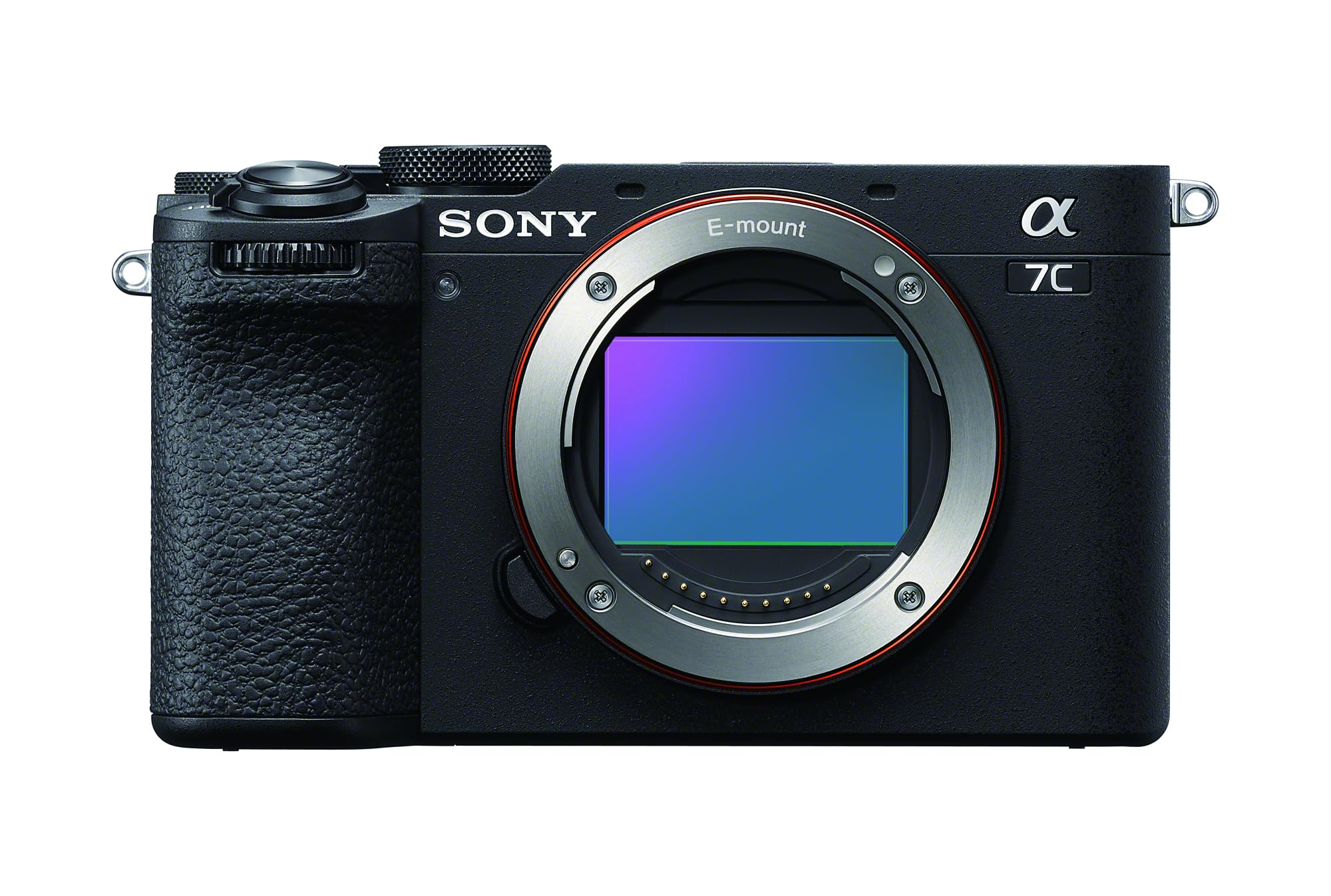

The Sony A7C II and the Sony ZV-E1 are two compelling full-frame mirrorless cameras released in 2023 that cater to a variety of photography and videography needs. While both models share several specifications such as sensor size, video resolution, and mount type, they are designed for different user profiles. The A7C II aims to be a versatile all-rounder suitable for photographers and hybrid creators, while the ZV-E1 leans towards content creators focused on video, vlogging, and live streaming. As such, potential buyers often find themselves debating which model better fits their specific usage scenarios based on key differentiators like image quality, autofocus capabilities, and ergonomics.
Specifications Comparison
Detailed Comparison
Image Quality
The Sony A7C II boasts a 33-megapixel sensor, which allows for high-resolution images with detailed textures and a broader dynamic range. This makes it suitable for professional photography, particularly for landscape and portrait work, where image detail is paramount. In contrast, the Sony ZV-E1, with its 12-megapixel sensor, offers adequate quality for vlogging and online content but may struggle in scenarios where large prints or extensive cropping are required. Additionally, the A7C II features an ISO range that extends to 204800, providing more flexibility in low-light conditions compared to the ZV-E1's maximum of 409600, which, while it can handle extreme sensitivity, may introduce more noise at higher settings.
Overall, image quality is significantly impacted by the megapixel count and dynamic range, where the A7C II has the clear advantage in detail retention for both stills and low-light scenarios. The ZV-E1, while competent for video, does not match the overall imaging capabilities of the A7C II, which is designed for greater versatility in various lighting conditions.
Autofocus System
Both cameras feature a robust autofocus system with 759 focus points, ensuring fast and accurate focusing. However, the A7C II's superior sensor and overall design provide it with better tracking capabilities, which is crucial for photographing moving subjects. The advanced features of the A7C II can handle consistent autofocus in dynamic environments, such as events and sports photography.
Although the ZV-E1 also utilizes fast autofocus, it is primarily designed for video use, meaning its autofocus features are optimized for smooth transitions and face tracking rather than the fastest tracking of moving subjects. For vloggers and content creators, the ZV-E1 does a solid job; however, the A7C II's superiority in tracking makes it the better choice for photographers who require high performance under varied conditions.
Overall, while both models perform admirably in autofocus, the A7C II edges ahead with its versatility in both stills and video contexts.
Video Capabilities
Both the A7C II and ZV-E1 can shoot 4K video at 60p, making them suitable for high-quality videography. However, they cater to slightly different audiences. The A7C II is equipped with superior video features such as enhanced stabilization (7 stops compared to the ZV-E1's 5 stops), allowing for smoother handheld shooting, which is vital for dynamic shooting scenarios. It also offers greater flexibility in color grading and profiles, catering to advanced users looking to produce professional-quality films.
In comparison, the ZV-E1 is focused on streamlining the process for content creators with features such as product showcase mode and bokeh switch, specifically catering to vloggers and casual filmmakers. Its autofocus is optimized for video, providing impressive face and object tracking. However, its lower stabilization level can impact video quality in fast-moving situations.
Thus, while both cameras perform well in video settings, the A7C II's advanced stabilization and broader video capabilities make it a better option for serious videographers.
Build & Ergonomics
In terms of physical build, the A7C II presents a more robust design, featuring weather sealing that makes it suitable for more rugged environments. Its dimensions are slightly larger, giving it a solid feel, while still being lightweight at 514g. On the other hand, the ZV-E1 is designed to be compact and lightweight at 483g, making it easy to carry for long durations, particularly suited for vlogging and travel.
The ZV-E1 omits an electronic viewfinder, which can influence the shooting experience for photographers who prefer composing shots through a viewfinder rather than a screen. The A7C II's electronic viewfinder offers this traditional advantage, increasing its appeal to photographers who require precise composition under different lighting.
Overall, while both cameras are well-built and portable, the A7C II offers better sturdiness, while the ZV-E1 provides a lightweight alternative for content creators.
Battery & Storage
The Sony A7C II features a decent battery life, offering around 540 shots per charge, which is respectable for most photography sessions. However, the ZV-E1 outperforms it slightly with a battery life rated for 570 shots, making it a better option for longer shooting sessions without needing to frequently recharge or swap batteries, especially beneficial for vloggers who may use the camera for extended periods.
In terms of storage, both cameras support the same types of memory cards, ensuring that users can choose between SD and CFexpress types for faster read/write speeds in video capture. This feature is critical for high-resolution video formats and burst shooting scenarios.
While the battery life favors the ZV-E1, the overall performance and reliability of the A7C II in typical shoot conditions may make the battery life difference less impactful for many users.
Value for Money
When it comes to price, both cameras are positioned at $2200, offering similar price-to-performance ratios. However, the A7C II presents a more well-rounded package suitable for both stills and video, making it a better investment for hybrid shooters. The additional features, particularly in image quality and autofocus, justify its price in the professional photography market.
Conversely, the ZV-E1, while cost-equivalent, is designed primarily as a video-first solution. It provides an excellent option for content creators and casual videographers but may not deliver the same level of value for those who also prioritize high-quality photography. Users looking solely for a video-centric camera may find the ZV-E1's features justifiable for its cost, but the A7C II's versatility offers stronger overall value.
Thus, for users looking for a comprehensive solution in a full-frame camera, the A7C II offers better value for money, particularly for serious photographers.
Our Verdict
The Sony A7C II wins overall by delivering superior image quality, autofocus capabilities, and video features, making it a better choice for hybrid creators and professional photographers alike. While the Sony ZV-E1 is an excellent choice for content creators focused predominantly on video, the A7C II's versatility, durability, and performance across various shooting conditions make it the more well-rounded camera. Buyers would benefit from considering their primary usage scenarios: if they are primarily focused on video, the ZV-E1 could be appealing, but for a broader range of photographic needs, the A7C II stands out.