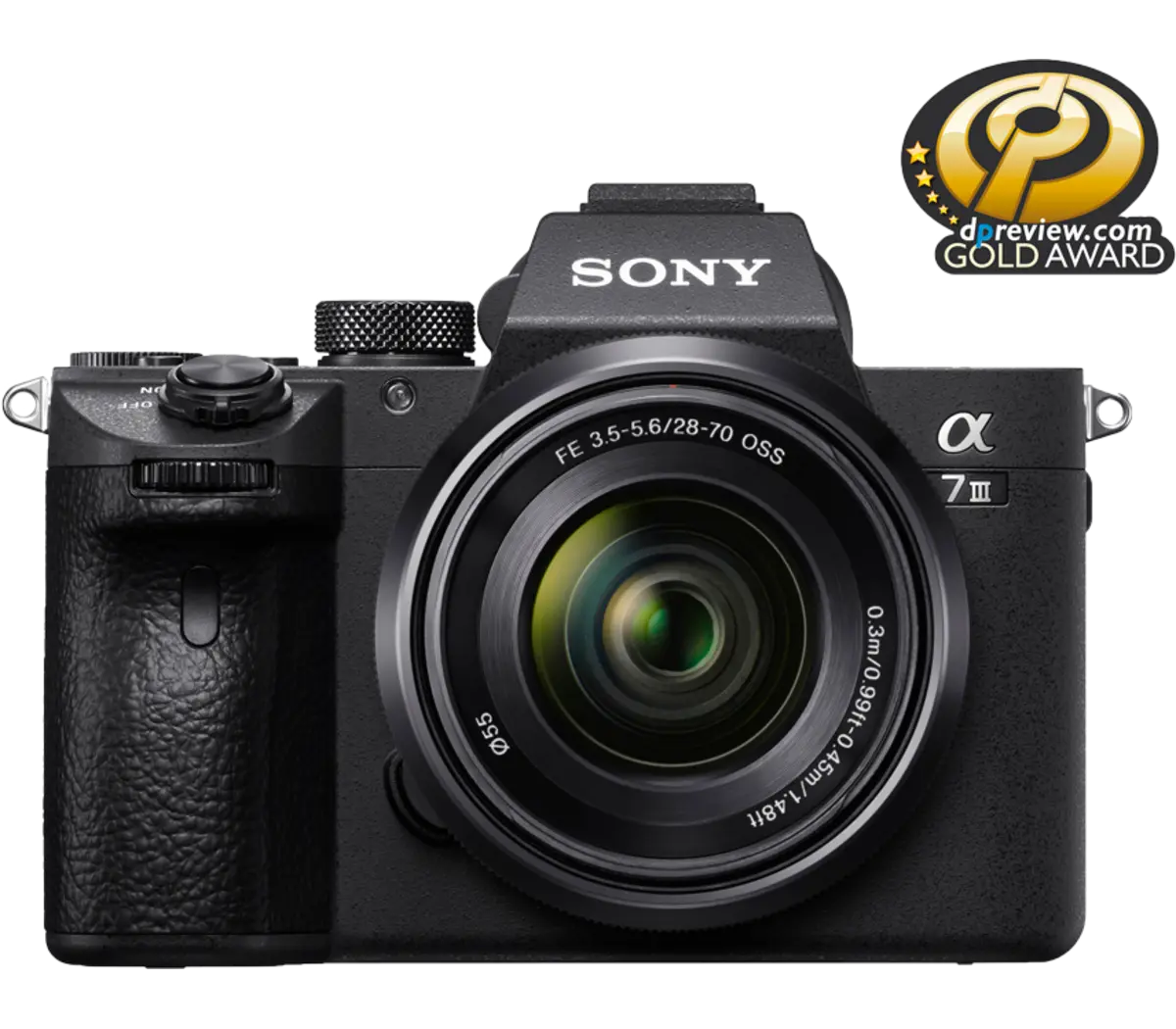

The Sony A7 III and the Sony ZV-E1 are two prominent offerings from Sony's full-frame camera lineup, each targeting different segments of the photography and videography markets. While they share the Sony E mount and the full-frame sensor format, they cater to distinct user needs. Photographers often favor the A7 III for its balanced performance across various disciplines, while vloggers and content creators may lean towards the ZV-E1 with its enhanced video capabilities and user-friendly features. Key differentiators include sensor resolution, autofocus capabilities, video performance, and overall usability.
Specifications Comparison
Detailed Comparison
Image Quality
The Sony A7 III features a 24-megapixel full-frame sensor which typically offers a broader dynamic range and better low-light performance compared to the 12-megapixel sensor of the Sony ZV-E1. Although the ZV-E1 has the advantage of an extended ISO range up to 409600, the pixel density on the A7 III allows for more detailed images in various lighting conditions. Photographers seeking to capture intricate details or large prints would likely prefer the A7 III's higher resolution. However, the ZV-E1's versatile ISO range is commendable for videography, especially when shooting in very low light conditions, albeit at a resolution lower than that of the A7 III. Overall, while both cameras deliver excellent image quality, the extra megapixels and detail in varying lighting conditions give the A7 III the edge when it comes to still photography.
Autofocus System
The autofocus systems in both the Sony A7 III and ZV-E1 use phase detection technology, but the ZV-E1 surpasses the A7 III with 759 autofocus points compared to the A7 III's 693. The ZV-E1 is designed with content creators in mind, implementing features such as Real-Time Eye autofocus for both humans and animals that significantly enhance its focus tracking, particularly during video recording. On the other hand, the A7 III still holds its own with its reliable and consistent autofocus performance, which can be crucial for photography. While both systems are effective, the ZV-E1's advancements in autofocus technology particularly benefit dynamic video environments. This gives the ZV-E1 a slight advantage for video creators but does not negate the A7 III's solid capabilities. Ultimately, for stills photography, the A7 III remains a strong contender.
Video Capabilities
Video versatility is a critical area where the Sony ZV-E1 shines with its capability of recording 4K video at up to 60 frames per second, while the A7 III is limited to 4K at 30 frames per second. This higher frame rate on the ZV-E1 enhances motion capture, making it particularly suitable for vlogging and fast-paced action video. Additionally, the ZV-E1 is equipped with a host of features aimed at vloggers such as a fully articulating screen and improved audio options. While the A7 III is still an excellent choice for video, especially with its 4K capabilities, the ZV-E1 boasts specific features that cater to the needs of modern video creators, allowing for greater creative freedom. The added frame rate and features alone make the ZV-E1 the clear winner in this section.
Build & Ergonomics
When it comes to build quality, both cameras boast a level of weather-sealing that ensures they can withstand the elements, but their designs cater to different audiences. The Sony A7 III is bulkier and heavier, weighing 650g compared to the ZV-E1's 483g, which might appeal to those who prefer a more substantial feel in hand, often favored by photographers for stability and control. The A7 III includes an electronic viewfinder which gives traditional photographers the advantage of composing shots more intuitively, especially in bright conditions. Conversely, the ZV-E1, being designed primarily for vlogging, competes with a lighter body and a fully articulating touchscreen that allows users to easily frame themselves for video content. Therefore, while both are ergonomic, the choice leans heavily into user intent: stability versus portability.
Battery & Storage
The A7 III features a longer battery life with approximately 710 shots per charge versus the ZV-E1's 570 shots, making it a more reliable option for extended shooting sessions. This is particularly beneficial for photographers or videographers who require longer shooting durations without worrying about recharging. Additionally, both cameras use the same type of storage card, the dual slot in the A7 III would typically be seen as an advantage for professional users who need to manage files more effectively, allowing for simultaneous or backup recording. In this aspect, the A7 III comes out ahead, offering greater longevity and versatility.
Value for Money
The price point of the Sony A7 III is approximately $2000, while the ZV-E1 is priced at around $2200, making the A7 III the more economical choice for budget-conscious buyers. For those who mainly engage in photography, the A7 III presents a better value given its superior image quality and battery life. However, for dedicated content creators who prioritize video features and modern capabilities, the ZV-E1's offerings may justify the higher price tag. As both target different user bases, value can be very subjective, but for versatile use across both video and stills, the A7 III tends to provide a better overall value.
Lens Ecosystem
Both the Sony A7 III and ZV-E1 utilize the Sony E mount, granting users access to a wide array of high-quality lenses that are popular among professional photographers and videographers. However, the A7 III, being part of the broader A7 series, is often associated with the professional lens ecosystem that includes a range of full-frame glass optimized for both stills and video productions. The ZV-E1 targets creators with some specific lens options suited for video work and vlogging, but overall, given the extensive range of available lenses for the A7 series, the A7 III has a more robust ecosystem for photographers who wish to utilize high-performance optics. Those seeking versatility in lens choices might find the A7 III a better fit.
Our Verdict
Overall, the Sony A7 III emerges as the winner in this comparison due to its superior image quality, longer battery life, and better value for money. It is particularly well-suited for photographers who require versatility across various shooting conditions. However, the ZV-E1 certainly has its strengths, particularly in video capabilities and advanced autofocus features, making it an excellent option for content creators and vloggers. Ultimately, the choice between the two should depend on the user's primary focus-whether it's still photography or video production.