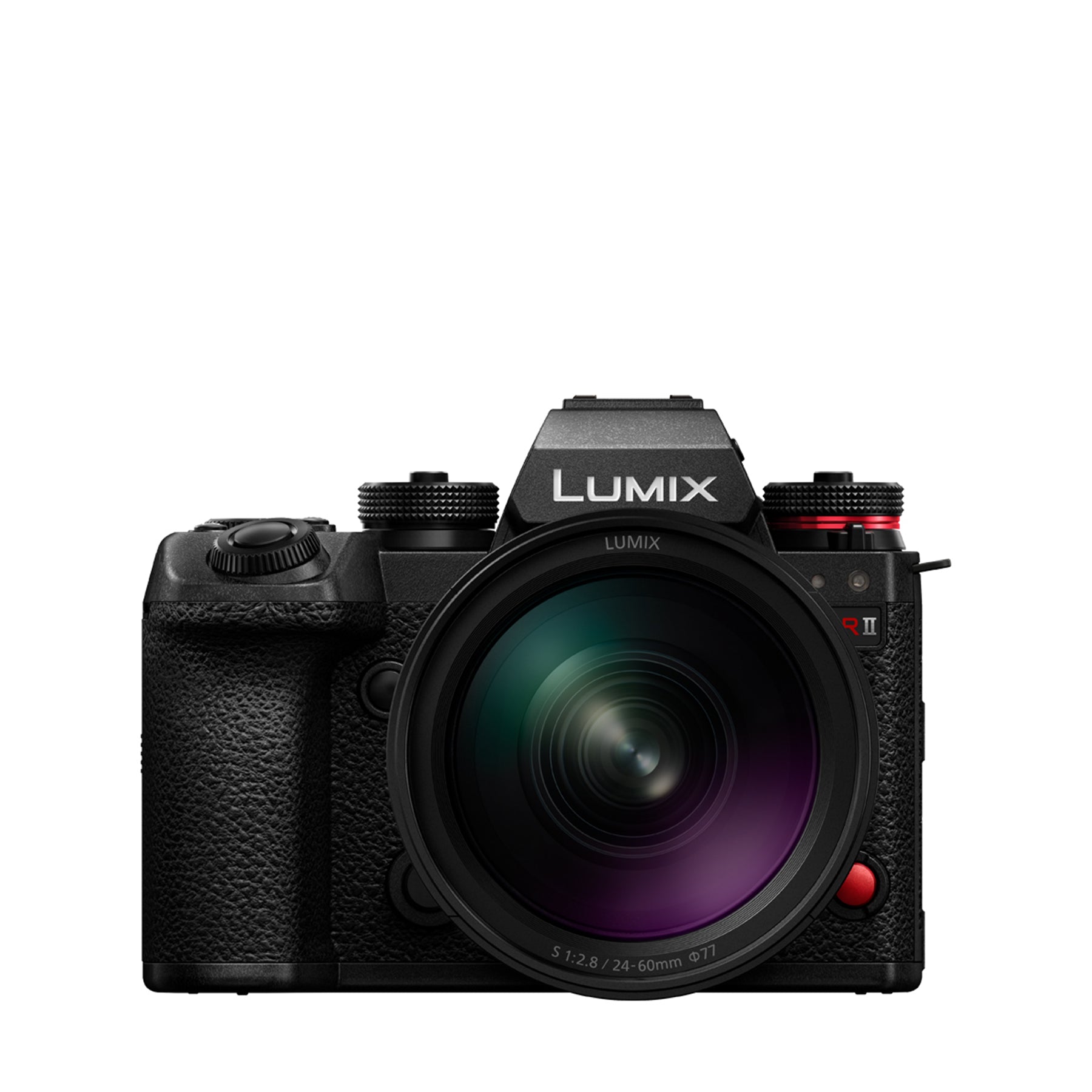

The Panasonic S1R II and the Sony ZV-E1 represent two distinct approaches to photography and videography, attracting different user bases. The S1R II targets professional photographers looking for high-resolution images and robust video capabilities, while the ZV-E1 is designed primarily for content creators and vloggers needing an efficient, portable solution. With their high-quality full-frame sensors, both cameras offer significant advantages, but they cater to different needs with their unique specifications. The key differentiators are image resolution, video capabilities, and usability features, which are crucial for potential buyers in choosing the right tool for their projects.
Specifications Comparison
Detailed Comparison
Image Quality
When it comes to image quality, the Panasonic S1R II significantly outshines the Sony ZV-E1 due to its 44.3-megapixel sensor, allowing for the capture of exceptionally detailed images, which is invaluable for professional applications such as portrait or landscape photography. On the other hand, the ZV-E1's 12-megapixel sensor, while perfectly adequate for video content, does not provide the same level of detail and resolution needed for high-quality prints or extensive crops. The S1R II's sensor allows for greater flexibility in post-processing, making it more suited for professional use.
Additionally, the S1R II's image processing capabilities are enhanced by Panasonic's latest innovations, including improved color science, which yields vibrant and accurate colors, especially in still photography. In contrast, the ZV-E1 targets real-time performance, prioritizing usability over raw resolution. Therefore, while the ZV-E1 captures quality images for its designed purpose, it cannot compete with the S1R II's superior resolution and image fidelity.
Given these considerations, the winner in image quality is unequivocally the Panasonic S1R II, as it caters excellently to professionals requiring high-resolution output.
Autofocus System
The autofocus system of the Sony ZV-E1 is built with content creators in mind, featuring 759 phase-detection points for high-speed focusing and tracking, especially useful in dynamic, fast-moving scenarios typical in vlogging. It also incorporates real-time Eye AF which works effectively for both human and animal subjects, making it ideal for creators who frequently switch between different types of shots.
In contrast, the Panasonic S1R II, while having a competent autofocus system, primarily focuses on still photography and may not feature the same level of tracking sophistication as the ZV-E1 for moving subjects. The S1R II's autofocus points are fewer, and while effective in controlled environments, they may require more manual adjustments in fast-paced situations.
Thus, in terms of autofocus innovation and performance in practical usage for video and vlogging, the ZV-E1 takes the lead due to its superior tracking capabilities.
Video Capabilities
The video capabilities differ significantly between the two models. The Panasonic S1R II stands out with its ability to shoot up to 8K at 30 frames per second, along with impressive 4K recording at 120 frames per second. This extensive range makes the S1R II ideal for filmmakers who require high-resolution video with detailed imagery and smooth slow-motion effects.
Conversely, the Sony ZV-E1 focuses on 4K capabilities, recording up to 60 frames per second, which, while adequate for most vlogging and content creation scenarios, is less versatile than the S1R II's offerings. The ZV-E1's strength lies in its user-friendly video features designed for live streaming and ease of use, such as its flip-out screen and audio input options tailored for creators.
Considering the wider array of video resolutions and frame rates available with the S1R II, it takes the crown in video capabilities, providing professionals with the tools necessary for high-level production.
Build & Ergonomics
The Panasonic S1R II boasts a sturdy, professional-grade build, featuring weather sealing that enhances durability for extensive outdoor use. Its larger form factor also allows for a more comfortable grip, especially when paired with heavier lenses, which many professional photographers prefer. The S1R II's layout provides easy access to essential controls, making it a practical choice for long shooting sessions.
On the other hand, the Sony ZV-E1 is designed to prioritize portability and ease of use, weighing in at only 483 grams and having compact dimensions, which appeal greatly to vloggers who need a lightweight, easily transportable camera. The ZV-E1 lacks a viewfinder, which might deter some traditional photographers but aligns with the needs of video creators who focus primarily on the screen.
Overall, while both cameras are well-built, the S1R II offers a more professional ergonomic experience, making it more suitable for prolonged usage in various environments.
Battery & Storage
One notable advantage of the Sony ZV-E1 is its impressive battery life, capable of capturing approximately 570 shots per charge, which is beneficial for users who are often on the go and require a reliable camera that won't frequently drain power. This makes it an appealing option for content creators who often work in environments where changing batteries can be inconvenient. The ZV-E1's design accommodates modern storage solutions with dual card slots that support higher capacity cards as well.
The Panasonic S1R II, in contrast, while equipped with a solid battery performance, does not rival the ZV-E1 in longevity. However, it does offer some advanced features that optimize performance, allowing for continuous shooting in rapid succession due to its higher frame rate capacity. Nonetheless, the need for greater energy consumption, especially during extensive video shoots, can necessitate additional batteries.
In terms of battery life, the ZV-E1 takes the edge, reinforcing its suitability for content creators focused on active filmmaking.
Value for Money
In evaluating value for money, the Sony ZV-E1, priced at around $2,200, positions itself as an affordable choice for vloggers and content creators who need versatility in a compact design without redundant features aimed at traditional photographers. Its relatively modest megapixel count does not undermine its value for video content, presenting a well-rounded performance for the intended user base.
Conversely, the Panasonic S1R II, with its superior capabilities in high-resolution photography and versatile video options, typically comes at a higher price point that reflects its advanced features and professional-grade quality. This camera caters more explicitly to professionals who require the absolute best in resolution and video quality, justifying the investment for serious users.
Ultimately, if value is measured against intended use, the ZV-E1 offers greater value for casual creators, whereas the S1R II provides exceptional capabilities for its cost, favoring professionals willing to invest for quality.
Lens Ecosystem
The Panasonic S1R II benefits from the established lens ecosystem available for the L-mount, which includes high-quality lenses from both Panasonic and Sigma, providing a broad range of options for professionals in diverse photography styles. This compatibility with multiple manufacturers enhances user flexibility and creativity, allowing photographers to select the most suitable glass for their needs.
In contrast, the Sony ZV-E1 utilizes the Sony E-mount system, which boasts an extensive catalog of lenses suitable for video and photography alike. The E-mount range also includes several high-quality options and versatile zoom lenses tailored for content creators, facilitating efficient workflows in videography. The ease of switching lenses within Sony's ecosystem further solidifies its appeal to users.
In this regard, both ecosystems have their strengths; however, the ZV-E1's vast selection of lenses, tailored towards video content, gives it a slightly better edge for those prioritizing video production.
Our Verdict
Overall, the Panasonic S1R II emerges as the overall winner due to its outstanding image quality, superior video capabilities, and robust build quality that caters excellently to professional photographers and filmmakers. While the Sony ZV-E1 excels in autofocus performance, battery life, and a user-friendly design, it is primarily suited for content creators seeking high-quality video solutions in a compact format. Depending on user needs, the S1R II is recommended for those pursuing high-resolution photography and serious filmmaking, whereas the ZV-E1 is ideal for vloggers and those focused on mobile, dynamic content creation.
Panasonic S1R II
Sony ZV-E1
Also Compare
Frequently Asked Questions
Which camera is better for professional photography?
The Panasonic S1R II is superior for professional photography due to its high-resolution sensor and advanced features geared toward capturing detailed images.
Can the ZV-E1 shoot high-resolution photos?
While the ZV-E1 can shoot photos, its 12-megapixel sensor limits its capability for high-resolution photography compared to the S1R II.
Is video quality significantly different between the two cameras?
Yes, the S1R II offers 8K video recording capabilities, whereas the ZV-E1 is limited to 4K at 60p, making the S1R II better for high-resolution video production.
Which camera is more portable?
The Sony ZV-E1 is more portable due to its lighter weight and compact dimensions, making it ideal for content creators on the go.
What is the key advantage of the Panasonic S1R II over the ZV-E1?
The key advantage of the Panasonic S1R II is its high megapixel count and overall image quality, making it ideal for professional photography and high-end videography.