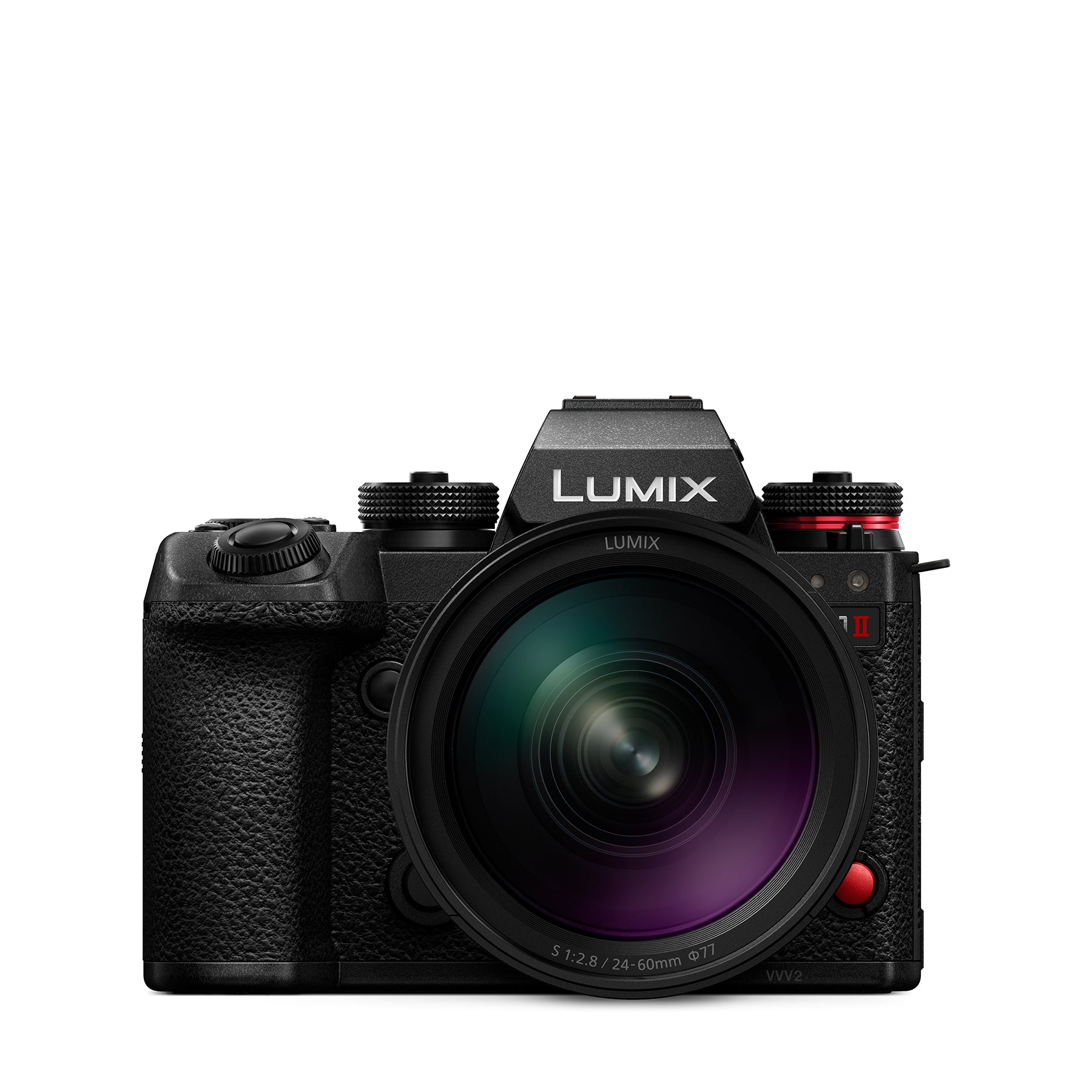

The Panasonic S1 II and Sony ZV-E1 are frequently compared cameras, particularly among enthusiasts and content creators looking for high-performance options in the full-frame category. Both cameras were released in 2023, catering to different needs: the S1 II for a broader range of photography and videography while the ZV-E1 is targeted primarily at vloggers and social media content creators. The decision between these two hinges on essential features such as image quality, autofocus capabilities, video resolutions, and overall build quality, particularly for users needing either robust performance or portability.
Specifications Comparison
Detailed Comparison
Image Quality
The Panasonic S1 II boasts a 24.1-megapixel full-frame sensor that produces high-resolution images with impressive detail and dynamic range, making it suitable for both still photography and video applications. Its larger megapixel count allows for greater cropping potential without significant loss of quality, which is crucial for professional work. In contrast, the Sony ZV-E1 has a smaller 12-megapixel sensor that, while still capable of producing high-quality images, limits resolution and detail, particularly in large print formats or heavy cropping situations.
The difference in megapixels aside, both cameras utilize full-frame sensors, which means they perform well in low-light conditions. However, the S1 II wins when it comes to versatility in image capture. It allows for a broader range of ISO performance that some users might find beneficial in challenging lighting environments, while the lower megapixel count of the ZV-E1 may show its limitations in demanding photography.
Overall, the Panasonic S1 II takes the lead in image quality due to its superior megapixel count and handling of dynamic range, making it the winner in this category.
Autofocus System
The autofocus system is crucial for both photography and video, especially for capturing moving subjects. The Sony ZV-E1 features an impressive 759 autofocus points, providing fast and accurate focus tracking that is particularly advantageous for vloggers and action photography. This advanced system includes face tracking, which is vital for content creators working alone and wanting to ensure they remain in focus while recording.
In comparison, the Panasonic S1 II incorporates a hybrid autofocus system that performs well but has fewer focus points compared to the ZV-E1. While it offers solid performance in general, the S1 II may struggle with fast-moving subjects compared to the advanced capabilities of Sony's system. Additionally, Sony's superiority in continuous autofocus during video shooting is noteworthy, as the ZV-E1's system enables seamless focusing shifts between subjects.
Given these specifications and real-world applications, the Sony ZV-E1 is the clear winner in terms of autofocus system effectiveness, particularly in scenarios relevant to its target audience.
Video Capabilities
For videographers, the Panasonic S1 II leads with its robust 5.1K video recording capability at 60 frames per second, which offers stunning resolution and detail, essential for professional video production and high-quality content creation. This higher resolution allows for extensive post-production flexibility, including cropping and stabilizing footage without losing quality.
On the other hand, the Sony ZV-E1 records up to 4K at 60p, which, while still impressive, cannot match the resolution offered by the S1 II. Furthermore, the S1 II's 8-stop 5-axis in-body stabilization provides enhanced stabilization for handheld filming, which is especially beneficial for motion-intensive shots.
In the realm of video capabilities, the Panasonic S1 II takes the prize for its superior resolution and stabilization features, making it the ideal choice for serious videographers.
Build & Ergonomics
Both cameras are designed with usability and durability in mind, but they target different audiences. The Panasonic S1 II has a more substantial build quality, suitable for professional use, including weather sealing for adverse conditions. Its ergonomic design and robust construction appeal to photographers who require a camera that can handle extensive use in various environments.
Conversely, the Sony ZV-E1 is lighter and more compact, making it a better choice for vloggers and travel filmmakers who prioritize portability. Its dimensions (121 x 72 x 54 mm) provide a smaller form factor that allows easy handling and storage. However, the trade-off is that it lacks a viewfinder, which may be disadvantageous for certain types of photography.
Considering the intended use, the Panasonic S1 II's superior build quality gives it an edge, particularly for those who value durability in diverse operational environments.
Battery & Storage
The Sony ZV-E1 offers an impressive battery life, capable of capturing approximately 570 shots per charge, making it suitable for extended shooting sessions without frequent interruptions. This is complemented by support for SD UHS-II cards, ensuring high-speed data writing, which is critical for both video and high burst photography.
The Panasonic S1 II, while also supporting SD cards, tends to have slightly less endurance with battery life, which can vary based on shooting conditions but generally offers fewer shots than the ZV-E1. However, it benefits from more robust dual card slots that allow for overflow and backup recording, ensuring additional security for critical projects.
In this category, the ZV-E1 takes the lead for its longer battery life, which is particularly advantageous for solo content creators, while the S1 II is better for those needing higher data security.
Value for Money
In terms of pricing, the Sony ZV-E1 retails at around $2,200, making it a compelling choice for those who need a feature-rich, portable camera designed specifically for video and vlogging. It offers great value for casual filmmakers and social media influencers who prioritize a user-friendly experience with strong autofocus and decent video capabilities. Its lightweight and compact design further enhances its appeal, allowing easy content creation on the go.
On the other hand, the Panasonic S1 II, while also priced competitively, justifies its price with a more versatile performance that caters to both still photography and video. Its superior image quality, stabilization, and build quality provide value for professional photographers and serious videographers looking to invest in a long-lasting, high-quality camera.
When considering the overall capabilities and target audiences, it could be argued that the S1 II offers a greater value proposition for professionals, while the ZV-E1 provides fantastic value for aspiring content creators focused on vlogging and lifestyle videos. Thus, this section may lean toward a tie, as both serve distinct market segments effectively.
Our Verdict
Overall, while both the Panasonic S1 II and Sony ZV-E1 have their strengths, the Panasonic S1 II emerges as the overall winner due to its superior image quality, videography capabilities, and robust construction. This makes it particularly suitable for professionals and hybrid shooters seeking versatility in their craft. The Sony ZV-E1 excels in autofocus performance and battery life, making it an outstanding option for vloggers and social media users who prize portability and ease of use. Choosing between the two should ultimately depend on the specific needs of the user: those requiring comprehensive photography and videography functions will prefer the S1 II, while content creators focused on streamlined video features will find the ZV-E1 more aligned with their requirements.
Panasonic S1 II
Sony ZV-E1
Also Compare
Frequently Asked Questions
Which camera is better for vlogging?
The Sony ZV-E1 is specifically designed for vlogging, featuring excellent autofocus and a compact build, making it easier to handle when recording yourself.
Does the S1 II offer better image quality?
Yes, the Panasonic S1 II has a higher 24.1-megapixel sensor compared to the ZV-E1's 12 megapixels, resulting in better detail and dynamic range for stills.
How does video recording differ between the two?
The S1 II can record in 5.1K at 60p, offering superior video resolution, whereas the ZV-E1 records in 4K at 60p, adequate for most use cases but limited in comparison.
Is battery life better on the ZV-E1?
Yes, the ZV-E1 has a longer battery life, rated for approximately 570 shots, which is beneficial for lengthy shoots without needing to change the battery frequently.
Which camera is more rugged?
The Panasonic S1 II offers better build quality with weather sealing, making it more suitable for professional use in varying environments.