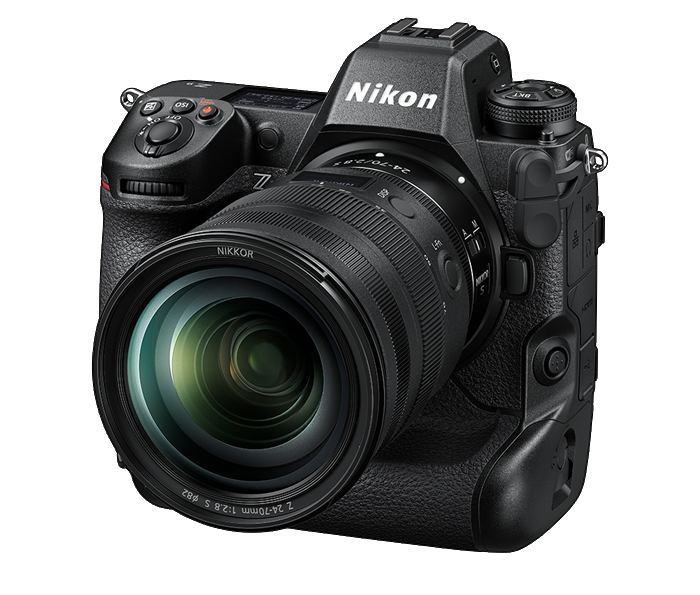

The Nikon Z9 and Sony ZV-E1 are both high-quality full-frame mirrorless cameras that cater to different segments of photography and videography enthusiasts. The Z9 is aimed at professional photographers and advanced users looking for exceptional image quality and performance, while the ZV-E1 targets vloggers and content creators who prioritize ease of use and portability. As both features a full-frame sensor, they often find themselves in the same conversation, leading potential buyers to weigh their specifications and target uses carefully. Key differentiators include sensor resolution, autofocus capabilities, video performance, and overall design preferences.
Specifications Comparison
Detailed Comparison
Image Quality
When comparing image quality, the Nikon Z9 stands out with its impressive 46-megapixel full-frame sensor, which offers detailed and high-resolution images that are ideal for professional applications like landscape and portrait photography. The larger megapixel count allows for greater cropping flexibility and detailed enlargements, which is a significant advantage for high-end users. In contrast, the Sony ZV-E1 has a 12-megapixel sensor which, while providing respectable image quality for web and video content, lacks the detail that comes with higher megapixel counts. This may limit the ZV-E1's suitability for applications where extreme detail is essential, although it can still perform well in low-light conditions. The difference in resolution makes the Z9 the clear winner in this regard.
Autofocus System
The autofocus systems of both cameras showcase the strengths of their respective brands. The Nikon Z9 boasts an impressive 493 autofocus points, which provide vast coverage and rapid subject tracking capabilities, ensuring sharp focus even in challenging conditions. This is particularly beneficial for wildlife and sports photography, where fast-moving subjects are commonplace. Conversely, the Sony ZV-E1 features an advanced autofocus system with 759 points that excels in face and eye detection, making it particularly effective for vloggers and those focused on capturing people. While the larger number of points on the ZV-E1 could suggest a slight edge for video work, ultimately, the versatile performance of the Z9 in varying conditions earns it the top spot.
Video Capabilities
In terms of video capabilities, both cameras have distinct strengths. The Nikon Z9 supports 4K video at up to 120 frames per second, enabling silky-smooth slow-motion footage and high-quality recordings suitable for cinematic projects. This is paired with advanced features like 10-bit color depth, 12-bit RAW output, and dual card slots, reinforcing its professional-grade status. On the other hand, the Sony ZV-E1 supports 4K video at up to 60 frames per second, which, while still sufficient for most content creators, does not match the Z9's high frame rate capabilities. However, it is significantly more user-friendly for vloggers, featuring features like product showcase mode and background defocus that cater specifically to this demographic. Nonetheless, for serious video work, the Z9's advanced specs clearly give it the edge.
Build & Ergonomics
The build quality of the Nikon Z9 reflects its professional status, featuring a robust, weather-sealed body that can withstand tough shooting environments, making it suitable for outdoor photography. It is heavier at 1340 grams and has a larger body, which some users may find more stable when shooting with long lenses. In contrast, the Sony ZV-E1, weighing only 483 grams, is designed with portability and comfort in mind, aligning with the needs of vloggers. While it is not as rugged as the Z9, it is still weather-sealed and compact, making it easy to carry for extended periods while maintaining decent durability. The choice here will depend significantly on the user's priorities between durability and portability.
Battery & Storage
The Nikon Z9 excels in the battery department, boasting a battery life of approximately 740 shots, which is ideal for long shooting sessions in various conditions. Coupled with dual card slots for both CFexpress and SD cards, it accommodates heavy data loads well, especially for high-resolution images and extensive video recording. In contrast, the Sony ZV-E1 has a shorter battery life, rated at around 570 shots. While it also features an SD card slot, it lacks the dual card capability, limiting its efficiency for professional workflows. For photographers and videographers who prioritize extended shooting sessions without the need to consistently change memory cards, the Z9 is the more reliable option.
Value for Money
Price-wise, the Nikon Z9 is positioned at $5500 compared to the Sony ZV-E1's more accessible price point of $2200, making the ZV-E1 a more budget-friendly option for entry-level users or content creators just starting out. However, while the ZV-E1 offers excellent value for its price, especially for video work with its specialized features, the Z9 provides significantly more advanced capabilities, higher resolution, and an overall professional build. For serious photographers and videographers who require top-tier performance, the investment in the Z9 may be justified due to its specifications. Therefore, when considering sheer capabilities, the value shifts in favor of the Z9, but for users on a budget, the ZV-E1 remains a commendable investment.
Our Verdict
Overall, the Nikon Z9 emerges as the winner in this comparison due to its superior image quality, advanced autofocus system, exceptional video capabilities, and robust build. It is an ideal choice for professional photographers and videographers who need a reliable camera for demanding environments. On the other hand, the Sony ZV-E1 is a fantastic option for vloggers and content creators seeking a lightweight, easy-to-use camera with impressive performance at a lower price. Both cameras serve distinct user needs, and potential buyers should carefully consider their priorities when making a decision.