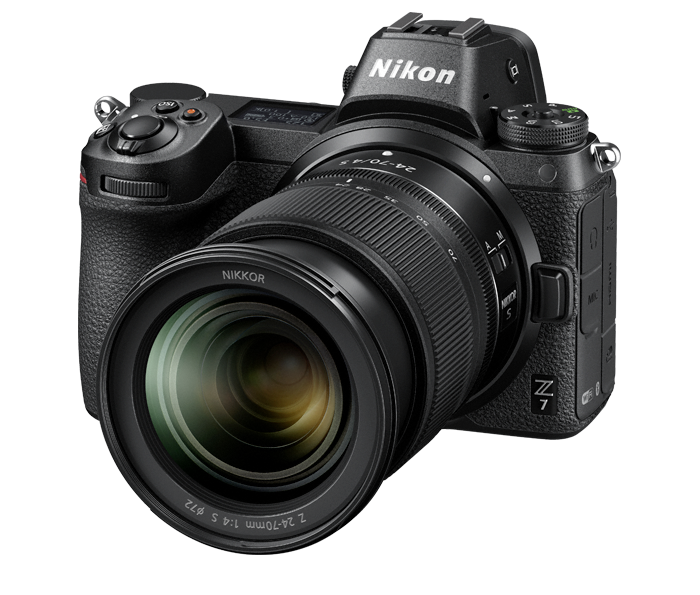

The Nikon Z7 and Sony A9 II are two highly regarded full-frame mirrorless cameras that attract photographers and videographers alike, especially those looking to step up their game. Both cameras have been designed with professionals in mind, offering high resolution, impressive autofocus capabilities, and robust build quality. Photographers may find themselves choosing between the Z7's high megapixel count for detail-rich images and the A9 II's superior speed and autofocus system, which benefits high-paced shooting situations such as sports or wildlife photography. Selecting between these two models often comes down to specific needs: image quality versus speed, resolution versus autofocus performance, and overall ergonomics.
Specifications Comparison
Detailed Comparison
Image Quality
The Nikon Z7 leads with a remarkable 46-megapixel sensor, producing images with exceptional detail and dynamic range. This high resolution is especially beneficial for landscape, portrait, and commercial photography, where fine detail is paramount. The Z7's ISO performance, with a range that can be expanded to 102400, allows for excellent image quality even in low-light scenarios, although noise can become a concern at higher settings.
Conversely, the Sony A9 II, which features a 24-megapixel sensor, is catered toward fast shooting and responsiveness rather than sheer resolution. While it may not match the Z7 in detail for large prints, the A9 II produces sharp, vibrant images that still perform well in low-light conditions, with an ISO range that expands from ISO 50 to 204800. This flexibility appeals to photographers who prioritize clean images across a broad range of lighting conditions.
Overall, while the Z7's higher resolution is a clear advantage for detail-oriented work, the A9 II offers sufficient image quality for most applications and excels in speed, making it a great option for action shots.
Winner: a
Autofocus System
In terms of autofocus, the Sony A9 II shines with its cutting-edge 693 phase-detection points, which cover a large area of the frame, allowing for quick and accurate focusing, especially in fast-paced situations. With its ability to achieve 20 frames per second when shooting in continuous mode, the A9 II is ideal for sports as it can capture fleeting moments with ease. Furthermore, the camera's reliable Eye-AF technology enhances portrait shooting by effectively tracking subjects' eyes, ensuring sharp focus where it is most needed.
The Nikon Z7's autofocus system features 493 points, which is impressive but doesn't quite measure up to the comprehensive speed and coverage offered by the A9 II. While the Z7 performs superbly in most scenarios and offers face detection, the difference in point coverage can make the A9 II a preferred choice for action-oriented photographers.
Considering the sheer speed and tracking capabilities, the A9 II takes the crown in the autofocus department. Both cameras perform well, but for those needing the utmost reliability in dynamic shooting environments, the A9 II is the clear winner.
Winner: b
Video Capabilities
Both the Nikon Z7 and Sony A9 II support 4K video resolution at 30p, making them suitable for videographers looking to capture high-quality footage. However, the Nikon Z7 provides full-frame 4K recording with no crop, making it more appealing for wide shots and maintaining the sensor's full field of view. Additionally, the Z7 offers ample features such as N-Log and 10-bit HDMI output, catering well to those looking to perform advanced post-production work.
On the other hand, the Sony A9 II also offers robust video capabilities, including additional frame rates in Full HD and an impressive autofocus system that carries over from its still photography performance, while being particularly effective during video shooting. However, video features like N-Log are not available in the A9 II, which may limit some professional videographers.
Overall, while both cameras can deliver excellent video quality, the Z7's broader array of video functionalities, coupled with its uncropped 4K capabilities, gives it a slight edge for those primarily focused on video.
Winner: a
Build & Ergonomics
Both the Nikon Z7 and Sony A9 II are robustly built and weather-sealed, making them suitable for outdoor use in challenging conditions. The Nikon Z7's design is particularly user-friendly, with a somewhat larger grip and a more traditional layout that may appeal to users transitioning from DSLRs. Its touchscreen is responsive and allows for intuitive operation.
The Sony A9 II is slightly bulkier, but its ergonomics are commendable, with customizable buttons and a comfortable grip. However, some users may find the button and dial layout less intuitive compared to the Z7. The A9 II's menu system is often criticized for complexity, which could deter new users.
Both cameras have their strengths in terms of ergonomics, but the Z7 may have a slight edge for those used to traditional camera layouts and a larger grip, while the A9 II will suit those accustomed to Sony's interface and who appreciate its customization options.
Winner: a
Battery & Storage
The battery life on the Sony A9 II is impressive, rated at approximately 690 shots per charge, allowing photographers to shoot for extended periods without needing frequent battery changes. This can be particularly beneficial in lengthy shooting scenarios or when engaging in event photography. The A9 II also supports dual memory cards, providing ample options for storage, backing up images seamlessly in different formats or speeds.
In contrast, the Nikon Z7 has a lower battery life at around 330 shots. While it also supports dual card slots, its lesser battery performance can be a limiting factor for those who shoot extensively throughout the day without the opportunity to recharge.
Taking battery life and storage capabilities into account, the A9 II is undoubtedly superior, addressing the needs of those who prioritize longevity and flexibility during shoots.
Winner: b
Value for Money
When assessed from a pricing perspective, the Nikon Z7 is priced at approximately $3399, while the Sony A9 II comes in at a higher price of about $4500. The Z7 presents itself as an attractive proposition for those seeking high resolution, solid build, and commendable features without breaking the bank. It represents excellent value, especially for landscape and portrait photographers who can leverage its high pixel count.
In contrast, the A9 II's increased cost can be justified by its high-speed performance, superior autofocus, and better battery life. For professionals whose work demands quick responsiveness and reliability, the additional investment may be worthwhile.
Ultimately, it boils down to how one values speed versus image quality. For high-resolution needs without needing extreme speed, the Z7 stands out as a more budget-friendly choice, while the A9 II's premium pricing aligns closely with its performance for fast-action photography.
Winner: a
Lens Ecosystem
Both Nikon and Sony have invested greatly in their lens ecosystems, making them robust choices for varying photographic needs. Currently, Nikon offers a growing range of Z-mount lenses that take full advantage of the Z7's capabilities. However, the selection may not yet match the breadth available for the Sony E-mount, which has a wide variety of lenses, both in terms of native lens offerings and third-party support.
Sony's extensive lens ecosystem provides photographers with numerous options, covering everything from ultra-wide to telephoto. Additionally, third-party manufacturers have widely embraced the E-mount, offering even more diverse choices. This versatility offers filmmakers and photographers an advantage in finding the correct lens for their specific projects.
In contrast, while Nikon's Z-mount system is expanding, for those who rely on a vast selection of lenses, the current limitation may deter some users. Thus, prospective buyers must consider their long-term lens needs alongside their camera body choice.
Winner: b
Our Verdict
In conclusion, the Nikon Z7 edges out the Sony A9 II overall due to its superior resolution, video capabilities, and value proposition, making it ideal for photographers prioritizing image quality and extensive detail. However, the A9 II excels in autofocus performance, battery longevity, and fast-action capabilities, making it the preferred choice for sports and action photographers. Each camera offers distinct advantages, and the final decision would depend on the buyer's specific needs and shooting style.
Nikon Z7
Sony A9 II
Also Compare
Frequently Asked Questions
Which camera is better for sports photography?
The Sony A9 II is better for sports photography due to its faster burst shooting, superior autofocus system, and overall speed capabilities.
Is the Nikon Z7 worth the investment for landscape photography?
Yes, the Nikon Z7 offers a high resolution of 46 megapixels, which is excellent for landscape photography, providing excellent detail and dynamic range.
How do these cameras perform in low light?
Both cameras perform well in low light; however, the Nikon Z7 has a slightly better high ISO expansion range, allowing for cleaner images in low-light scenarios.
Can these cameras be used for video production?
Yes, both cameras can record 4K video, but the Nikon Z7 has extra video features like N-Log and no crop recording, which may make it more suitable for professional video production.
What about lens options for each camera?
The Sony A9 II has a more extensive lens selection available due to the well-established E-mount ecosystem, while the Nikon Z7's lens offerings are growing but may not be as comprehensive as Sony's at this stage.