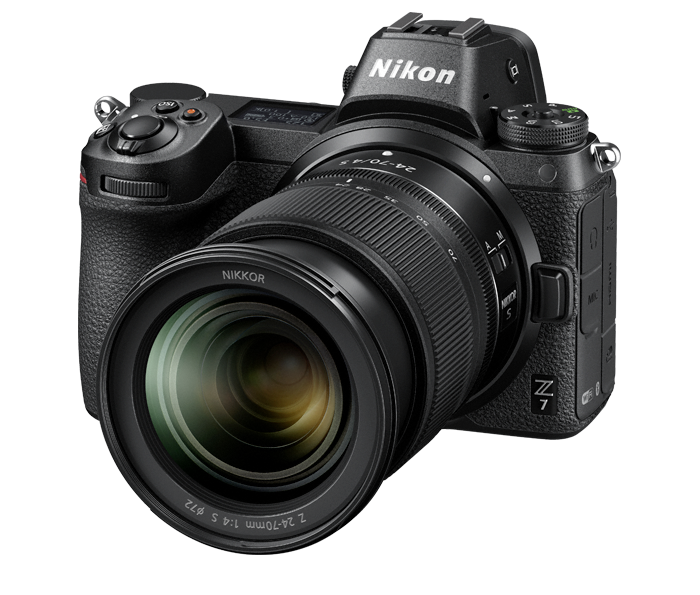

The Nikon Z7 and Sony A7S III are two of the leading full-frame mirrorless cameras available, often compared by enthusiasts and professionals alike who are looking for high-quality image capture and video capabilities. While both cameras share a similar full-frame sensor architecture, they cater to somewhat different audiences: the Z7 is primarily geared towards high-resolution photography, making it ideal for landscape, portrait, and studio work, whereas the A7S III targets videographers and content creators with its exceptional video capabilities and low-light performance. Understanding the key differentiators will help buyers select the right camera that aligns with their specific photographic needs.
Specifications Comparison
Detailed Comparison
Image Quality
In contrast, the Sony A7S III features a much lower resolution 12-megapixel sensor. While this may seem limiting for still photography, it excels in low-light conditions due to its larger individual pixel size, allowing for better noise management and overall image quality at high ISO settings. Its native ISO range of 80-102,400 (expandable to 40-409,600) translates into exceptional performance in extreme lighting situations, making it a favorite among videographers and night-time photographers. Moreover, for applications requiring wide dynamic range and depth of field control, Z7's higher resolution may have the edge.
Autofocus System
Conversely, the A7S III features a more advanced autofocus system with 759 points, offering faster and more accurate focusing, especially for video work and fast-action photography. Its real-time Eye autofocus for both humans and animals is highly praised, providing exceptional tracking capabilities. The additional focus points give the A7S III a crucial advantage in scenarios where speed and precision matter most, making it a superior choice for action and wildlife photographers.
Video Capabilities
In stark contrast, the A7S III stands out with its robust video features, offering 4K recording up to 120p, enabling stunning slow-motion playback without compromising quality. It also includes advanced features like 10-bit 4:2:2 internal recording, high frame-rate capture, and excellent low-light performance, making it a clear leader in the realm of videography. These features cater comprehensively to the needs of filmmakers and content creators looking for the highest quality video.
Build & Ergonomics
On the other hand, the A7S III weighs 699g, which is marginally heavier, but offers a larger body size that some users find ergonomic, especially with larger lenses. Despite being slightly bulkier, it maintains a balance that many users appreciate. Additionally, the A7S III is noted for its customizable buttons and intuitive layout, further enhancing user experience. Both bodies feel premium, yet personal preference might sway buyers based on fit and feel in hand.
Battery & Storage
In contrast, the A7S III boasts a superior battery performance with an estimated 600 shots per charge, effectively doubling the longevity in the field. This extended life allows videographers to shoot longer sessions without worry, making it a more reliable option for dedicated shooting days. Additionally, both cameras feature dual card slots; however, the A7S III supports CFexpress Type A cards, which provide faster writing speeds necessary for high-bitrate video recordings.
Value for Money
However, the A7S III's price of $3,499 can be considered justified based on its advanced video features, superior low-light performance, and longer battery life. It positions itself uniquely for content creators and professional videographers who require cutting-edge video technology and the ability to perform in challenging lighting conditions. The enhanced functionality and versatility present in the A7S III make it an attractive option that may justify the higher price for those prioritizing videographic capabilities.
Our Verdict
In conclusion, both the Nikon Z7 and Sony A7S III shine in their respective domains, making the choice heavily dependent on the user's primary needs. If high-resolution still photography is the focus, the Z7 has an edge with its superior image quality and detail. Conversely, for videographers seeking incredible performance in dynamic environments or low-light conditions, the A7S III is the definitive choice. Each camera offers excellent value; thus, potential buyers should consider whether their primary interest lies in stills or video to make the most informed decision.
Nikon Z7
Sony A7S III
Also Compare
Frequently Asked Questions
Which camera has better low-light performance?
The Sony A7S III has superior low-light performance due to its larger individual pixels and higher expandable ISO range, making it the better choice for shooting in dark conditions.
Is the Nikon Z7 good for video work?
The Nikon Z7 can handle video well with 4K capabilities at 30p, but it may not meet the needs of serious videographers compared to the A7S III's more advanced video specifications.
Which camera is better for wildlife photography?
The Sony A7S III is generally better for wildlife photography due to its faster autofocus system and performance in low-light situations, essential for capturing rapid movements.
Can I use old Nikon lenses on the Z7?
Yes, with the proper adapter, you can use older Nikon F-mount lenses on the Z7, expanding your lens options significantly.
Which camera offers the best dynamic range?
The Nikon Z7 provides a better dynamic range thanks to its higher resolution sensor, delivering more detail in both shadows and highlights.