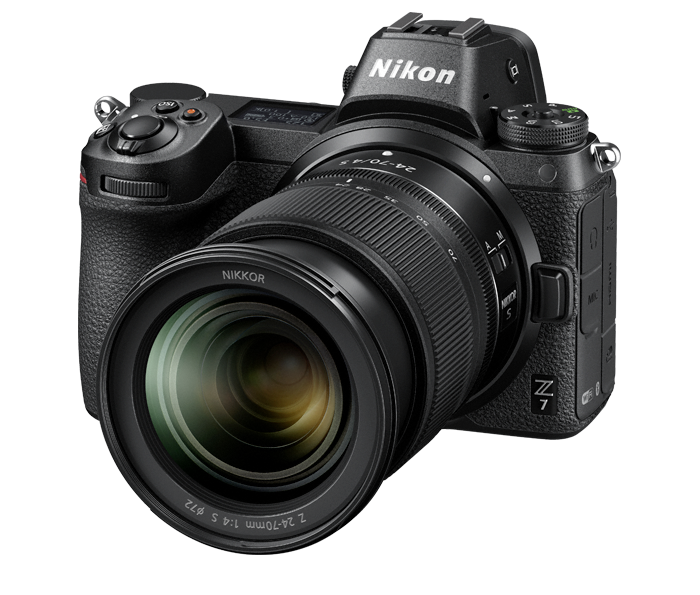
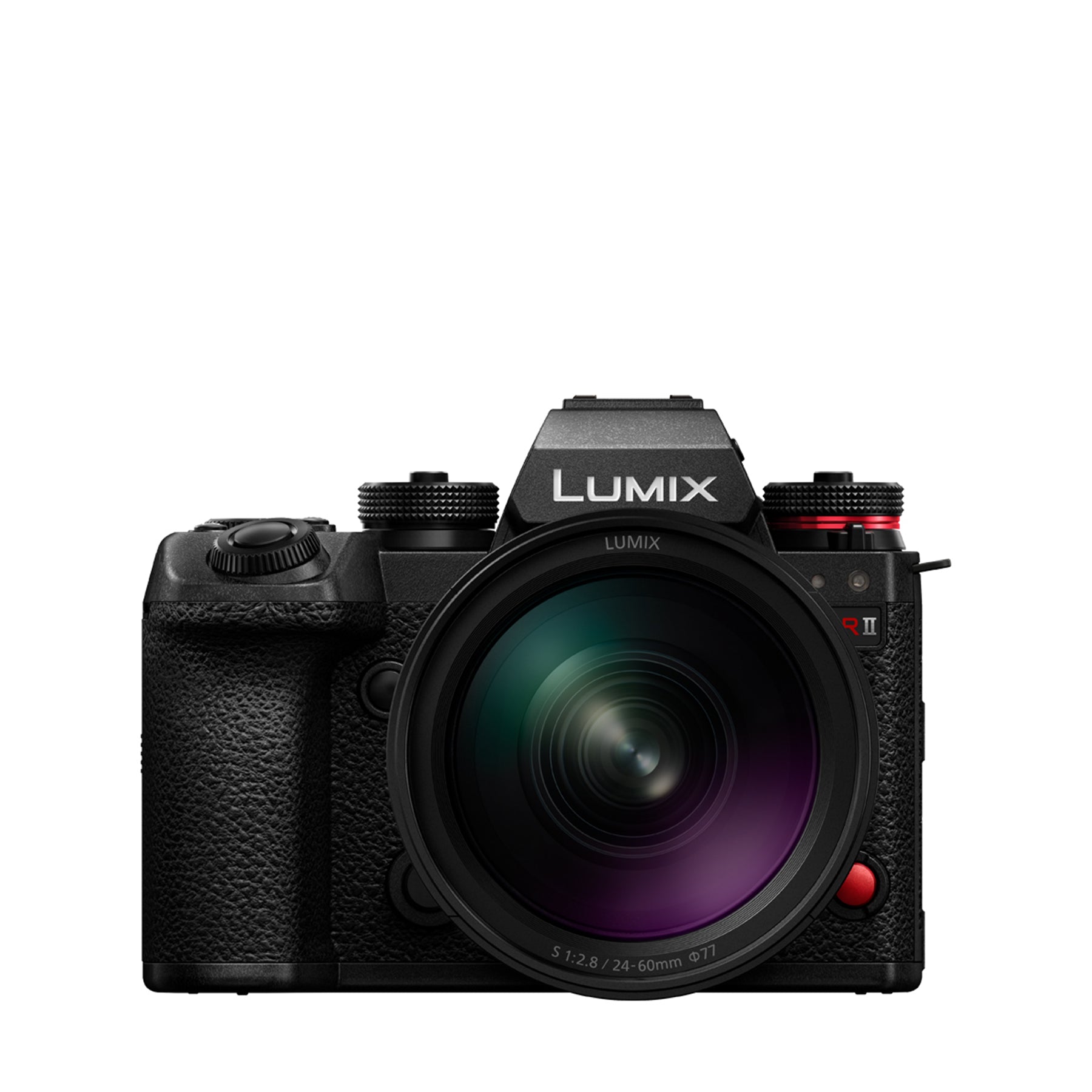
The Nikon Z7 and the Panasonic S1R II are two high-end mirrorless cameras positioned towards professional photographers and advanced enthusiasts. Both models feature full-frame sensors and outstanding image quality, making them popular choices for anyone looking to capture stunning images in various conditions. Buyers may find themselves torn between these two models, as they offer different strengths catering to specific needs, such as video capabilities, autofocus performance, and overall usability. Key differentiators include the Nikon Z7's higher resolution and weather sealing versus the Panasonic S1R II's superior video features and burst shooting capabilities.
Specifications Comparison
Detailed Comparison
Image Quality
The Nikon Z7 boasts a maximum resolution of 46 megapixels, offering exceptional detail and sharpness, which is invaluable for landscape and studio photography. With an ISO range that extends from 64 to 25600 (expandable up to 102400), the Z7 maintains clean images even at higher sensitivities, a crucial factor for low-light conditions. Users will appreciate its dynamic range and color reproduction, which remain impressive across various lighting scenarios.
On the other hand, the Panasonic S1R II, equipped with a 44.3-megapixel sensor, still delivers remarkable image quality, albeit slightly lower than the Z7. The camera's ISO range also spans to 25600, which means that while its performance in low light is decent, it might not match the Z7 in extreme conditions. However, the S1R II has features like High-Res Mode for even more detail, making it a compelling option for studio work.
In real-world scenarios, both cameras perform exceptionally well, but the Z7's higher resolution slightly elevates its edge for detailed work such as large prints or heavy cropping. Thus, for photographers whose priority is ultimate detail capture, the Nikon Z7 may be the preferred choice, while the S1R II can still meet most professionals' needs effectively.
Autofocus System
The Nikon Z7 utilizes an advanced autofocus system featuring 493 points, offering extensive coverage that is both fast and reliable. This allows the camera to lock focus quickly even in low-light conditions and enables tracking of moving subjects effectively, making it ideal for wildlife and sports photography.
Conversely, the Panasonic S1R II has a robust autofocus system that typically excels in burst tracking, with a maximum frame rate of 40 fps. This feature can be particularly advantageous in scenarios requiring high-speed shooting. However, it has slightly fewer autofocus points compared to the Z7, meaning that while it's competent, it may not offer the same precision in challenging focusing conditions.
When considering performance in diverse environments, the Z7 may have the edge in overall reliability and tracking capability, particularly for still subjects. However, if high-speed access and burst shooting rates are the higher priority, the S1R II shows its strength. Ultimately, the choice may come down to what type of photography one engages in most frequently.
Video Capabilities
In terms of video functionality, the Panasonic S1R II is a powerhouse, supporting both 8K at 30 fps and 4K at 120 fps, making it an excellent choice for videographers and those who prioritize high-resolution recording for their projects. The S1R II also provides advanced video features like V-Log and HDR capture, allowing for more creative control in post-production.
The Nikon Z7, while capable, offers 4K video recording only up to 30p, which may not satisfy those looking to create professional quality video content. However, it still performs admirably for casual and semi-professional video, with solid image quality and stabilization, though it lacks the high-frame-rate options present in the S1R II.
Given the needs of today's video creators, the Panasonic S1R II clearly stands out as the winner in this category. Its superior video specifications make it a better fit for filmmakers and those requiring high-resolution outputs.
Build & Ergonomics
Build quality is an essential aspect of any professional camera, and both the Nikon Z7 and Panasonic S1R II excel in this area. The Z7 is weather-sealed, which makes it suitable for demanding conditions while still maintaining a relatively compact design at 675 grams. Its dimensions are also ergonomic for comfortable handling during extended shooting sessions.
On the flip side, the S1R II also offers a robust weather-sealed body, but it is bulkier, which some users may find less convenient. The slightly heavier weight can be a factor when considering long shoots or mobility in the field. However, the design incorporates a more substantial grip, making it easier to handle during dynamic shooting situations.
In terms of usability, the ergonomic design can differ based on personal preference. The lightweight nature of the Z7 might appeal to landscape and travel photographers, while the S1R II's heftier structure encourages stability during shooting. Ultimately, both cameras provide excellent build quality, so personal preference may dictate the best choice.
Battery & Storage
The Nikon Z7's battery life is rated for approximately 330 shots, which is respectable but may be on the lower end compared to its competitor. When engaging in intensive shooting or video work, this could require the user to have additional batteries on hand, particularly for full-day shoots.
In contrast, the Panasonic S1R II benefits from improved energy management, allowing for a considerably longer shooting duration. With advancements in battery technology, it can exceed the Z7's performance significantly, making it a better choice for those who need to shoot extensively without interruption.
When considering storage, both cameras support CFexpress cards, which provide high-speed data transfer; however, the overall storage management can come into play based on the desired output resolution and frame rate. For users focused on efficiency and endurance, the superior battery performance of the S1R II offers an attractive advantage.
Value for Money
Both cameras are positioned within the premium market segment, with the Nikon Z7 priced at $3,399. Given its high resolution and robust autofocus system, it provides excellent value for photographers who prioritize image quality and low-light performance. However, the price tag may be a hefty investment for those not needing maximum resolution.
The Panasonic S1R II, while also expensive, tends to offer greater versatility for both still and video work, with its better video specifications justifying its price for many users, including filmmakers. Depending on the user's needs, the enhanced video capabilities and battery life may influence the perceived value.
When weighing options, the Nikon Z7 presents outstanding value for still photography enthusiasts focused on image quality, while the S1R II is a justifiable choice for professionals seeking hybrid capabilities. Ultimately, the right choice will largely depend on what functionalities are deemed worth the investment.
Lens Ecosystem
The Nikon Z7 utilizes the Nikon Z mount, which, while still expanding, offers a growing selection of high-quality lenses specifically designed for the mirrorless format. Nikon's established reputation in optics means that photographers can expect excellent performance and image quality from Z-mount lenses, but the choice might be less extensive compared to more mature systems.
In comparison, the Panasonic S1R II benefits from compatibility with the L-Mount, shared by Leica and Sigma. This effectively broadens the lens options available to users, making it easier for photographers to find specific focal lengths and series that best meet their needs. The collaboration among these three brands helps assure a richer lens ecosystem.
In the long run, while both systems are expanding, the S1R II boasts a more extensive variety of lenses available now. This could be a determining factor for buyers who place a high value on diverse photographic opportunities.
Our Verdict
The overall winner is the Panasonic S1R II, especially for buyers needing excellent video capabilities, higher frame rates, and longer battery life. Although the Nikon Z7 excels in still image quality and autofocus performance, the S1R II's hybrid strengths make it a compelling choice for a broader scope of photography and videography work. Photographers focused solely on high-resolution stills with a preference for ergonomics may still favor the Z7; however, the Panasonic S1R II provides a more well-rounded offering for those needing versatility across different formats.
Nikon Z7
Panasonic S1R II
Also Compare
Frequently Asked Questions
Which camera is better for video?
The Panasonic S1R II is better for video due to its support for 8K recording and higher frame rates than the Nikon Z7.
Is Nikon Z7 better for low-light photography?
Yes, the Nikon Z7 has a broader ISO range and higher resolution, making it more effective for low-light scenarios.
Which camera has a longer battery life?
The Panasonic S1R II has a significantly better battery life compared to the Nikon Z7, allowing for longer shooting durations.
Do I need to buy additional lenses?
It depends on your photography style. The Panasonic S1R II's lens ecosystem is currently more extensive, which may offer more options for different styles.
What about ergonomics and weight?
The Nikon Z7 is lighter and may be more comfortable for longer shoots, while the Panasonic S1R II, being bulkier, provides a more substantial grip and stability.