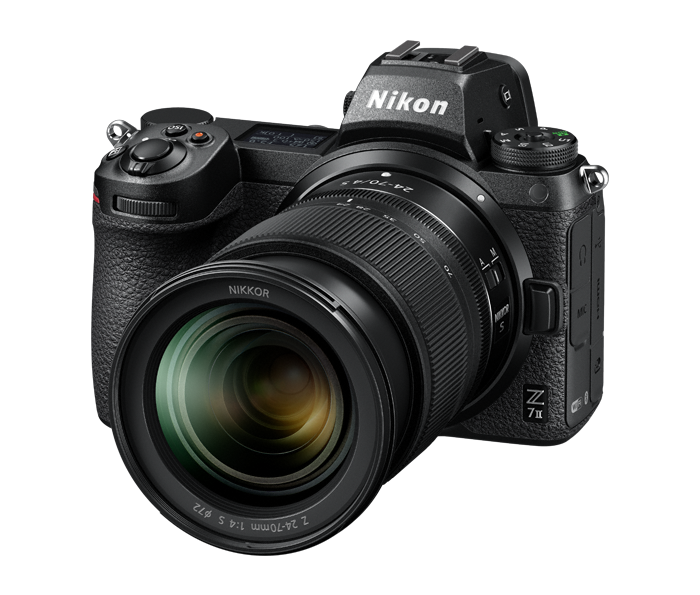

The Nikon Z7 II and Sony ZV-E1 are two prominent full-frame mirrorless cameras that cater to different user needs but are often compared due to their advanced features and capabilities. While the Nikon Z7 II appeals to professional photographers seeking high resolution and exceptional image quality, the Sony ZV-E1 targets content creators and vloggers who prioritize video performance and usability. As both cameras exhibit outstanding specifications, potential buyers must consider their specific requirements, budget, and intended use case to make an informed decision.
Specifications Comparison
Detailed Comparison
Image Quality
The Nikon Z7 II stands out with its impressive 46-megapixel sensor, allowing for highly detailed images suited for professional photography, large prints, or cropping without loss of quality. Its full-frame sensor size of 35.9 x 23.9 mm captures an extensive dynamic range, resulting in stunning image quality even in low light settings. The Z7 II's native ISO range of 64-25,600, expandable to 32-102,400, further enhances low-light capabilities, enabling photographers to shoot in various lighting conditions with less noise.
In contrast, the Sony ZV-E1, while equipped with a lower 12-megapixel sensor, excels in video-centric applications where high frame rates and sharp video capture are prioritized. Its effective ISO range from 80-102,400 offers significant low-light performance, further expanded to 40-409,600. Although its resolution is lower, the ZV-E1's sensor delivers good image quality, especially in dynamic video scenarios or when streaming.
Overall, the Nikon Z7 II is tailored for still photography enthusiasts who require resolution and quality, while the Sony ZV-E1 caters to content creators with a more video-focused approach. For still image quality, the Nikon Z7 II takes the lead.
Autofocus System
The autofocus system is crucial for ensuring sharp images and effective tracking, especially in dynamic environments. The Nikon Z7 II features a sophisticated autofocus system with 493 focus points, providing wide coverage and the ability to lock onto subjects efficiently-ideal for a range of photography styles, including portraits and action shots. It also supports eye-detection autofocus in both humans and animals, enhancing portrait photography capabilities.
On the other hand, the Sony ZV-E1 has an even more robust autofocus system boasting 759 autofocus points. This extensive coverage and advanced eye-tracking technology allow for superior subject tracking, particularly beneficial for video recording and fast-moving subjects during vlogs. The inclusion of features like Real-Time Eye autofocus enhances its appeal for creators focused on capturing engaging content with precision.
Considering the diverse applications and performance of both systems, the ZV-E1's autofocus system is slightly more reliable for videos and fast-paced shooting, whereas the Z7 II remains an excellent option for traditional photography. Thus, this section leans towards the ZV-E1.
Video Capabilities
When assessing the video capabilities between the two cameras, both models support 4K video at 60p, making them suitable for high-quality video production. The Nikon Z7 II is particularly praised for its stunning image quality and ability to capture detailed footage, making it an excellent choice for cinematic projects and professional videography. Additionally, it offers a range of frame rates and color profiles, allowing filmmakers to create distinctive pieces.
Conversely, the Sony ZV-E1's video functionality is designed with the vlogger in mind, featuring a fully articulating touchscreen that simplifies self-recording. Furthermore, its user-friendly interface and dedicated video features enhance the shooting process, particularly for those who may not have extensive technical expertise. The ZV-E1 also supports live streaming features, making it highly relevant in today's content creation landscape.
In a direct comparison, while both cameras excel in video resolution and quality, the ZV-E1 is more equipped for content creators looking for versatility and ease of use in video recording. Therefore, in the context of video performance, the ZV-E1 takes the edge.
Build & Ergonomics
In terms of build quality and ergonomics, both cameras are designed to withstand the rigors of professional use. The Nikon Z7 II features a robust weather-sealed body, ensuring durability in challenging conditions, and is slightly larger and heavier at 705g. This heft contributes to a comfortable grip for photographers who may shoot for extended periods, making it a reliable tool for outdoor and studio work alike.
The Sony ZV-E1, weighing in at just 483g and featuring a smaller footprint, is designed for portability and ease of use, particularly for on-the-go video creators. Its compact design emphasizes convenience and accessibility for vloggers, with controls and features often tailored to speed up the video creation process.
Ultimately, the choice here depends on user preference: the Z7 II offers a heftier, more professional build, while the ZV-E1 excels in portability and streamlining content creation. For professional photography needs, the Z7 II may be more appealing, while vloggers might prefer the convenience of the lightweight ZV-E1.
Battery & Storage
Battery performance is a critical consideration for photographers and videographers. The Nikon Z7 II boasts a battery life of approximately 420 shots on a single charge, which is quite respectable for prolonged photography sessions but may require extra batteries for extended video use. It utilizes dual card slots for storage, accommodating both SD UHS-II and XQD cards, providing flexibility and speed in data handling, which is essential for both high-resolution images and long video recordings.
On the flip side, the Sony ZV-E1 exhibits longer battery life, with the ability to shoot around 570 shots per charge. This extended battery life is beneficial for video recording and outings where charging opportunity may be limited. Like the Z7 II, the ZV-E1 also includes dual card slots that support SD UHS-II cards, ensuring speedy performance, particularly when managing high-bitrate video files.
When it comes to overall battery performance, the ZV-E1 holds a slight advantage, particularly for video-heavy workflows. Thus, in the context of battery life and storage efficiency, the Sony ZV-E1 is the winner.
Value for Money
Analyzing the value proposition, the Nikon Z7 II is priced at approximately $2999. This camera targets professionals and enthusiasts who demand high-quality images and advanced features suitable for serious photography and video work. The camera's superior resolution, robust autofocus, and weather-sealed body justify its higher price for those primarily focused on still photography.
In contrast, the Sony ZV-E1 is priced at $2200, catering more to content creators and vloggers who require high-quality video capabilities without needing high-resolution images as a priority. The lower price doesn't compromise its feature set, as it comes equipped with versatile shooting options, a user-friendly interface, and enhanced video functions that are especially valuable for its target audience.
Considering the performance and specific user needs, the Z7 II offers excellent value for traditional photography, while the ZV-E1 delivers compelling features for its price, particularly geared towards content creation. Evaluating the price against the core user needs presents the ZV-E1 as offering superior value overall.
Our Verdict
Overall, the comparison between the Nikon Z7 II and Sony ZV-E1 showcases the strengths of each camera tailored to different user needs. The Z7 II excels in image quality, making it a favorite among professional photographers, while the ZV-E1 shines in video capabilities and user-friendly features, appealing to content creators and vloggers. The overall verdict leads to a tie, as each camera serves distinct purposes and meets the expectations of its respective user base effectively, making them leaders in their segments.
Nikon Z7 II
Sony ZV-E1
Also Compare
Frequently Asked Questions
Which camera is better for professional photography?
The Nikon Z7 II is better for professional photography due to its 46-megapixel sensor, superior image quality, and advanced autofocus capabilities, making it ideal for high-resolution needs.
Is the Sony ZV-E1 suitable for vlogging?
Yes, the Sony ZV-E1 is designed specifically for content creators and vloggers, offering user-friendly features like a flip-out screen and enhanced autofocus for capturing dynamic video content.
How important is weather sealing for these cameras?
Weather sealing is essential for photographers who shoot in challenging environments. Both cameras are weather sealed, making them resilient in inclement weather, but the Z7 II may offer more durability due to its robust build.
Does video quality differ between these two models?
While both offer excellent 4K 60p video quality, the ZV-E1 provides better video-centric features and ease of use, making it more suitable for those focusing primarily on video content creation.
Can I use Nikon lenses on the Sony ZV-E1?
No, you cannot directly use Nikon lenses on the Sony ZV-E1. Each camera has a different lens mount system (Nikon Z mount vs. Sony E mount), and lenses are generally not interchangeable without an adapter, which may introduce limitations.