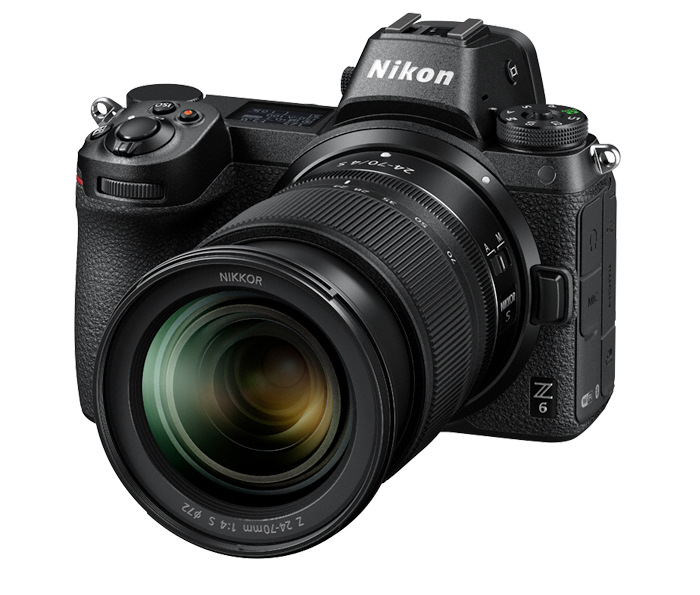
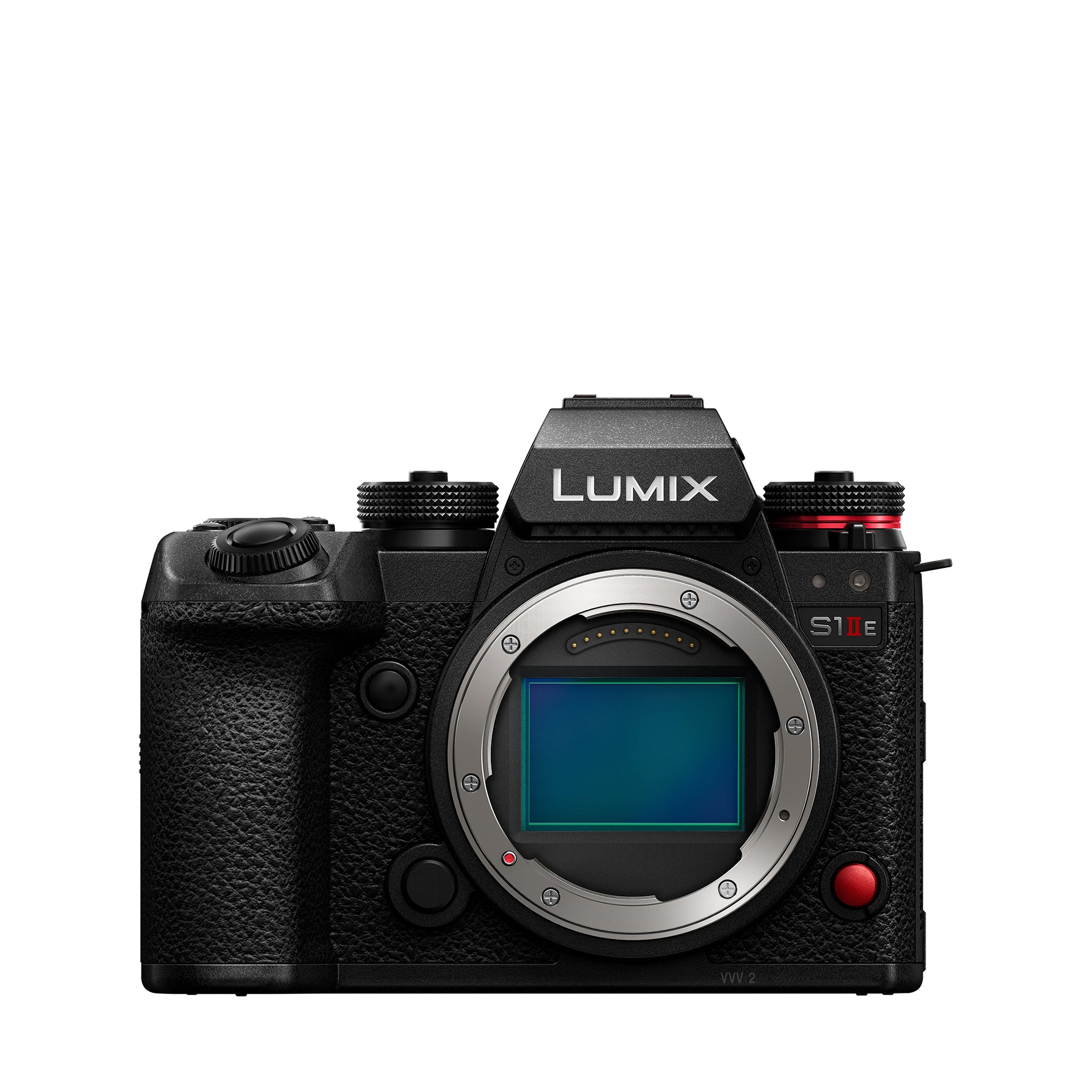
The Nikon Z6 and Panasonic S1 II E are both formidable contenders in the full-frame mirrorless camera market, appealing to a wide range of photographers and videographers. They are often compared due to their excellent image quality, advanced video capabilities, and robust build quality. Buyers looking for a camera that excels in low-light performance, fast shooting speeds, and 4K video capabilities often find themselves torn between these models. Key differentiators include the Nikon Z6's established history since its 2018 release and its balanced feature set, while the Panasonic S1 II E offers superior video options and higher frame rates in video recording, appealing particularly to those focused on cinematography and content creation.
Specifications Comparison
Detailed Comparison
Image Quality
The Nikon Z6 features a full-frame sensor with a resolution of 25 megapixels, allowing for impressive detail and dynamic range in various lighting conditions. Its ISO range extends significantly from 100 to an impressive 51200, expandable to 204800, which grants it remarkable low-light capabilities. Users have often praised its performance in challenging environments, making it a top choice for event and wedding photographers.
On the other hand, the Panasonic S1 II E offers a slightly lower resolution at 24.1 megapixels, but it still produces high-quality images with excellent color reproduction. While both cameras share a full-frame sensor, the difference in pixel count is minor, and for most users, it may not translate to noticeably better images. However, the S1 II E's sensor is known for its color science and detail retention. Additionally, both cameras benefit from their respective manufacturers' technologies, enhancing their performance in high-contrast scenes.
Overall, both cameras deliver excellent image quality, but the Nikon Z6's better ISO performance gives it a slight edge in low-light scenarios. However, for general photography, the difference may not be significant enough to sway all buyers.
Autofocus System
The Nikon Z6 boasts a sophisticated autofocus system with 273 focus points, ensuring accurate tracking of subjects across the frame. It also features Eye AF technology, which greatly enhances portrait photography by locking focus on the subject's eyes. Combined with substantial low-light performance, this autofocus system is adept at handling fast-moving subjects, making it a reliable choice for sports and wildlife photography.
In contrast, the Panasonic S1 II E features an equally impressive autofocus system but emphasizes the use of contrast detection and depth from defocus technology. While both systems work effectively, some users report that the autofocus in the S1 II E may struggle with rapid movement in low light compared to the Z6. However, the touch-screen functionality allows users to easily select focus points, which can enhance the overall shooting experience.
Given the higher number of autofocus points and real-world performance in challenging environments, the Nikon Z6 is the clear winner in this category. Its capability to track subjects consistently under various conditions makes it especially appealing for those who prioritize autofocus speed and accuracy.
Video Capabilities
When it comes to video recording, the Panasonic S1 II E takes the lead with its impressive capabilities, supporting video resolutions up to 5.9K at 60p and 4K at 120p. This offers filmmakers a wealth of options for high-frame-rate and high-resolution projects, making it ideal for serious videographers and content creators. The versatility in video modes, coupled with advanced features such as V-Log and real-time monitoring, enhances its appeal for professional use.
In contrast, the Nikon Z6 can shoot 4K video at 30p, which, while sufficient for many casual and semi-professional videographers, may not meet the demands of those looking for higher frame rates or resolutions. The Z6 lacks some advanced video features found in the S1 II E, such as 10-bit internal recording and high-frame-rate recording options, which could limit its use for serious video projects.
Thus, for video-centric users, especially those seeking to produce cinematic-quality content, the Panasonic S1 II E is the superior choice, offering a breadth of features that aligns with modern videography needs.
Build & Ergonomics
Both the Nikon Z6 and Panasonic S1 II E feature robust build quality, with both cameras being weather-sealed to withstand challenging conditions. The Nikon Z6 weighs 675g with dimensions of 134 x 101 x 68 mm, making it relatively compact for a full-frame camera. Its ergonomics are well-designed for long handling sessions, and the button layout is intuitive, appealing to those new to mirrorless systems.
The Panasonic S1 II E, while slightly heavier, is built with a more substantial feel, which can inspire confidence in the field. Its larger grip offers a comfortable hold and can be an advantage for users who frequently use larger lenses. The controls on the S1 II E are also designed with videography in mind, featuring more dedicated buttons for quick access to video settings, providing filmmakers convenience during shoots.
Overall, while the Z6 offers a highly ergonomic experience, the S1 II E's sturdier build and added features appeal to videographers and those working in rugged environments. This makes this category a close race, but the S1 II E's ergonomics for video work give it a slight advantage.
Battery & Storage
The Nikon Z6 features a decent battery life, rated for approximately 310 shots per charge, which may be limiting for full-day shooting sessions, especially for intensive use in continuous shooting modes. It uses the Nikon Z mount, compatible with various lenses, but with fewer native options compared to other brands as it was released earlier.
Conversely, the Panasonic S1 II E shines in this respect, boasting longer battery life and capabilities that allow for around 400 shots. Additionally, it supports multiple video codecs and resolutions, leading to larger file sizes that can also demand greater storage capacity. The S1 II E is designed for more extended video shoots, making it a solid choice for filmmakers who often record in high-definition settings.
In terms of adaptability, while both cameras utilize SD cards for storage, the S1 II E's expanded capabilities and battery life make it substantially better for extended use in both photography and videography.
Value for Money
The Nikon Z6, priced at $1995, offers exceptional value considering its image quality, autofocus, and compact size. It is an all-rounder that caters to both photographers and videographers, making it an attractive option for those stepping into the full-frame mirrorless space without breaking the bank. Additionally, being an established model, it may present more accessible options for accessories and lenses, given its time on the market.
On the other hand, the Panasonic S1 II E, while offering advanced video features and overall robust performance, comes at a slightly higher price point and may not be as budget-friendly for casual users. The advanced video capabilities justify the price for filmmakers but may overshadow the needs of still photographers who could find similar results in the more affordable Z6.
When looking at the overall value, the Z6 stands out for general photography enthusiasts, but for professional video needs, the S1 II E may offer better long-term value despite the upfront cost differences. Therefore, the winner in this section ultimately depends on the buyer's specific usage requirements.
Our Verdict
In conclusion, the Nikon Z6 and Panasonic S1 II E both have specific strengths that cater to different segments of the photography and videography market. The Z6 excels in image quality and autofocus performance, making it a preferred choice for photographers focused on capturing stunning images, particularly in low-light situations. Meanwhile, the S1 II E stands out for its superior video capabilities and ergonomics tailored for videography but may be less appealing to still photographers looking for a purely stills-focused tool. Ultimately, the best choice hinges on whether the buyer prioritizes still photography or videography, with each camera offering a compelling package tailored to its respective user base.
Nikon Z6
Panasonic S1 II E
Also Compare
Frequently Asked Questions
Which camera has better low-light performance?
The Nikon Z6 provides better low-light performance due to its higher ISO range and larger dynamic range, making it more suitable for shooting in challenging lighting conditions.
What is the main advantage of the Panasonic S1 II E for videographers?
The Panasonic S1 II E's main advantage lies in its advanced video capabilities including 5.9K resolution, 4K/120p recording, and extensive video codec support, allowing filmmakers to create high-quality video content.
How do their autofocus systems compare?
The Nikon Z6 features 273 autofocus points with excellent subject tracking, particularly effective for fast-moving subjects, while the Panasonic S1 II E utilizes contrast detection with some depth from defocus technology, which may be less reliable in low-light situations.
Which camera is better for travel photography?
The Nikon Z6 is more lightweight and compact, making it a preferable option for travel photography, especially for those focusing on versatility and ease of use.
Can both cameras shoot in 4K?
Yes, both cameras can shoot in 4K; however, the Panasonic S1 II E offers higher frame rates and additional video resolutions for more advanced video needs.