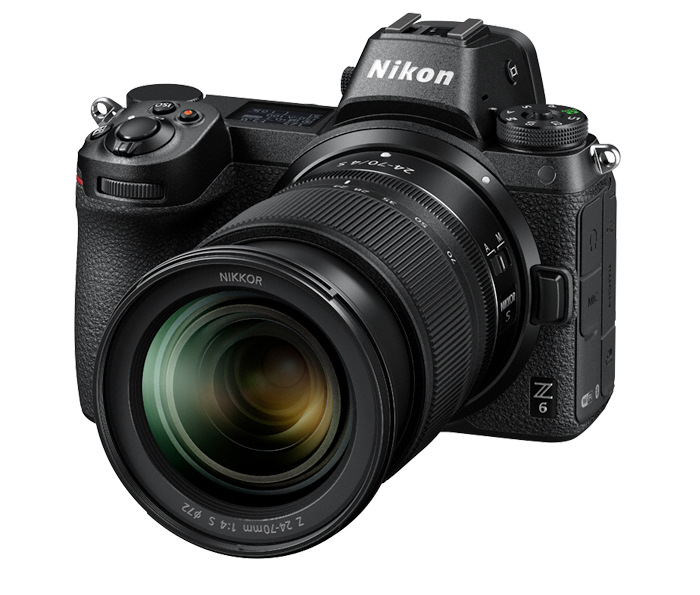
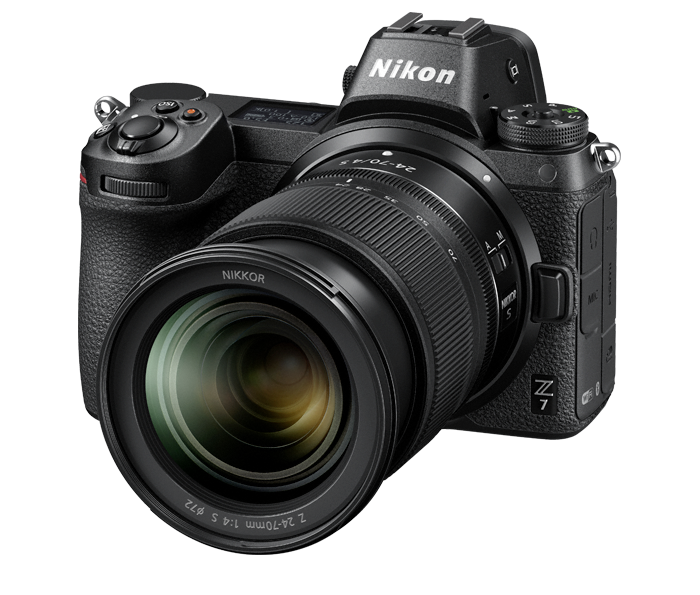
The Nikon Z6 and Z7 are two standout mirrorless cameras in Nikon's Z-series lineup, both introduced in 2018. They are often compared due to their shared full-frame sensor format, Z mount compatibility, and similar physical dimensions. Photographers looking to choose between the two are often those seeking either a high-resolution option (Z7) for landscapes and detailed subjects, or a versatile and slightly more affordable option (Z6) ideal for low-light performance and action shooting. The decision often boils down to specific needs concerning image quality, autofocus capabilities, video functionality, and budget constraints.
Specifications Comparison
Detailed Comparison
Image Quality
The Nikon Z7 boasts a significantly higher resolution with its 46 megapixels compared to the Z6's 25 megapixels. This higher resolution allows for more detail, making the Z7 an excellent choice for landscape photographers or those needing large prints. However, the Z6's image quality is still impressive, and it excels in low-light situations thanks to its wider ISO range, which can go as low as 50 and as high as 204800. Although the Z7 offers excellent image quality as well, its base ISO starts at 64, which might not perform as effectively in very low-light conditions.
Another factor to consider is dynamic range. The Z7 also seems to have a slight edge in dynamic range, allowing for better recovery of highlights and shadows in post-processing, which is particularly beneficial for photographers working in challenging lighting conditions. Nonetheless, both cameras deliver outstanding color fidelity and detail, but the Z6's performance in low-light scenarios might sway users who prioritize versatility in various shooting environments.
Autofocus System
In terms of autofocus, the Nikon Z7 features 493 focus points compared to the Z6's 273 points, giving it an advantage in terms of coverage and precision when tracking subjects. This makes the Z7 potentially better for capturing fast-moving subjects or for sports photography. Additionally, the Z7's autofocus system includes features like Eye AF, which is beneficial for portrait photography.
However, it's worth noting that the Z6 is no slouch and can still achieve remarkable autofocus performance, especially when shooting in lower light. The reduced number of points does not significantly hinder the Z6's tracking or hit rate in real-world conditions, making it more than capable for most photography needs. Overall, while both systems are strong, the Z7 wins due to its greater focus point coverage and capabilities.
Video Capabilities
Both the Z6 and Z7 offer similar video capabilities, providing 4K video resolution at 30 frames per second. However, the Z6 has a slight advantage with its superior low-light performance due to its lower megapixel count, which allows for less noise in darker shooting conditions. This makes it a preferred option for videographers who often shoot in dim environments. Additionally, the Z6 can utilize a wider range of ISO values effectively, vital for achieving quality footage.
Build & Ergonomics
Both the Z6 and Z7 feature identical dimensions and weight, making them quite comfortable to hold and operate for long periods. They also share robust weather-sealing, ensuring durability in adverse conditions, which is crucial for outdoor photographers. The controls and layout are identical, so users familiar with one will find it easy to transition to the other.
This consistency in design means that irrespective of which camera you choose, both maintain a high level of ergonomics and a professional feel. However, build quality is essentially equal across both models, making this aspect a tie.
Battery & Storage
The Nikon Z7 has a slightly better battery life, rated at approximately 330 shots compared to the Z6's 310 shots. While the difference is marginal, it can matter when shooting on longer assignments or during events. Both cameras use the same battery type (EN-EL15b), and both support USB charging.
In terms of storage, both models support dual card slots via the XQD format. However, the Z6's versatility in video capture could sway video developers, as it pulls higher performance in low-light conditions, enabling longer usage without the hassle of changing cards frequent enough to concern battery life.
Value for Money
When considering price, the Nikon Z6 is significantly more affordable at approximately $1995 compared to the Z7's price tag of around $3399. For photographers who require maximum resolution and can afford the premium, the Z7 is undoubtedly worth the investment. However, the Z6 offers exceptional value for a full-frame camera, particularly for those focused on versatility, low-light performance, and a well-rounded feature set.
Moreover, the Z6's price point makes it more accessible to a wider audience, including enthusiasts and semi-professionals who might not need the extra resolution of the Z7. Thus, for users where budget plays a critical role, the Z6 stands out as a more sensible investment.
Our Verdict
Overall, while the Nikon Z7 excels in resolution and autofocus capabilities, the Nikon Z6 offers superior value for those prioritizing low-light performance, video, and budget. For professionals needing high megapixel counts and advanced tracking, the Z7 is the ideal choice. Conversely, the Z6 accommodates a broader audience who can still achieve stunning results without the added cost or complexity of the higher-resolution model.
Nikon Z6
Nikon Z7
Also Compare
Frequently Asked Questions
Which camera is better for low-light photography?
The Nikon Z6 is generally better for low-light photography, as it has a wider usable ISO range and produces less noise at higher ISO settings due to its lower resolution.
Is the Nikon Z7 worth the extra cost?
If high resolution is crucial for your work-such as for large prints or detailed landscapes-the Z7 is worth the investment. However, if you don't need extreme detail, the Z6 is a more cost-effective choice.
Can both cameras shoot 4K video?
Yes, both the Nikon Z6 and Z7 can shoot 4K video at 30 frames per second, making them suitable for video projects.
How does the autofocus system compare in practicality?
The Z7 has a superior autofocus system with 493 points and advanced features, ideal for fast-moving subjects, whereas the Z6 is also capable but with fewer points.
What is the difference in battery life?
The Nikon Z7 has a slightly better battery life, rated at around 330 shots compared to 310 shots for the Z6. Both figures are respectable for mirrorless cameras.