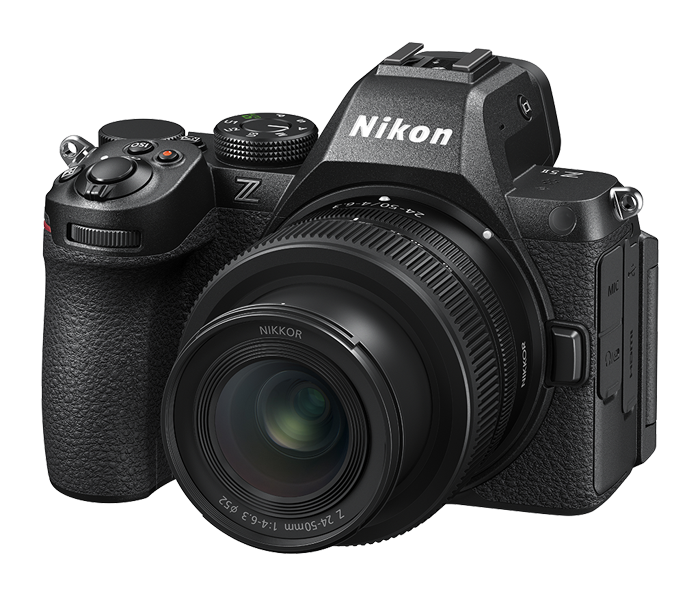
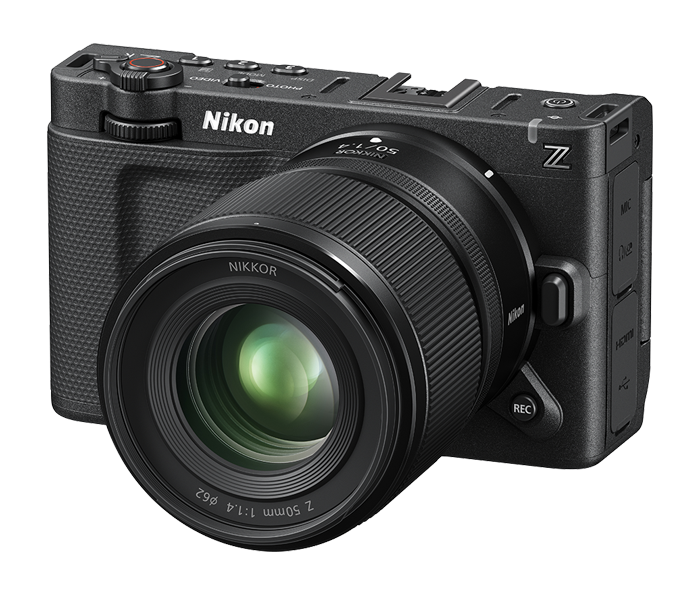
The Nikon Z5II and Nikon ZR are both full-frame mirrorless cameras released in 2025, catering to photography enthusiasts and semi-professional users seeking excellent performance in a portable package. These models are commonly compared due to their similar sensor sizes, modern Nikon Z-mount compatibility, weather-sealed bodies, and close release dates. Buyers are often torn between these two models because they target slightly different priorities: the Z5II offers a more traditional design approach, including an electronic viewfinder, while the ZR pushes boundaries with a minimalist form factor, a particularly large screen, and enhanced speed features.
Photographers deciding between the Z5II and ZR typically weigh the importance of ergonomics, image composition tools (like a viewfinder), speed, and multimedia functionality. The Z5II appeals to those who value a viewfinder, balanced performance, and a robust design at an aggressive price. In contrast, the ZR attracts those gravitating toward cutting-edge, compact, and simple camera designs for travel and vlogging, along with a higher frame rate and superior LCD. The key differentiators include the presence or absence of a viewfinder, shooting speed, screen technology, video spec, and the price point.
Specifications Comparison
Detailed Comparison
Image Quality
Both the Nikon Z5II and the Nikon ZR feature similar full-frame sensors measuring 35.9 x 23.9 mm, ensuring excellent light-gathering capability and dynamic range. The Z5II has a 24-megapixel sensor, while the ZR edges slightly ahead with 25 megapixels. This one-megapixel difference is negligible in real-world performance and has an inconsequential effect on overall image resolution. Differences in color science, dynamic range, and high-ISO performance are expected to be similarly minor given their contemporary sensor technologies.
One standout factor for the ZR is its explicitly stated native ISO range of 100-64000, which, while not specified for the Z5II, is typical of modern full-frame cameras. There's no evidence of a significant advantage in practical ISO usability, but the ZR may allow marginally more flexibility for extreme low-light work.
Both cameras feature the same 7.5-stop in-body image stabilization system, ensuring handheld shooting is equally effective in low light. In summary, image quality is extremely close between the two models, given their matching sensor sizes and near-equal resolution.
Autofocus System
The Nikon Z5II features a robust 299 autofocus points, promising excellent coverage and accuracy for both still and moving subjects. The ZR, in contrast, has 273 autofocus points. While this is slightly fewer in raw number, practical differences in autofocus point distribution and tracking are unlikely to be dramatic for most users, especially given Nikon's recent autofocus advancements.
However, if you shoot fast action or rely on subject tracking over a broad frame area, the Z5II's additional AF points could provide slightly better focus precision and tracking capability, especially in unpredictable situations. For portraiture, landscapes, and general photography, both systems will feel modern and reliable.
It's worth noting that frame rate is often intertwined with autofocus system demands; the ZR's higher 20 fps burst could theoretically push its AF system harder, but there's no explicit indication that accuracy or reliability suffers. In everyday use, the difference in the number of autofocus points is minimal, but the Z5II does maintain a paper advantage.
Video Capabilities
Video features are a distinguishing point between these two cameras. The Nikon Z5II records up to 4K at 60p, providing high resolution and frame rates for videographers and hybrid shooters. Having 4K 60p enables smooth slow-motion and greater flexibility for action and event shooters needing crisp, detailed video footage.
The Nikon ZR's video specifications are not fully detailed, but there's no explicit mention of 4K video or high frame rate recording in its provided specs. Given the lack of stated 4K video capability, as well as the more compact, screen-centric design, the ZR appears to prioritize stills and vlogging with its large, high-resolution 4" LCD (3,070,000 dots) but may not serve demanding video creators as well as the Z5II.
Both cameras benefit from the same effective 7.5-stop stabilization, which is a boon for handheld video work. However, the Z5II's confirmed 4K 60p video support gives it a decisive edge for serious video users.
Build & Ergonomics
The Nikon Z5II embraces a traditional mirrorless form, featuring an electronic viewfinder for precise composition in bright light or when shooting handheld with stability. Its slightly heavier (700g) and larger body provides a better grip and greater balance, especially when using larger Z-mount lenses, making it preferable for extended shoots or pro work.
The Nikon ZR takes the opposite approach: it's much more compact (630g, 133 x 81 x 49 mm) and forgoes the viewfinder entirely, instead relying on its large, ultrahigh-resolution 4-inch LCD. This makes the ZR extremely portable and attractive to travel photographers, vloggers, or anyone who prizes pocketability and discretion over traditional ergonomics. However, shooting in bright sunlight or needing added stability can be challenging without a viewfinder option.
Both bodies are weather-sealed, making them suitable for demanding environments, but the ZR's compactness will appeal to those prioritizing weight savings. Overall, the Z5II's inclusion of a viewfinder and better grip lend it broader ergonomic versatility.
Battery & Storage
Battery life can be a critical consideration, especially for travel and event photographers. The Nikon Z5II is rated for 330 shots per charge, which is around average for mirrorless cameras with EVFs, given the energy demands of the high-resolution electronic viewfinder and large LCD. The ZR's battery life is unspecified, but the absence of a viewfinder and lighter body could help reduce power consumption-although its larger, brighter screen may offset these gains.
Unfortunately, absent explicit data for the ZR, the Z5II's rating must serve as our comparison reference. 330 shots remains a practical baseline for most day-to-day use, though both models would likely benefit from spare batteries during serious outings.
In terms of storage, both cameras use the Nikon Z mount and presumably support the same memory card types (not specified). Given the available specs, neither model has a clear, decisive advantage aside from the Z5II's confirmed rating.
Value for Money
The Nikon Z5II sits at a very competitive price point of $1699 USD, making it one of the most affordable full-frame mirrorless cameras with a viewfinder, 4K 60p video, and advanced stabilization. It offers a broad feature set that covers all the needs of enthusiasts and emerging professionals.
By comparison, the ZR is positioned as a more premium option at $2200 USD. For the higher price, you get a slightly higher resolution sensor, faster burst speed (20 fps vs 14 fps), and a larger, more detailed LCD screen. However, the higher cost comes at the expense of an electronic viewfinder and possibly some video capabilities, depending on user priorities.
Ultimately, while the ZR offers innovation in handling and speed, the Z5II delivers a more traditional, well-rounded camera package at a lower price, providing better value for the majority of users.
Lens Ecosystem
Both cameras use the Nikon Z mount, granting access to a rapidly growing arsenal of high-quality native lenses and legacy compatibility through FTZ adapters. There's no functional difference between the Z5II and ZR in lens compatibility or future-proofing, so buyers can expect a similar wealth of lens options regardless of the body selected.
For users deeply invested in Nikon's mirrorless lens selection, both cameras are equally capable platforms for Z-mount lenses, whether it's for ultra-wide landscapes, telephoto wildlife, or professional f/2.8 zooms. This parity is a strong selling point for both bodies, allowing buyers to shift between Nikon Z cameras without concern for their optical investments.
Our Verdict
In aggregate, the Nikon Z5II emerges as the more well-rounded and better value camera in this comparison. It wins decisively in autofocus, video capabilities, build and ergonomics, battery and storage, and value for money, while tying with the ZR in image quality and lens ecosystem. Its inclusion of an electronic viewfinder, excellent stabilization, 4K 60p video, competitive sensor, and lower price make it the best fit for most enthusiast and semi-professional users who need versatility without unnecessary compromise. The Nikon ZR is a unique and innovative offering, excelling in portability, screen size, LCD resolution, and burst shooting speed. It will appeal to those who prize compactness, vlogging, or street/travel photography where discretion and speed are paramount, and who are willing to pay a premium and sacrifice a viewfinder. However, for most photographers and hybrid shooters, the Z5II's balance of features and affordability offer broader appeal. The ZR carves out a specialized niche, while the Z5II succeeds as the all-rounder.
Nikon Z5II
Nikon ZR
Also Compare
Frequently Asked Questions
Does the Nikon ZR have an electronic viewfinder?
No, the Nikon ZR does not include an electronic viewfinder. It relies solely on its large 4-inch rear LCD for image composition. This makes it less suitable for shooting in bright sunlight or for those who prefer viewfinders for stability and precision.
Which camera is better for video, the Z5II or ZR?
The Nikon Z5II is the clear choice for video work thanks to its 4K 60p recording capabilities, robust stabilization, and traditional build. The ZR's video specs are unclear, but the Z5II provides a fuller, more advanced feature set for videographers and hybrid shooters.
Is the Nikon ZR worth the higher price?
The ZR is worth its premium if you prioritize portability, faster 20 fps burst shooting, and a large/high-resolution screen. However, for most users, the Z5II's lower price and more comprehensive feature set deliver better value unless the ZR's specific strengths align with your needs.
Are both cameras weather-sealed?
Yes, both the Nikon Z5II and Nikon ZR are weather-sealed, making them suitable for use in challenging outdoor environments and offering solid protection against dust and moisture.
Do the Z5II and ZR use the same lenses?
Yes, both cameras use the Nikon Z mount and are fully compatible with Nikon's growing line of Z-mount lenses, as well as adapted F-mount lenses via Nikon's FTZ adapter.
Which camera is more compact or lighter?
The Nikon ZR is notably more compact and about 70g lighter than the Z5II. This difference makes the ZR more portable and easier to carry for travel or casual shooting.