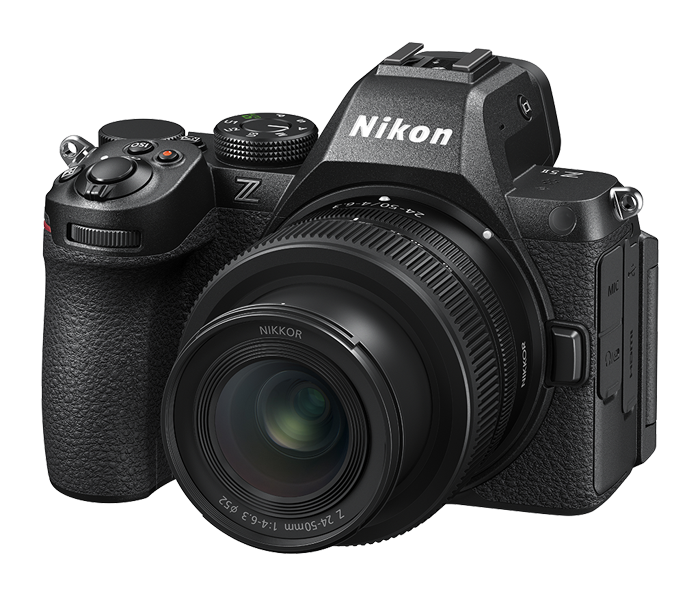
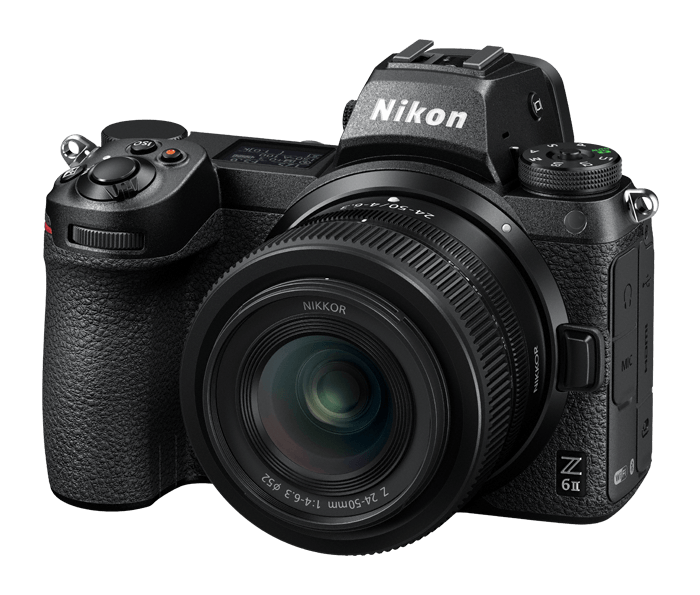
The Nikon Z5 II and the Nikon Z6 II are two full-frame mirrorless cameras that cater to enthusiasts and semi-professionals alike. Both models have garnered attention for their impressive specifications, robust build quality, and advanced features. Photographers and videographers may find themselves deciding between these two offerings due to their similarities in sensor size and ergonomic design, while their differences in specifications can greatly influence their final choice. Key differentiators include autofocus capabilities, video resolution, and battery life, positioning each camera to excel in different types of photography and videography work.
Specifications Comparison
Detailed Comparison
Image Quality
When it comes to image quality, both the Nikon Z5 II and Z6 II share a similar full-frame sensor size (35.9 x 23.9 mm) that ensures good low-light performance and dynamic range. The Z5 II features a 24 MP sensor while the Z6 II has a slightly higher resolution at 25 MP, providing a marginal advantage in detail capture for the Z6 II. However, the difference is minimal and likely unnoticeable in standard shooting conditions. Both cameras perform excellently in terms of color accuracy and dynamic range, producing high-quality images suitable for various applications.
The Z6 II offers a wider ISO range, extending from 100 to 51,200 and expandable up to 204,800, which may be advantageous for those who frequently shoot in low-light scenarios. The Z5 II's ISO performance is more contained, but still highly competent for typical shooting situations. Overall, the handling of highlights and shadows is impressive in both models, making them suitable for critical work.
In essence, while both cameras deliver superior image quality, the slightly higher resolution, extended ISO range, and overall performance in varying light conditions give the Z6 II a slight edge in terms of image fidelity under diverse conditions.
Autofocus System
The autofocus systems in both the Nikon Z5 II and Z6 II are impressive, yet they differ in terms of autofocus points and capabilities. The Z5 II includes 299 autofocus points, providing a dense network to track moving subjects seamlessly. In contrast, the Z6 II utilizes 273 autofocus points. While the Z5 II offers more points, both systems utilize advanced hybrid autofocus technologies, ensuring quick and accurate focus acquisition across a variety of subjects, including those in motion.
However, the Z6 II not only slightly lags in the number of points but is also fitted with more sophisticated tracking algorithms, especially useful in dynamic shooting environments such as sports or wildlife photography. Photographers might find the Z6 II more responsive, particularly in challenging lighting conditions. Additionally, for those specializing in video, the autofocus transition in the Z6 II is smoother, enhancing video production quality.
Given these points, while both cameras are very capable in autofocus performance, the Z6 II is favored for its advanced algorithms and performance in challenging situations.
Video Capabilities
Video functionality showcases another area where the Z5 II and Z6 II diverge. The Z5 II offers video recording up to 4K at 60p, catering to videographers who want high frame rates for smoother slow-motion capture. This is an appealing feature for content creators aiming for higher resolution footage with added frame rates. In contrast, the Z6 II is limited to 4K at 30p, which may suffice for many users but lacks the high frame rate advantage of the newer Z5 II.
Both cameras feature the ability to output uncompressed video over HDMI, enhancing flexibility for professional workflows. However, the Z6 II features advanced video functions such as N-Log and a wider array of recording codecs, which can be beneficial for filmmakers requiring more control over their footage in post-production.
Ultimately, the Z5 II takes the lead in terms of higher frame rates for video, catering to users who prioritize fast motion capturing, while the Z6 II offers more nuanced video features for serious film production.
Build & Ergonomics
Both cameras are built with a rugged design, featuring weather-sealed bodies that make them suitable for challenging environments. The dimensions and weight are very similar, with the Z5 II weighing 700g compared to the Z6 II at 705g, making both cameras manageable for extended shooting sessions.
Ergonomically, both models sport a comfortable grip and intuitive control layout, suitable for both beginners and professionals. The placement of buttons and dials remains consistent across both models, which is a plus for existing Nikon users transitioning to these newer variants. Both cameras have a 3.2" LCD screen with 2,100,000 dots, making them easy to focus and compose shots under various lighting conditions.
The slight differences in size can influence user preference, but overall, both models stand out for their solid construction and effective ergonomics. As such, this round is a tie, as both cameras cater effectively to both practical and aesthetic considerations.
Battery & Storage
Battery life can significantly impact a photographer's ability to shoot for extended periods. The Z6 II offers an impressive 410 shots on a single charge, while the Z5 II comes in lower at 330 shots. This extra longevity can be crucial for those engaging in long shooting sessions, particularly in event or documentary photography.
Both cameras utilize the same EN-EL15c battery, making them compatible with each other's power systems, which is a bonus for photographers already invested in Nikon gear. Additionally, both the Z5 II and Z6 II support dual card slots, which provides more storage flexibility and security for critical shooting.
Considering battery endurance alone, the Z6 II remains the more favorable option for professionals who rely on prolonged shooting without frequent changes.
Value for Money
Assessing the value proposition, the Nikon Z5 II is priced at $1,699, while the Z6 II stands at $1,995. The price difference can be significant for many buyers, particularly those new to photography. The Z5 II provides exceptional features at a slightly lower price point without sacrificing essential performance, which makes it accessible to enthusiasts and semi-pros.
However, the Z6 II offers more advanced video capabilities, better low-light ISO performance, and superior autofocus technology. For buyers who would benefit from these enhancements, the extra investment in the Z6 II could be justified, particularly for professional applications.
Thus, while the Z5 II offers a compelling balance of features for the price, the Z6 II may resonate more with those who demand slightly higher performance and can justify the additional cost.
Lens Ecosystem
Both the Nikon Z5 II and Z6 II utilize the Nikon Z mount, which opens up access to a growing ecosystem of Nikkor Z lenses. As of 2023, Nikon has introduced a wide variety of lenses compatible with both models, which enhances their versatility for different shooting needs. Users will benefit from the compatibility across both camera systems, enabling them to share lenses instead of investing in separate gear.
While both cameras also offer compatibility with older F-mount lenses via an adapter, which opens up even more possibilities, the rapid growth of native Z-mount lenses suggests that both models will continue to improve in terms of lens selection over time.
Ultimately, there isn't a clear winner in the lens ecosystem availability; both cameras benefit equally from this growing array of lenses.
Our Verdict
While both the Nikon Z5 II and the Z6 II offer strong performance, the Z6 II emerges as the overall winner due to its superior image quality capabilities, better autofocus performance, and extended battery life. For professionals who require advanced video features and high performance in low-light scenarios, the Z6 II is the better investment. However, for those who prioritize value for money, the Nikon Z5 II provides an outstanding feature set that will suffice for enthusiasts and serious amateurs alike. The choice ultimately hinges on individual needs and shooting preferences.
Nikon Z5II
Nikon Z6 II
Also Compare
Frequently Asked Questions
Which camera is better for low-light photography?
The Nikon Z6 II is better for low-light photography due to its higher ISO range and slightly better sensor performance, allowing it to capture detailed images in darker environments.
Is the Z5 II a good option for video work?
Yes, the Z5 II is an excellent option for video work, particularly with its ability to shoot 4K at 60p, making it suitable for action-based videography.
How important is battery life when choosing between these two models?
Battery life is quite important, especially for photographers who shoot events or in environments where charging opportunities are limited. The Z6 II's longer battery life provides added peace of mind during prolonged shoots.
What about the autofocus performance?
While both systems are capable, the Z6 II features more advanced autofocus algorithms, which can result in better tracking of moving subjects and overall performance in dynamic shooting conditions.
Should I choose the Z5 II or Z6 II if I primarily shoot stills?
If you primarily shoot stills and are looking for a budget-friendly option, the Z5 II would be a great choice. However, if you demand the highest quality and performance, the Z6 II would be a better investment.