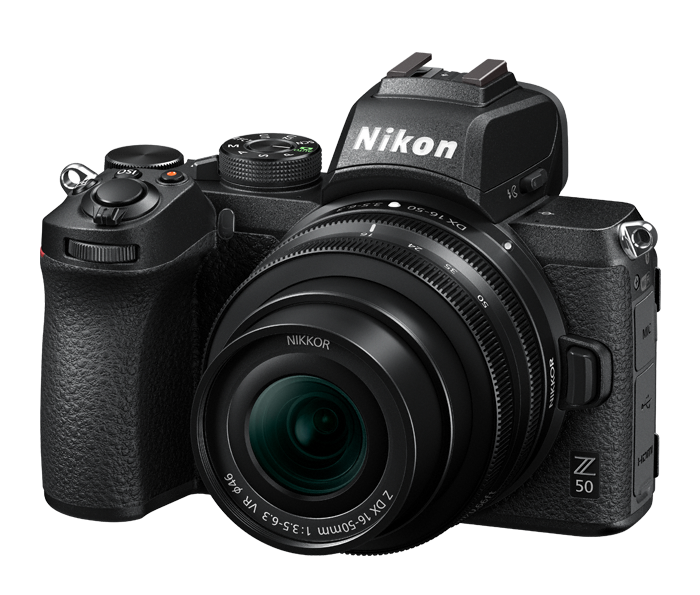

The Nikon Z50 and Sony A6700 are two popular APS-C mirrorless cameras often compared by enthusiasts and professionals alike. The Z50, released in 2019, has established a solid reputation for versatility and compactness, making it appealing for travelers and everyday photographers. On the other hand, the A6700, released in 2023, introduces advanced features and improved specifications, targeting serious content creators and videographers. Buyers may find themselves weighing the benefits of the established Nikon ecosystem against the cutting-edge features offered by Sony, ultimately influencing their decision based on intended use, budget, and feature preferences.
Specifications Comparison
Detailed Comparison
Image Quality
When comparing image quality, the Sony A6700 leads with a higher resolution sensor, offering 26 megapixels versus the Nikon Z50's 21 megapixels. This allows the A6700 to capture more detail in expansive landscapes or intricate subjects. The ISO performance of both cameras is compelling; however, the Z50's range (100-51200, expandable to 204,800) gives more flexibility in low-light scenarios. In contrast, the A6700 has a base ISO of 100 and an impressive high ISO of 102,400, making it more adaptable in a variety of lighting conditions due to its improved sensor and processing capabilities, which can also mitigate noise at higher settings. Both cameras deliver excellent image quality, but Sony's offering slightly edges ahead concerning detail and low-light performance.
Autofocus System
When it comes to autofocus, the A6700 offers a significant advantage with 759 autofocus points compared to the Z50's 209 points. This advanced system allows for more precise focusing, particularly beneficial in fast-moving subjects and challenging lighting. The A6700 benefits from real-time eye autofocus for both humans and animals, making it an excellent choice for portrait and wildlife photographers. While the Z50 performs well in most situations, the inferiority in tracking capabilities may be noticeable in competitive environments. The A6700's autofocus system enhances both accuracy and speed, making it the clear winner in this category.
Video Capabilities
In terms of video capabilities, the Sony A6700 shines with its ability to shoot 4K at up to 120 frames per second, allowing for smooth slow-motion recording and detailed footage. Conversely, the Nikon Z50 is limited to 4K at 30 frames per second, which is adequate for most casual videography but less appealing for serious filmmakers. Furthermore, the A6700 offers advanced codecs and external input options that make it more suitable for professional video production. With its robust video features, the A6700 emerges as the preferred choice for users focused on video content creation.
Build & Ergonomics
Both the Nikon Z50 and Sony A6700 have sturdy builds with weather sealing, making them suitable for outdoor shooting. The Z50's larger dimensions (127 x 94 x 60 mm) and greater weight (450 grams) provide a more substantial feel in hand, which some photographers may appreciate. Conversely, the A6700 is more compact and slightly heavier at 493 grams, making it easier to carry for extended periods. Additionally, the A6700 has a fully articulating screen, which is a notable advantage for vloggers and creative shooting angles. Overall, the choice may come down to personal preference regarding handling and size, but the features present in the A6700 may prove more versatile.
Battery & Storage
The Nikon Z50 has a battery life of approximately 320 shots, while the Sony A6700 boasts a significant jump to around 570 shots per charge. This can be a crucial factor for photographers who shoot extensively throughout the day without immediate access to spare batteries. In terms of storage options, both cameras support SD cards, but the A6700 also offers dual card slots, allowing for extended shooting flexibility and backup options. This added convenience makes the A6700 more suitable for professional use cases. Consequently, the A6700's superior battery life and storage capabilities give it an edge in this comparison.
Value for Money
At a price of $859, the Nikon Z50 is more accessible for photographers looking for a capable APS-C option without breaking the bank. While it does lack some advanced features offered by the A6700, it still provides excellent image quality and a solid user experience, making it a great introductory camera. The A6700's price of $1400 positions it as a premium offering, justified by its advanced features and improved performance metrics. However, it may be seen as a steep investment for casual users. The Z50, while less feature-rich, offers great value for those prioritizing a budget-friendly option, particularly for starters in photography or travel.
Our Verdict
Overall, the Sony A6700 edges out the Nikon Z50 primarily due to its superior autofocus, advanced video capabilities, and enhanced build features, making it well-suited for serious photographers and videographers. While the Z50 offers excellent value for its price, particularly for entry-level users or casual enthusiasts, the A6700's features justify its price for those who seek high performance and versatility. Depending on the buyer's needs - whether they favor budget over features or need advanced functionality - both cameras have strong offerings.