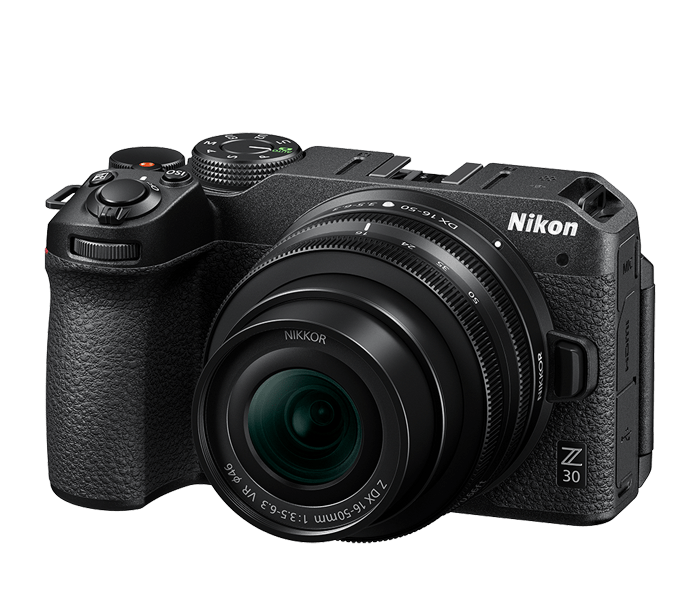
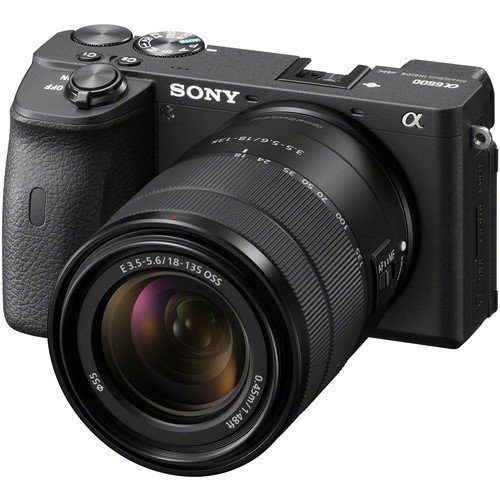
The Nikon Z30 and Sony A6600 are two popular choices in the mid-range mirrorless camera segment, appealing to enthusiasts and those stepping up from entry-level models. Each camera offers a blend of features suitable for photography and videography, making them widely compared for their performance and value. While the Nikon Z30 is known for its user-friendly design and portability, the Sony A6600 provides advanced features that cater to more experienced users who demand robustness and versatility.
As buyers weigh their options, key differentiators include image quality, autofocus capabilities, stabilization features, and battery life. The Z30 might cater to vloggers and casual photographers looking for a straightforward, compact option, while the A6600 targets users seeking high-performance capabilities, especially in autofocus and low-light conditions. Understanding these differences is essential for making an informed decision.
Specifications Comparison
Detailed Comparison
Image Quality
Both the Nikon Z30 and Sony A6600 utilize APS-C sensors that deliver impressive image quality, but slight differences exist. The Z30 features a 21-megapixel sensor, which is slightly lower than the A6600's 24-megapixel sensor. The difference in megapixels can lead to a more significant detail retention in the A6600, especially in large prints or cropping scenarios. While the Z30's lower resolution might suffice for most everyday shooting, the A6600's sensor can yield sharper images in challenging lighting conditions due to its favorable performance at a broader ISO range, reaching up to 32,000 natively, expandable to 102,400.
Moreover, the dynamic range in both cameras is commendable, but the A6600 has a slight edge owing to its more advanced processing capabilities. That said, both cameras exhibit great color reproduction and detail rendition up to their respective ISO limits; casual users might not notice significant differences in real-world use. In summary, if absolute image quality and versatility across various lighting conditions are paramount, the A6600 slightly edges out the Z30.
Autofocus System
The autofocus systems in these cameras highlight significant variations that may sway user preference. The Nikon Z30 offers a respectable 209 autofocus points; however, the Sony A6600 outperforms it with 425 autofocus points and features real-time Eye Autofocus for both human and animal subjects. This advanced autofocus technology enhances the A6600's ability to track subjects with greater reliability and speed, particularly useful for capturing action shots or moving subjects in both photo and video modes.
Additionally, the autofocus system in the A6600 operates efficiently in low-light situations, giving it an advantage for event photography or shooting in dim environments. The Z30's autofocus is competent for casual use but does not offer the same sophisticated tracking capabilities found in the A6600. For users who prioritize fast and accurate subject tracking, particularly for wildlife or sports photography, the A6600 is the clear winner in this category.
Video Capabilities
Both the Nikon Z30 and Sony A6600 shoot 4K video at 30 frames per second, making them suitable options for video enthusiasts. However, the Z30 is tailored more towards vloggers and content creators, featuring a fully articulating screen that is beneficial for self-recording. In terms of video quality, both cameras perform admirably under good lighting, although the low-light performance tilts slightly in favor of the A6600 due to its better dynamic range and sensor performance.
The Z30 lacks in-body stabilization, which contrasts with the A6600's Sensor-shift Stabilization, allowing for smoother handheld shots, especially during dynamic shooting situations. This advantage becomes significant when recording video without a tripod or gimbal. Therefore, while both cameras are capable of producing 4K video, the combination of stabilization and improved low-light handling in the A6600 gives it the upper hand for serious videographers.
Build & Ergonomics
In terms of design, both the Nikon Z30 and Sony A6600 offer weather-sealed bodies, making them suitable for outdoor photography. The Z30 is slightly more compact and lighter at 405 grams, which makes it easy to carry around for long periods. However, the A6600, while at 503 grams, provides a more robust grip which can be preferred for extended shooting sessions. The placement of controls and buttons is more refined on the A6600, catering to photographers who appreciate a tactile experience when adjusting settings.
The Z30 features no electronic viewfinder, which may not appeal to users who prefer composing through a viewfinder rather than the rear LCD. In contrast, the A6600 has an electronic viewfinder, which provides a more immersive shooting experience. Ultimately, build and ergonomics favor the A6600 for those who often shoot in challenging conditions, while the Z30 excels in portability, ideal for casual outings.
Battery & Storage
Battery life is a noteworthy aspect where the A6600 shines significantly, offering around 810 shots per charge, compared to the Z30's 330 shots. This extended battery life translates to less frequent charging and more time spent shooting, which is especially beneficial for event photographers or when shooting long sessions away from power sources. Both cameras utilize SD storage, but the A6600's better battery performance provides it a substantial advantage in sustained shooting scenarios.
Furthermore, users who tend to shoot bursts or long videos will appreciate this aspect of the A6600. The Z30, with its limited battery life, may frustrate those who require extended usage without the need to frequently swap batteries. Therefore, for photographers who prioritize long shooting times, the A6600's battery efficiency is a strong selling point.
Value for Money
In terms of price, the Nikon Z30 comes in at a more accessible $710, which emphasizes its appeal to hobbyists and entry-level users. This lower price point makes the Z30 an attractive option for those still learning the ropes of photography or those who need a backup camera. While it lacks some of the advanced features found in competitors, its price-to-performance ratio is commendable for its target audience.
Conversely, the Sony A6600 is priced at $1400, reflecting its advanced features like superior autofocus, stabilization, and better battery life. For serious enthusiasts or professionals, this price may be justified by the added capabilities, especially in terms of low-light performance and video capabilities. However, casual shooters may find the Z30 to offer everything they need at a fraction of the cost, making its value proposition strong within its niche. Therefore, in terms of value for specific user needs, the winner in this category can depend significantly on the user's experience level and expectations.
Our Verdict
Overall, the Sony A6600 claims victory in this comparison due to its superior autofocus, stabilization, and battery life. It caters effectively to enthusiasts and professionals seeking advanced capabilities in a mirrorless camera. However, the Nikon Z30 does not fall short in its intended market, providing an excellent option for casual photographers and vloggers, especially at its competitive price point. Users who prioritize video functionality and extended usage without interruption will likely find the A6600 a better fit, while those on a budget who value compactness may lean toward the Z30.
Nikon Z30
Sony A6600
Also Compare
Frequently Asked Questions
Is the Nikon Z30 better for beginners?
Yes, the Nikon Z30 is designed with beginners in mind, featuring an intuitive interface and a lower price point which makes it more accessible for those new to photography.
Does the Sony A6600 have better low-light performance?
Yes, the Sony A6600 has a better ISO range and sensor performance, making it a stronger choice for low-light conditions compared to the Nikon Z30.
Which camera is better for video?
The Sony A6600 is better for video due to its in-body stabilization, superior autofocus system, and longer battery life, allowing for smoother and more reliable video capture.
How do the electronic viewfinders compare?
The Sony A6600 has an electronic viewfinder, offering a more comprehensive shooting experience, while the Nikon Z30 does not feature a viewfinder, relying solely on its LCD screen.
Are there significant differences in lens options?
Both cameras have access to varied lens ecosystems, with the Nikon Z30 utilizing Nikon Z-Mount lenses and the A6600 using Sony E-Mount lenses; users may prefer one over the other based on specific lens availability and performance.