
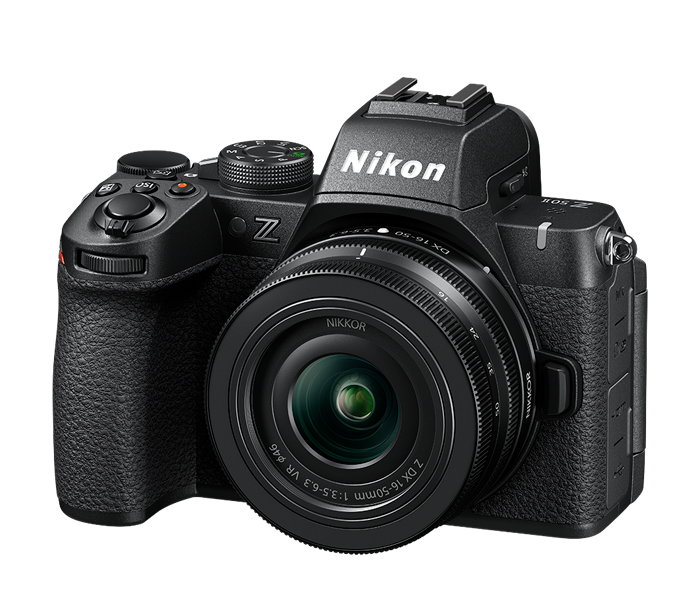
The Fujifilm X-T5 and Nikon Z50II are both noteworthy contenders in the APS-C mirrorless camera segment, appealing to photography enthusiasts and professionals alike. Both cameras come from well-respected brands and target similar audiences, with the X-T5 positioned as a more premium option and the Z50II aiming to provide excellent performance for a slightly lower price. Key differentiators between these two products include sensor resolution, autofocus capabilities, and the overall feature set designed for hybrid shooting.
Specifications Comparison
Detailed Comparison
Image Quality
The Fujifilm X-T5 features a higher resolution sensor at 40 megapixels, which offers more detail in images compared to the Nikon Z50II's 21 megapixels. This higher resolution is beneficial for large prints or cropping flexibility in post-processing. Furthermore, the X-T5 performs well at various ISO settings, with an ISO range that expands down to 64 and up to 51,200, enabling better low-light performance and flexibility in varying lighting conditions. In contrast, the Z50II boasts an ISO range that can expand up to 204,800, which may appeal to users who often shoot in low light, yet the lower base resolution means less detail overall when comparing images at the same size. Overall, the image quality from the X-T5's sensor generally provides superior clarity and depth.
Autofocus System
The autofocus system is crucial for capturing sharp images, especially in dynamic environments. The Fujifilm X-T5 shines with 425 autofocus points, allowing for a highly adaptive focus system that can quickly lock on subjects. This performance is significant for wildlife and action photography where focus accuracy is critical. On the other hand, the Nikon Z50II, with its 231 autofocus points, still delivers reliable autofocus but falls short compared to the expansive system of the X-T5. While the Z50II features face and eye detection, it simply doesn't match the speed and flexibility offered by the X-T5's system, making it more suitable for those who prioritize fast-moving or unpredictable subjects.
Video Capabilities
Both cameras support robust video capabilities, but there are differences worth noting. The Fujifilm X-T5 offers advanced video features, including 6.2K video recording at 30fps and 4K up to 60fps, making it a versatile choice for video creators looking for higher resolutions. In contrast, the Nikon Z50II supports 4K video up to 30fps but lacks the higher frame rates and resolutions found in the X-T5. Additionally, the X-T5 provides impressive video features like F-Log recording, which is favored by filmmakers for its color grading flexibility. The Z50II, while capable, is geared more towards casual videography and may fall short for users focused on serious video creation.
Build & Ergonomics
Both the Fujifilm X-T5 and Nikon Z50II come with weather-sealing, ensuring durability in challenging environments. The X-T5 is slightly heavier at 557g compared to the Z50II's 550g, but the weight difference is minimal. In terms of dimensions, the X-T5 has a slightly more compact design, which enhances portability while maintaining a comfortable grip. The X-T5 also features a higher resolution screen with 1,840,000 dots compared to the Z50II's 1,040,000 dots, translating to better visibility in bright conditions. While both cameras have electronic viewfinders, the overall build quality of the X-T5 feels more solid, appealing to users who prioritize a premium feel in their equipment.
Battery & Storage
Battery life is a crucial factor for many photographers, especially when shooting on the go. The Fujifilm X-T5 excels in this area, offering a battery life of approximately 580 shots, whereas the Nikon Z50II has a more modest lifespan of around 250 shots per charge. This significant difference may greatly influence users who plan on shooting extensive sessions without immediate access to charging. However, the storage options are fairly comparable; both cameras utilize SD cards, giving photographers flexibility in storing their images. Overall, the X-T5's longer battery life greatly enhances its usability for prolonged shooting.
Value for Money
When considering the price point, the Fujifilm X-T5 is positioned at $1,699, while the Nikon Z50II is more budget-friendly but also less feature-rich, with a price point lower than that of the X-T5. The X-T5 justifies its higher price with superior image quality, more advanced video options, and overall more robust performance, making it a better investment for serious photographers. However, the Z50II may present a compelling option for beginners or hobbyists who want good performance without the higher cost. Ultimately, value for money depends on the user's specific needs and intended usage.
Our Verdict
The Fujifilm X-T5 emerges as the overall winner due to its superior image quality, comprehensive autofocus system, enhanced video capabilities, and better battery life. It is ideal for professional photographers and videographers who need high performance across various shooting scenarios. The Nikon Z50II, while possessing its strengths, particularly in terms of price and portability, generally caters to users looking for an entry-level camera or those focused on casual shooting. Each camera has its target audience, but for those prioritizing advanced features and image fidelity, the Fujifilm X-T5 is overwhelmingly the better choice.
Fujifilm X-T5
Nikon Z50II
Also Compare
Frequently Asked Questions
Which camera is better for video?
The Fujifilm X-T5 is better for video with higher resolutions, frame rates, and additional recording features like F-Log, suitable for serious filmmakers.
How do the image quality compare?
The X-T5 offers superior image quality with a 40MP sensor compared to the 21MP sensor of the Z50II, providing more detail and flexibility in editing.
Is the Nikon Z50II good for beginners?
Yes, the Nikon Z50II is a great option for beginners due to its ease of use, good handling, and more affordable price, while still delivering quality images.
How does battery life compare?
The Fujifilm X-T5 has a significantly better battery life, rated for around 580 shots, while the Z50II lasts about 250 shots per charge.
What about lens availability?
Both cameras have a growing selection of lenses, but the Fujifilm X series generally has a more extensive ecosystem of high-quality lenses tailored for a range of photography styles.