
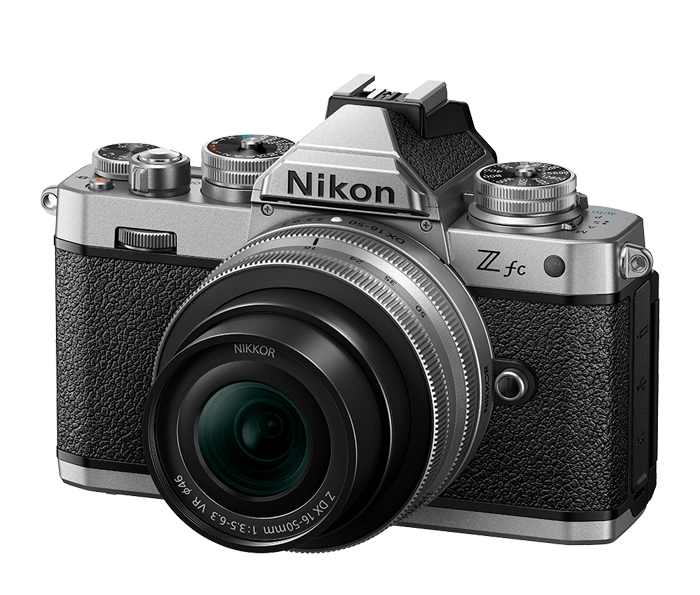
The Fujifilm X-S20 and Nikon Z fc are two noteworthy entrants in the APS-C mirrorless camera market, appealing to both enthusiasts and professionals looking for compact yet powerful systems. Their retro-inspired designs are particularly attractive to those who appreciate both form and function. Potential buyers might be torn between these two models, especially given their similar price ranges and capabilities, making them prime candidates for comparison. Key differentiators lie in their image quality, autofocus capabilities, video performance, and overall ergonomics, which can significantly influence the photographer's experience and outcomes.
Specifications Comparison
Detailed Comparison
Image Quality
In terms of image quality, the Fujifilm X-S20 edges out the Nikon Z fc with its 26-megapixel APS-C sensor compared to the Z fc's 21-megapixel variant. This added resolution translates into finer detail retention, especially in larger prints or when cropping images. Additionally, the X-S20 offers a wider ISO range that extends from 80 to 51200, granting photographers greater flexibility in low-light situations. In contrast, the Z fc begins its range at ISO 100 but has a considerably higher ceiling, extending to an impressive 204800, which could be beneficial in extreme lighting conditions. Nonetheless, in practical usage, users may find the higher resolution and unique Film Simulation modes offered by Fujifilm particularly appealing for creative control.
Autofocus System
When evaluating the autofocus systems, the Fuji X-S20 boasts an impressive 425 autofocus points, significantly surpassing the Nikon Z fc's 209 points. This advantage allows for more precise tracking of subjects, especially in dynamic scenarios such as sports or wildlife photography. The face and eye detection capabilities of the X-S20 also enhance its performance for portrait photography. Conversely, while the Z fc has fewer autofocus points, its performance is still competent for many users and may suffice for casual shooting or in less demanding environments. Overall, serious photographers who require speed and accuracy will likely prefer the Fujifilm X-S20's autofocus system.
Video Capabilities
The video capabilities also set these two cameras apart. The Fujifilm X-S20 supports 4K video recording at up to 60p, offering greater versatility for videographers who want high frame rates and resolution. Additionally, the X-S20's advanced stabilization system, rated at 7 stops, aids significantly in achieving smooth footage even during handheld shooting. Meanwhile, the Nikon Z fc is limited to 4K at 30p and lacks any in-body stabilization, putting it at a disadvantage for videography. While Z fc could suffice for casual video work, the Fujifilm X-S20 clearly offers superior video functionality for serious creators.
Build & Ergonomics
Both models exhibit solid build quality, but their ergonomics differ significantly. The Fujifilm X-S20, with its compact dimensions of 127 x 85 x 65 mm, feels very lightweight and maneuverable, making it a great option for travel and street photography. However, it does lack some retro aesthetic cues that the Nikon Z fc delivers. The Z fc, measuring 135 x 94 x 44 mm with a more pronounced vintage style, appeals to users who appreciate a classic camera design. That said, it is slightly heavier, at 445g compared to the X-S20's 491g. The choice here will depend on personal preference for size versus design.
Battery & Storage
Battery performance is another consideration where the X-S20 has the upper hand, boasting a battery life of approximately 750 shots, compared to the Z fc's 300 shots. This extended battery life is a significant advantage for photographers on longer shoots or in remote locations without easy access to charging. Both cameras utilize similar storage options, supporting SD cards, though the X-S20's ability to handle continuous shooting at a higher frames per second also showcases its more efficient power management. Users focused on shooting longevity will prefer the Fujifilm X-S20 due to its superior battery performance.
Value for Money
Considering the price point, the Nikon Z fc retails for $959, making it more accessible for budget-conscious buyers, particularly those who may be starting in photography or videography. In contrast, the Fujifilm X-S20, priced at $1299, presents a higher investment but comes equipped with advanced features like better image quality, higher video capabilities, and superior autofocus. While both cameras offer strong value, the decision often comes down to how much weight the buyer places on performance versus affordability. For the serious enthusiast, the Fuji X-S20 may justify its higher price with significant capabilities.
Our Verdict
In conclusion, the Fujifilm X-S20 emerges as the winner of this comparison, particularly for those prioritizing image quality, advanced video capabilities, and superior autofocus performance. While the Nikon Z fc offers a charming aesthetic and a lower cost, it lacks the features that more demanding photographers often require. The X-S20, with its robust capabilities, is ideal for serious photographers and videographers, while the Z fc may still appeal to casual users or those on a tighter budget seeking a stylish digital camera.