
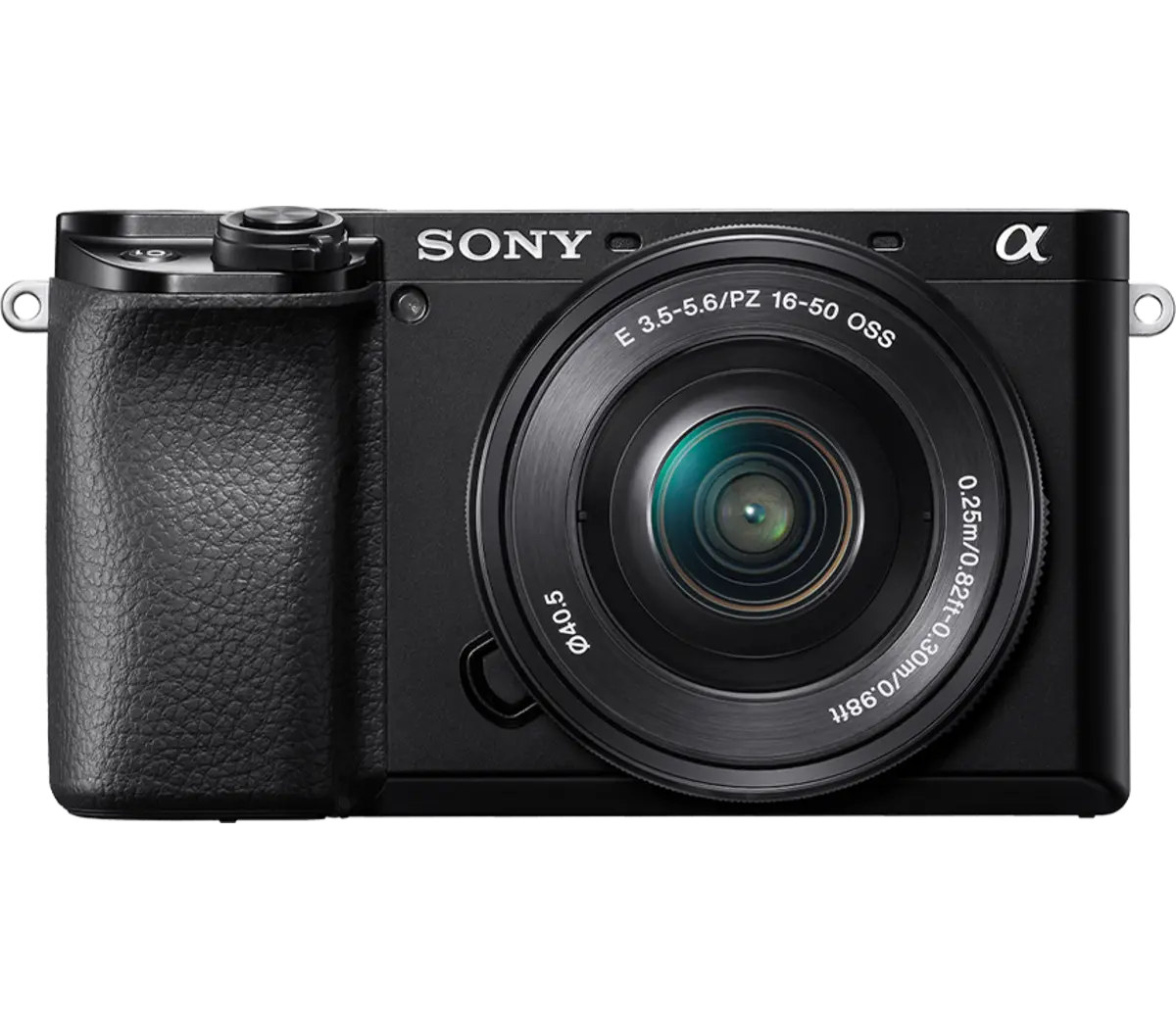
The Fujifilm X-H2S and Sony A6100 are both popular choices within the APS-C mirrorless camera market, appealing to photographers and hybrid shooters who value a blend of performance, portability, and versatility. While the X-H2S is Fujifilm's flagship APS-C camera designed for professionals and advanced enthusiasts, the A6100 targets budget-conscious users, beginners, and those who prioritize portability. This results in these models being frequently compared by photographers deciding between higher investment and top-tier features versus accessibility and value.
Key differentiators include price, performance, and feature sets. The X-H2S is a premium, feature-rich camera boasting fast burst rates, advanced stabilization, and pro-level video, making it ideal for action, wildlife, and serious video work. Conversely, the A6100 stands out for its compact form, ease of use, and strong autofocus in a more affordable package ideal for everyday shooting, travel, and entry-level creators.
Specifications Comparison
Detailed Comparison
Image Quality
Both cameras employ APS-C sensors (23.5 x 15.6 mm) and deliver high-resolution images-26MP for the Fujifilm X-H2S and 24MP for the Sony A6100. Practically, the difference in megapixels is minor, but the X-H2S benefits from a stacked sensor design, offering improved readout speeds, dynamic range, and noise performance, especially at higher ISOs.
The X-H2S's ISO range starts at 160 (expandable to 80) and tops out at 12800 (expandable to 51200), slightly narrower than the A6100's base range of 100-32000 (expandable to 51200). However, Fujifilm's renowned color science and dynamic range further distinguish its output, providing rich, film-like colors and flexibility in post-processing.
While the Sony A6100 also produces vibrant images and Sony's JPEG colors have improved, it lacks in-body stabilization, which can limit sharpness when shooting handheld in low light. Overall, both cameras deliver excellent results for general photography, but the X-H2S holds an advantage in challenging lighting and detailed work.
Autofocus System
Both cameras feature 425-point autofocus systems, leveraging wide sensor coverage and fast subject acquisition. The X-H2S employs Fujifilm's latest AI-based algorithms and subject detection capabilities, offering superior tracking for faces, eyes, and various animals or moving objects, even at high speeds.
The Sony A6100 is notable for its highly effective Real-time Tracking and Real-time Eye AF, particularly for humans and animals. Its AF system is fast, intuitive, and rarely misses, making it ideal for candid photography and beginners. However, the A6100 lacks the advanced computational AF and deep learning subject detection that the X-H2S brings to the table, as well as the ability to maintain high AF accuracy during extremely rapid burst shooting.
For action, sports, and wildlife photographers, the X-H2S's advanced and customizable AF gives it a professional edge. Still, for most casual and general photographers, the A6100's autofocus remains extremely capable.
Video Capabilities
This is a clear area of distinction. The Fujifilm X-H2S is engineered for serious video users, offering 4K/60p internal recording with advanced codecs, F-Log, multiple high-quality recording formats, and professional video tools. The X-H2S's stacked sensor minimizes rolling shutter, and its 7-stop in-body image stabilization (IBIS) is invaluable for handheld shooting.
The Sony A6100 can record 4K/30p and delivers good video quality for vlogs or general use. However, its lack of in-body stabilization, limited video-centric features, and shorter maximum recording lengths position it for casual rather than professional use. The screen resolution is also lower, making manual focus and critical review less precise in video.
If video is a primary focus-especially action, wildlife, or handheld work-the X-H2S is the far superior choice. The A6100 covers basic video needs, but doesn't approach the capabilities of the Fujifilm flagship.
Build & Ergonomics
The Fujifilm X-H2S boasts a robust, weather-sealed magnesium alloy body built for professional use. Its larger hand grip, tactile controls, and overall ergonomics make it more comfortable for extended shoots or when using large lenses. The fully articulating, high-resolution 3-inch screen (1,620,000 dots) and high-res electronic viewfinder enable precise composition and review. Weather-sealing means the X-H2S can confidently handle inclement environments, from rain to dust.
The Sony A6100 emphasizes portability, weighing just 396g versus the X-H2S's 660g. It's significantly smaller (120 x 67 x 59mm), easily fitting in most bags or even jacket pockets, making it great for travel or on-the-go shooting. The controls and build feel less premium, with a plastic build and no weather sealing, but this also makes it less intimidating for newcomers.
Those prioritizing ruggedness, pro ergonomics, and outdoor reliability will prefer the X-H2S, but for lightness and discretion, the A6100 shines.
Battery & Storage
The X-H2S offers an excellent battery life of approximately 580 shots per charge, outlasting the A6100's 420 shots-substantial for professional and enthusiast shooters alike, especially during events or outdoor assignments. The larger battery size of the X-H2S also suits its greater power demands and performance features.
Regarding memory, both use a single SD card slot, but the X-H2S supports faster UHS-II cards for high-bitrate video and continuous shooting demands. The A6100's SD slot suffices for typical photo and entry-level video projects, but may limit buffer clearance and speed with high-speed bursts or video.
While both deliver acceptable battery performance and storage for their respective audiences, Fujifilm's model offers superior stamina and flexibility for demanding scenarios.
Value for Money
The Sony A6100's greatest asset is accessibility: at $750 (body only), it provides outstanding autofocus, good image quality, decent 4K video, and portability. For beginners, hobbyists, and those on a budget, it's a terrific entry point into mirrorless photography with plenty of upgrade paths within the Sony E-mount ecosystem.
The X-H2S, at $2499 (body only), is a significant investment, but its feature set-stacked sensor, class-leading burst speed, advanced video, pro build-caters to those needing top-tier performance. For enthusiasts or pros who demand uncompromising hybrid capabilities and rugged design, the value proposition is strong, though overkill for casual users.
If you need advanced features and can justify the spend, the X-H2S's price is reasonable. However, the A6100 wins for pure value, delivering fantastic performance per dollar.
Lens Ecosystem
Both cameras feature mature, well-supported lens systems. The Fujifilm X-mount offers excellent proprietary lenses-from compact primes to fast telephotos-optimally tuned for Fujifilm bodies, with a balanced mix of affordable and premium glass. Third-party offerings are expanding but still fewer than Sony's.
The Sony E-mount boasts one of the largest APS-C lens selections on the market, spanning Sony, Sigma, Tamron, and Samyang/Rokinon, in addition to full-frame E-mount lenses which are fully compatible. This makes it easy to find affordable, specialized, or compact lenses to suit nearly any use case or budget. For entry-level lens shoppers or those wanting maximum variety, Sony has an edge.
In summary, both ecosystems are strong, but Sony's broader, more affordable lens choices give it a slight advantage, especially for those growing their system over time.
Our Verdict
Overall, the Fujifilm X-H2S emerges as the technical winner, offering superior performance in nearly every category except value and lens ecosystem. Its blend of high-speed shooting, advanced autofocus, professional video capabilities, rugged build, and long battery life make it the APS-C camera of choice for demanding photographers and hybrid shooters. If budget is not a primary constraint and you require best-in-class features, the X-H2S is a future-proof investment. However, the Sony A6100 is unbeatable in terms of value and system versatility. It is lighter, more affordable, and offers excellent autofocus and image quality for its price. For hobbyists, those new to photography, or anyone seeking a capable and travel-friendly camera without pro-level needs, the A6100 remains a superb option and opens the door to the vast Sony lens ecosystem. Ultimately, the X-H2S is for professionals and ambitious creators who need the very best in a crop-sensor body, while the A6100 is the smart choice for beginners or budget-conscious shooters who still want impressive results.
Fujifilm X-H2S
Sony A6100
Also Compare
Frequently Asked Questions
Is the Fujifilm X-H2S worth the extra price compared to the Sony A6100?
If you require fast burst rates, advanced autofocus, professional-level 4K/60p video, in-body stabilization, and a tough, weather-sealed body, the X-H2S fully justifies its premium. For entry-level users or those satisfied with strong performance and portability at a lower price, the A6100 is the better value.
Which camera is better for beginners?
The Sony A6100 is more beginner-friendly due to its intuitive interface, lower price, lightweight design, and straightforward controls. It offers automatic modes and reliable autofocus that make it easy for novices to get great results quickly.
Can the Sony A6100 handle sports or wildlife photography?
The A6100's fast autofocus and 11 fps burst rate are adequate for some sports or wildlife situations, especially in good light. However, the X-H2S's 40 fps burst, AI subject detection, and better buffer performance make it the superior choice for fast action.
Which camera is preferred for video creators?
The X-H2S is clearly better for serious video work, offering 4K/60p, advanced codecs, F-Log, and effective in-body stabilization, making handheld and action shooting much easier. The A6100 can manage basic video, but lacks the pro-level features and stabilization found in the X-H2S.
How do the available lenses compare between Fujifilm X and Sony E mounts?
Sony E-mount has a larger third-party and native lens selection, providing options ranging from budget to premium and including many compact primes and fast zooms. Fujifilm X-mount lenses are known for optical quality and design synergy but have a slightly smaller selection and fewer budget choices.
Is the Fujifilm X-H2S good for travel?
The X-H2S is weather-sealed and offers great battery life, making it a trustworthy travel partner for demanding conditions. However, its larger size and weight mean the Sony A6100 might be better if you prioritize portability and discreetness on the go.