
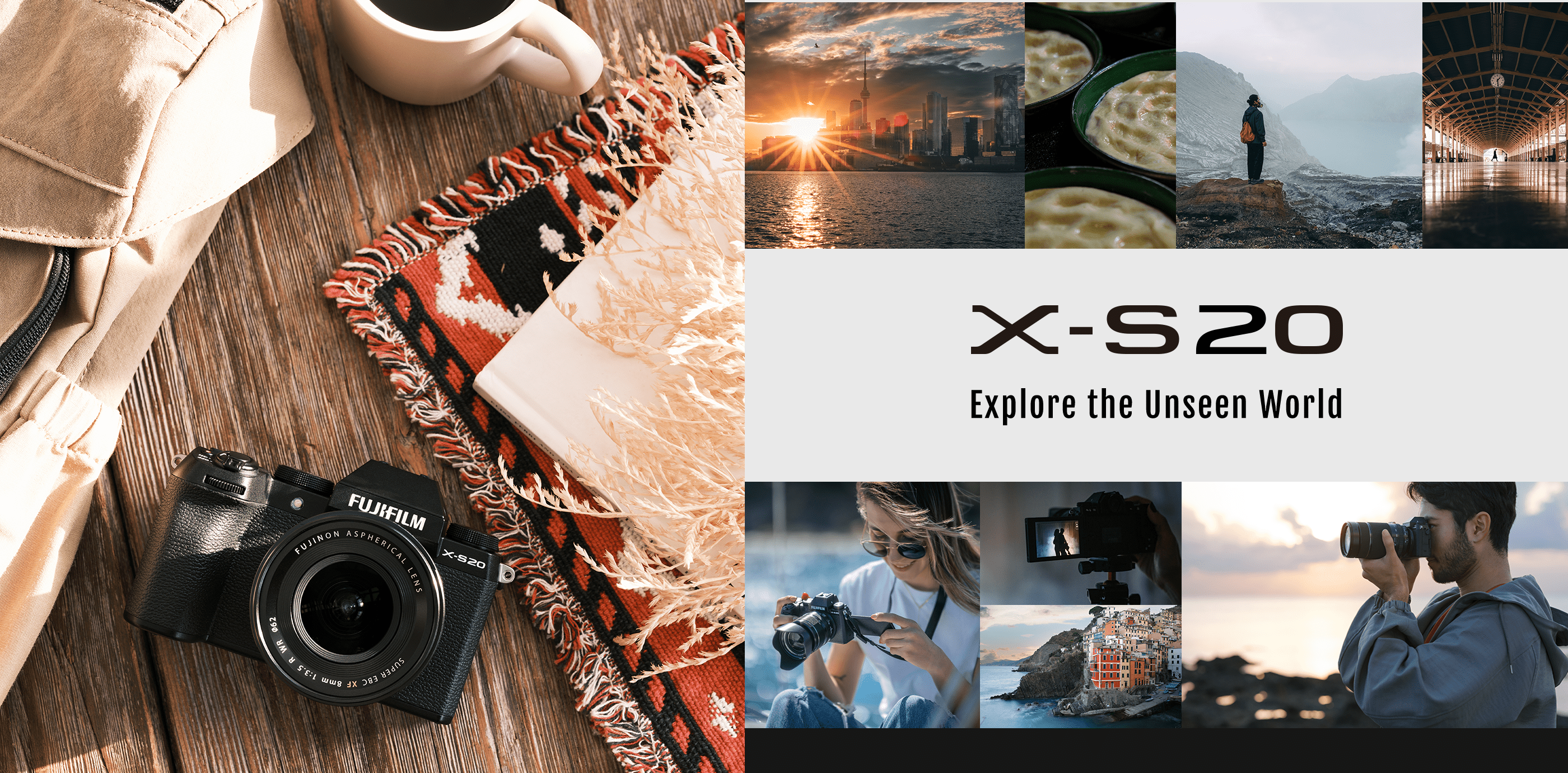
The Fujifilm X-H2 and X-S20 are two APS-C mirrorless cameras that cater to photo and video enthusiasts, each appealing to different segments of the market. The X-H2, released in 2022, targets professionals with its high-resolution sensor and robust feature set, while the X-S20, introduced in 2023, is designed for content creators seeking a balance of performance and affordability. Buyers are often drawn to these models because they represent the latest in Fujifilm's innovation, featuring similar mounts and user interfaces but differing in technical specifications and use cases. Key differentiators include megapixel count, video capabilities, and overall design, making it crucial for potential buyers to understand their priorities before choosing between these two cameras.
Specifications Comparison
Detailed Comparison
Image Quality
The X-H2 boasts an impressive 40 megapixels, making it an exceptional choice for photographers who prioritize detail and clarity in their images. The higher resolution can capture fine textures and give more flexibility in cropping. It performs excellently at various ISO levels, with a native range of 125-12800 expanding to 80-51200, which contributes to its overall versatility in different lighting conditions.
In contrast, the X-S20, with its 26-megapixel sensor, still delivers excellent image quality, especially suitable for social media and online content where ultra-high resolution may not be as critical. Its ISO performance is similar, ranging from 160-12800 (also expandable), ensuring decent image results in low-light scenarios. However, the lower resolution may not meet the needs of professional photographers looking for maximum detail.
Ultimately, while both cameras produce stunning images, the X-H2's superior resolution gives it a standout advantage in raw image quality, especially for large prints or detailed editing work.
Autofocus System
Both the X-H2 and the X-S20 feature robust autofocus systems with 425 autofocus points, offering fast and accurate focus acquisition. This makes them suitable for capturing fast-moving subjects, whether in sports or wildlife photography. The X-H2 benefitting from its higher resolution can provide better subject detail for tracking.
The X-S20, on the other hand, has the advantage of a higher maximum frame rate, able to shoot at 20 fps compared to the X-H2's 15 fps. This means that while both offer proficient autofocus, the X-S20 may be marginally better suited for dynamic scenarios due to its increased burst capabilities.
Overall, the autofocus systems are comparable, but the differences in shooting speed and application mean that the winner can depend on the specific needs of the photographer. For those who prioritize frame rate over resolution, the X-S20 could hold a slight edge.
Video Capabilities
The X-H2 provides strong video recording features, capable of 4K recording with detailed quality. However, the X-S20 takes a significant lead with its ability to record 4K at 60p. This makes it more attractive for videographers or content creators who require smooth frame rates and higher capture rates for compelling narratives.
Both models include in-body stabilization up to 7 stops, aiding with handheld shooting and reducing blur from camera shake, which can benefit both photo and video shooting styles. However, the advantage of recording at 60p in the X-S20 enhances its appeal in video-centric situations.
Therefore, with video resolution and frame rate opportunities, the X-S20 stands out as the better choice for aspiring filmmakers or content-oriented users, solidifying its edge in this aspect.
Build & Ergonomics
The X-H2 is built with a more robust and heavier design, weighing in at 660g and featuring weather sealing, which makes it ideal for outdoor shooting and professional use in a variety of conditions. This means it's built to withstand harsher environments and is designed to handle extensive usage in demanding situations.
The X-S20, however, is considerably lighter at 491g and sports a more compact size, which can be an advantage for travel photographers or vloggers looking for portability without sacrificing too much functionality. While it lacks the weather sealing of its counterpart, it still offers solid build quality for everyday use.
In conclusion, while the X-H2's build quality emphasizes durability, the X-S20's ergonomics favor portability. User preference will dictate which is more advantageous depending on their specific shooting scenarios.
Battery & Storage
The X-H2 offers a battery life of approximately 680 shots per charge, which is commendable for a high-resolution camera, allowing a fair amount of shooting without frequent changes. Its storage options are compatible with SD cards, supporting high-speed options enabling efficient shooting and video functions.
On the flip side, the X-S20 improves slightly on battery life with the capability of approximately 750 shots on a single charge, making it appealing for long shooting days, especially for content creators who require consistent performance.
Both cameras support equivalent storage mediums, but the increased battery life of the X-S20 may benefit users who prioritize extensive use over the course of a shooting session. Thus, in this category, the X-S20 takes a small advantage over the X-H2.
Value for Money
The Fujifilm X-H2 comes with a price tag of $1999, targeting serious photographers who are willing to invest in advanced features, higher resolution, and build quality. The substantial price reflects its premium offerings, making it suitable for professional work where top-tier performance is necessary.
In contrast, the X-S20 is priced at $1299, making it a more budget-friendly option for those seeking a capable camera without the premium price. This model strikes a balance between performance and affordability, making it especially appealing to content creators who may prioritize video features without needing the utmost image quality.
When considering value, the X-S20 provides excellent performance for its price, demonstrating that it is a strong contender for entry-level enthusiasts to advanced hobbyists. Therefore, while the X-H2 justifies its higher price point with additional features, the X-S20 presents a compelling value proposition for more budget-conscious buyers.
Our Verdict
Overall, the Fujifilm X-S20 emerges as the more versatile option for the average consumer or aspiring videographer, particularly due to its excellent video capabilities, lighter design, and commendable battery life, making it suitable for a variety of shooting conditions. Conversely, the X-H2 excels in high-resolution photography, advantageous for professionals who require detailed imagery for print and demanding applications. Depending on the specific needs-whether they be high-resolution stills or video versatility-buyers can determine which model suits them best.