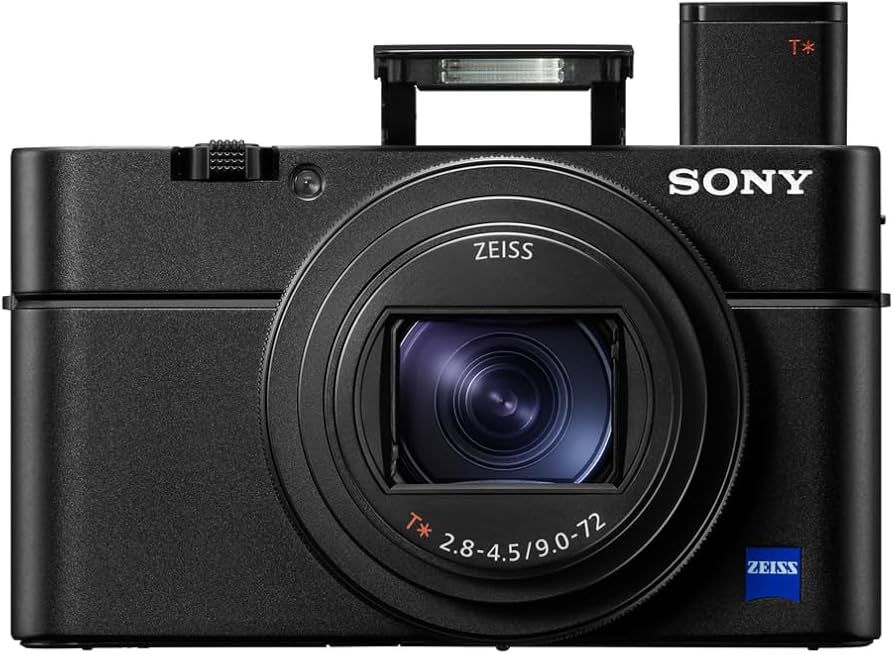
The Canon PowerShot V10 and the Sony RX100 VII are two compact cameras that have gained popularity among enthusiasts and vloggers alike. Both models feature a large 1-inch sensor size, making them capable of producing high-quality images and video despite their small form factor. Choosing between these two can be challenging, especially for those looking for portability without compromising on performance. Key differentiators include image quality, autofocus performance, video capabilities, and overall ergonomics, which cater to different types of users-from casual shooters to advanced videographers.
Specifications Comparison
Detailed Comparison
Image Quality
Both the Canon PowerShot V10 and the Sony RX100 VII utilize a 1-inch sensor, allowing for better low-light performance compared to smaller sensors. However, the RX100 VII pulls ahead with a higher resolution at 20 megapixels compared to the V10's 15 megapixels. This difference enables the RX100 VII to capture finer details in images, which is beneficial for printing or cropping. Additionally, the Sony model has an ISO range extending up to 12800, providing more versatility in challenging lighting conditions. The Canon's image quality is commendable, but it may struggle slightly in low light compared to the RX100 VII's broader ISO capabilities, leading to potentially more noise in higher ranges. Overall, while both cameras deliver excellent image quality, the additional resolution and ISO flexibility of the RX100 VII give it the edge in this category.
Autofocus System
Autofocus performance can significantly affect the user experience. The Sony RX100 VII stands out with its advanced Fast Hybrid AF system, featuring 357 phase-detection and 425 contrast-detection points, allowing for quick and accurate focusing. This makes it exceptionally suitable for capturing fast-moving subjects. In contrast, the Canon PowerShot V10 lacks an advanced autofocus setup, providing basic autofocus functions without phase-detection capabilities. While the V10 still offers adequate focus for casual use, it can't compete with the speed and reliability of the RX100 VII's system. Users who prioritize quick autofocus and tracking during action shots will likely prefer the RX100 VII.
Video Capabilities
Both cameras are capable of recording 4K video at 30 frames per second, catering well to videographers and content creators. However, the RX100 VII provides additional features such as 4-stop in-body stabilization, enhancing the smoothness of handheld shooting. The Canon PowerShot V10, while it does not have stabilization, still offers decent video quality, but the lack of this feature can lead to shaky footage, especially in dynamic environments. The RX100 VII also has a higher frame-per-second rate, reaching up to 90 fps in 1080p for slow-motion capabilities, offering greater creative flexibility. For those seeking quality video with advanced features, the RX100 VII clearly has the upper hand.
Build & Ergonomics
The design and build quality of a camera affect usability and handling. The Canon PowerShot V10 is lightweight at 211 grams and has compact dimensions, making it incredibly portable and easy to carry for everyday use. However, its screen size of 2 inches and lower resolution targets more casual users. In contrast, the Sony RX100 VII, weighing 302 grams and slightly larger in dimensions, provides a more robust build quality. It features a 3-inch touchscreen with a higher resolution of 921,000 dots, enhancing the shooting experience and making it easier to compose shots and review images. The unique inclusion of an electronic viewfinder in the RX100 VII adds versatility in bright light situations. Given the improved ergonomics and feature set, the RX100 VII caters well to users who will be shooting frequently and for longer periods.
Battery & Storage
Battery life is crucial for users who shoot on the go or for extended periods. The Canon PowerShot V10 has a battery life that can shoot approximately 290 shots, which offers a reasonable usage before needing a recharge. On the other hand, the Sony RX100 VII has a slightly lower battery life, rated at around 260 shots. However, RX100 VII supports the use of extra storage options due to its advanced features requiring fast read/writes. In practical usage, the difference in battery life may not be significant for a casual user, but the RX100 VII's capabilities may draw on the battery more swiftly during intensive usage. Therefore, the V10 may provide a slight advantage in battery endurance.
Value for Money
The price point is a significant consideration for many users. The Canon PowerShot V10, priced at $429, offers a budget-friendly option for those seeking quality without breaking the bank. For casual users and vloggers who do not require the extensive features of more advanced cameras, the V10 represents solid value. Conversely, the Sony RX100 VII comes at a premium price of $1200, reflecting its advanced features, superior optics, and greater versatility. For serious content creators or those investing in hybrid photography and videography, the higher cost may justify the performance advantages. Ultimately, the ideal choice will depend on the user's budget and needs; for entry-level users, the V10 is a far more accessible option, while the RX100 VII is suited for professionals or serious hobbyists.
Our Verdict
Overall, the Sony RX100 VII emerges as the winner in this comparison primarily due to its superior image quality, advanced autofocus system, and enhanced video capabilities. While the Canon PowerShot V10 offers excellent value for more casual users, those looking to invest in a versatile compact camera for professional work or serious content creation will find the RX100 VII to be the better choice. For users who prioritize portability and cost-effectiveness, the V10 still stands as a commendable option.