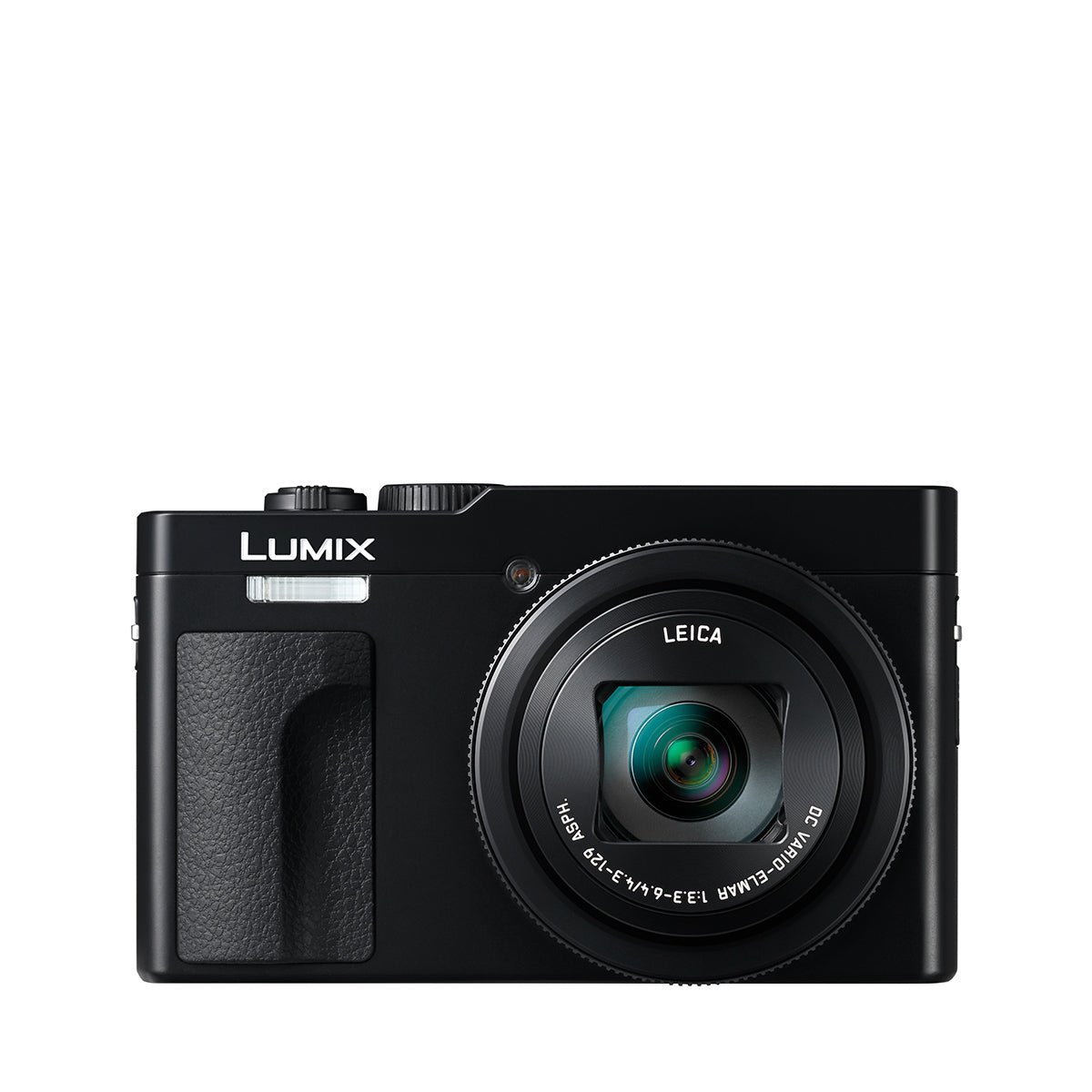
The Canon PowerShot V10 and the Panasonic ZS99 are two compact cameras that cater to photography enthusiasts and casual shooters alike. While the V10 is a newer model released in 2023 with a larger 1-inch sensor, the ZS99 has been a go-to choice since its launch in 2019, offering robust features and advanced stabilization systems. Buyers are often drawn to these models due to their portability, video capabilities, and user-friendly interfaces. The key differentiators in this comparison revolve around image quality, stabilization effectiveness, screen usability, and overall value for money.
Specifications Comparison
Detailed Comparison
Image Quality
The Canon PowerShot V10 features a 1-inch sensor, which is significantly larger than the 1/2.3" sensor found in the Panasonic ZS99. This difference in sensor size typically allows for better low-light performance, increased dynamic range, and overall image quality. The V10 provides 15 megapixels of resolution, contrasted with the ZS99's higher 20.3-megapixel count. While more megapixels can be beneficial for cropping or large prints, the larger sensor typically handles color and detail better, particularly in challenging lighting conditions. Furthermore, the V10's image processing may also yield warmer and more lifelike colors which appeal to many photographers.
On the other hand, the ZS99, with its smaller sensor, can provide images with a good level of detail in good lighting conditions. Given its 20.3 megapixels, users may appreciate the crisp images in well-lit environments. The camera's performance may suffer slightly in low light due to its sensor size, but it can still deliver satisfactory results. However, for those chiefly concerned with achieving the best image quality, the V10 has a clearer advantage due to its sensor size.
Overall, while both cameras produce acceptable images for casual use, the PowerShot V10's larger sensor gives it an edge in terms of image quality, particularly in varied lighting scenarios.
Autofocus System
Autofocus is crucial for capturing sharp images quickly, especially in dynamic scenes. The Canon PowerShot V10 offers straightforward autofocus capabilities that can suffice for everyday photography, but it lacks advanced features such as face detection or eye autofocus. This simplicity may appeal to casual users who prefer a more relaxed approach to focusing, but can be a limitation in more complex shooting scenarios.
In contrast, the Panasonic ZS99 incorporates more advanced autofocus technology, including face detection and tracking. This facilitates intuitive shooting, particularly in scenes with moving subjects or varying focal points. The responsiveness of the autofocus system in the ZS99 is a distinct advantage, making it more suitable for capturing fleeting moments, especially in family or travel photography.
While both cameras perform adequately for general use, the ZS99's superior autofocus capabilities provide a noticeable advantage, allowing users to focus on capturing the moment rather than worrying about getting sharp images.
Video Capabilities
Both the Canon PowerShot V10 and Panasonic ZS99 offer impressive video capabilities. The V10 supports 4K video recording at 30 frames per second, which is a significant feature for those looking to capture high-quality footage. However, it does not include built-in stabilization, which can be a disadvantage for handheld shooting.
In contrast, the ZS99 not only supports 4K video but also includes In-Body 5-axis stabilization. This is a major advantage for videographers, particularly in dynamic settings where camera shake can diminish video quality. The stabilization in the ZS99 ensures smoother footage, making it more suitable for capturing moving subjects or scenarios where the camera may be moved frequently.
Thus, while both cameras are capable of 4K video recording, the ZS99's superior stabilization makes it the preferable option for video creators and ensures better results in a wider range of shooting conditions.
Build & Ergonomics
In terms of build quality, the Canon PowerShot V10 is compact and lightweight, making it an excellent option for travel and everyday portability with a weight of 211 grams. It features a 2-inch screen, which while small, can still be manageable for most users. However, the screen resolution of 460,000 dots may feel limited compared to more modern standards.
The Panasonic ZS99, on the other hand, has a more substantial build at 310 grams but offers a larger 3.0-inch tilting touchscreen. The larger screen provides a more immersive experience and makes it easier to compose shots, particularly when shooting from unconventional angles. The improved touchscreen interface can also enhance the overall user experience, allowing for quick adjustments.
In conclusion, while the V10 is highly portable and lightweight, the ZS99's larger touchscreen and greater usability make it more appealing for those who value comfort and ease of use in ergonomics.
Battery & Storage
Battery life is another essential aspect of performance, especially for users who spend extended periods capturing photos or videos. The Canon PowerShot V10 boasts a decent battery life of approximately 290 shots per charge, which provides reasonable longevity for a compact camera. This makes it suitable for day trips or short outings without the need to carry an extra battery.
In contrast, the ZS99 offers a similarly competitive battery performance, but it also supports additional features that can influence battery consumption, such as advanced autofocus and larger screens. While specifics on the number of shots may vary slightly, users should expect comparable performance in real-world usage. Furthermore, both models utilize SD memory cards for storage, offering flexibility in expanding storage capacity as needed.
Overall, while both cameras have adequate battery life for casual use, the differences are negligible, and both present sufficient performance for day-to-day photography and videography.
Value for Money
When considering value for money, the Canon PowerShot V10 is priced at $429 compared to the Panasonic ZS99's $399 price tag. The V10's newer sensor and 4K capabilities highlight its appeal, which may justify the slight price premium for some users. However, the absence of stabilization and the smaller screen could hold back some potential buyers.
Conversely, the ZS99 provides excellent value through its comprehensive feature set, advanced autofocus, 5-axis stabilization, and larger touchscreen, all at a lower price point. For users who prioritize video capabilities and a versatile shooting experience, the ZS99 offers a more well-rounded package for its price.
Overall, for buyers on a budget who want superior features like stabilization and advanced autofocus, the ZS99 earns a stronger value proposition, especially considering the features it offers at a lower price.
Our Verdict
After a thorough evaluation across various aspects, the Panasonic ZS99 emerges as the overall winner due to its advanced autofocus system, superior video stabilization features, and better ergonomics with a larger touchscreen. While the Canon PowerShot V10 holds its ground with a larger sensor that may appeal to purists and those focused on still photography, the ZS99's broader feature set caters to a more versatile audience. Therefore, for buyers who value video performance, quick focus, and overall usability in their camera choices, the ZS99 is the better option.