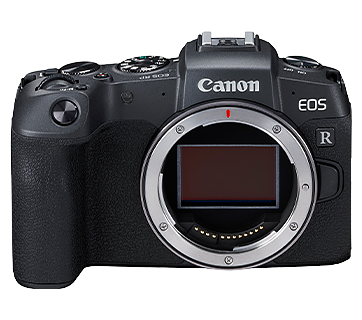
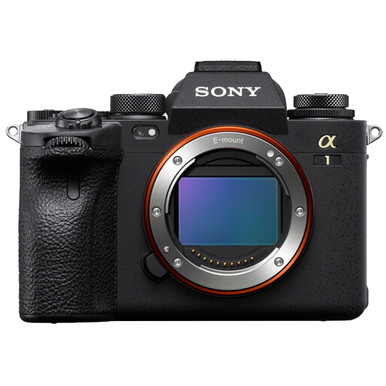
The Canon EOS RP and the Sony A1 are two prominent full-frame mirrorless cameras that cater to different segments of photographers. The EOS RP, launched in 2019, targets entry-level full-frame users and amateur photographers looking for a lightweight and affordable option. In contrast, the Sony A1, released in 2021, is a top-tier flagship model designed for professional photographers who demand the utmost in performance, speed, and versatility. Both cameras attract attention for their impressive specifications and capabilities, making them frequently compared by those looking to invest in a new full-frame system.
Specifications Comparison
Detailed Comparison
Image Quality
The Canon EOS RP features a 26-megapixel full-frame sensor, which provides very good image quality for most photography needs, including landscapes, portraiture, and more. Its ISO performance is commendable, allowing for an expanded range from ISO 50 to 102,400, giving photographers flexibility in tricky lighting conditions. However, when compared to the Sony A1, the resolution might feel limiting for users who need higher detail.
The Sony A1 takes the lead in this category with a remarkable 50-megapixel sensor, offering significantly higher resolution images, which is especially beneficial for large prints and cropping. The A1's ISO range is comparable to the RP, also expanding to ISO 102,400, but its superior resolution allows for finer detail in images.
Overall, while both cameras produce high-quality images, the A1's higher resolution can provide a distinct advantage for professional applications, making it a better choice for those prioritizing image detail over price.
Autofocus System
Canon's EOS RP features an impressive autofocus system with 4779 focus points, providing good coverage and reliable tracking for moving subjects. Its Dual Pixel autofocus technology is widely praised for face and eye detection, especially in portrait photography.
However, the Sony A1 offers a more advanced autofocus system with 759 focus points, including real-time eye tracking for both humans and animals, which can significantly enhance the shooting experience in action or wildlife photography. The speed and accuracy of the A1's autofocus system often outshine that of the RP, providing immediate focus adjustments even in challenging conditions.
Given these factors, while both systems are competent, the Sony A1's advanced student autograph system offers a notable advantage, especially for professional users or those who require fast and reliable autofocus capabilities.
Video Capabilities
The Canon EOS RP supports 4K video at 24 frames per second, which, although decent for casual users, is limited in terms of frame rates and features such as high-frame-rate recording and advanced video codecs. This may be a constraint for videographers seeking more dynamic shooting options.
In contrast, the Sony A1 excels in video capabilities, offering 4K recording at an impressive 120 frames per second. This allows for high-frame-rate slow-motion applications, providing filmmakers with greater creative flexibility and higher quality footage in demanding scenarios. Additionally, the A1 supports 10-bit recording, making it a far more capable camera for professional video work than the EOS RP.
As such, for users prioritizing video capabilities, the Sony A1 clearly outperforms the Canon EOS RP, making it the superior choice for serious videographers.
Build & Ergonomics
The Canon EOS RP is designed to be lightweight and compact, weighing in at just 485 grams, making it an excellent choice for travel or casual use. Its dimensions result in a more borderless design which can fit easily into smaller camera bags. However, this comes at the expense of several advanced features and may not feel as robust as its competitor.
On the other hand, the Sony A1, though heavier at 737 grams, offers weather sealing and a more rugged build, making it better suited for challenging shooting conditions preferred by professionals. The ergonomics of both cameras are well-designed, but the A1's layout tends to cater to serious photographers with customizable buttons and a more substantial grip.
In terms of build and ergonomics, the winner depends on user preference: those seeking portability might prefer the RP, while professionals or rugged adventurers would find value in the A1's durability and enhanced ergonomics.
Battery & Storage
Battery life is a critical factor for photographers, and the Canon EOS RP offers approximately 250 shots per charge, which might not be adequate for long shoots or travel without carrying spare batteries.
In contrast, the Sony A1 boasts an impressive battery life of around 530 shots per charge, which greatly extends its usability in demanding environments. Furthermore, the A1 utilizes dual card slots, allowing users greater versatility with storage-especially beneficial for professionals needing to quickly backup their work.
Overall, the A1 clearly wins this section due to its superior battery life and storage options, essential for any serious photography or videography ventures.
Value for Money
The Canon EOS RP offers a very compelling entry point into full-frame photography at a price of around $1,299. For beginner photographers or those who need a lightweight and straightforward camera, the EOS RP delivers great value for its features and performance without breaking the bank.
Conversely, the Sony A1 is priced at approximately $6,500, more aligned with professionals who require the highest quality and capabilities. While its cost is justified through numerous advanced features and superior performance, it may be overkill for casual shooters or enthusiasts who do not need the extensive feature set.
In this regard, especially for aspiring photographers, the EOS RP represents better value for money, while the A1's higher investment targets professionals ready to capitalize on advanced capabilities and performance.
Our Verdict
The overall winner between the Canon EOS RP and the Sony A1 is the Sony A1, which significantly outperforms the RP in key areas such as image resolution, autofocus, video capabilities, and battery life. While the EOS RP provides compelling value for novice photographers seeking an entry into full-frame systems, the A1 is tailored to meet the demands of professionals requiring top-notch performance and advanced features. For photographers looking for a robust, high-performance camera, the A1 is the clear choice, while the EOS RP is ideal for those prioritizing affordability and ease of use.
Canon EOS RP
Sony A1
Also Compare
Frequently Asked Questions
Which camera is better for video?
The Sony A1 is better for video with its ability to shoot 4K at 120fps, making it suitable for professional videography. The Canon EOS RP, while decent for casual video, lacks advanced features and frame rate options.
Is the weight difference significant?
Yes, the Canon EOS RP is significantly lighter at 485 grams compared to the 737 grams of the Sony A1. This makes the RP more portable, ideal for casual photography and travel.
What type of photographer should choose the Canon EOS RP?
The Canon EOS RP is suitable for beginner photographers, hobbyists, or those looking for a lightweight and affordable full-frame option with competent performance for general photography.
How does the autofocus compare in real-world use?
In real-world conditions, the Sony A1's autofocus system is generally faster and more reliable, particularly in challenging scenarios like rapidly moving subjects, thanks to its superior tracking capabilities.
What are the main advantages of the Sony A1?
The Sony A1 boasts higher image resolution, improved autofocus, superior video recording capabilities, and better battery life, making it ideal for professional photographers and videographers.