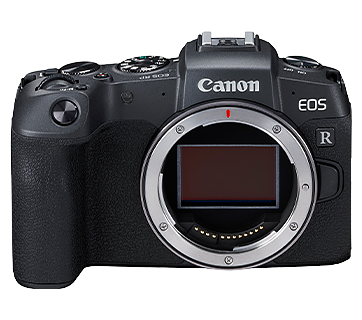
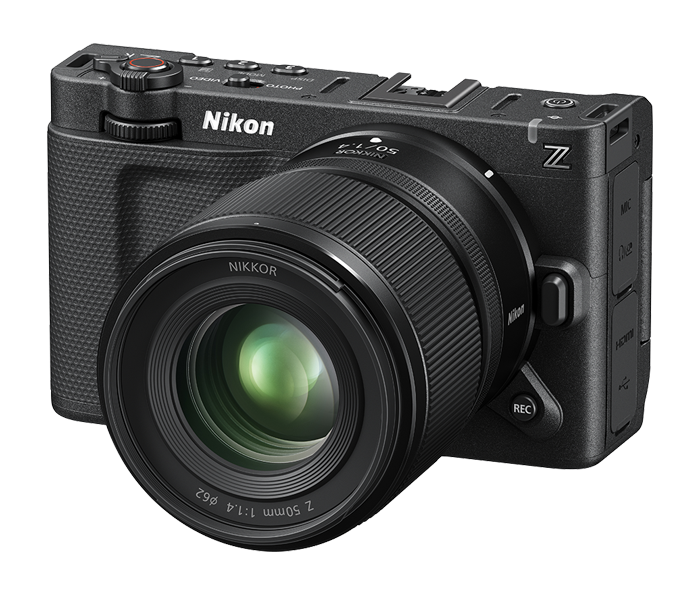
The Canon EOS RP and Nikon ZR are two popular full-frame mirrorless cameras frequently compared, appealing to both amateur and professional photographers alike. With their competitive features and specifications, they cater to users looking for high image quality, robust performance, and special capabilities in particular fields like video and low-light photography. Canon users often stick to the brand for its color science and user-friendly interface, while Nikon fans may gravitate toward the ZR for its advanced stabilization and high-resolution display.
Specifications Comparison
Detailed Comparison
Image Quality
Both the Canon EOS RP and Nikon ZR produce excellent images with their full-frame sensors, but there are subtle differences in their specifications. The EOS RP features a 26 MP sensor, while the ZR has a slightly lower resolution at 25 MP. However, the ZR offers a broader ISO range, starting from 100 to 64000, which can be beneficial in low-light conditions. The RP expands its ISO range to 102400 but performs better at standard to low light levels. Additionally, Canon is known for its color science, often providing more pleasing skin tones and vibrant colors straight out of the camera, whereas Nikon provides a more subdued yet accurate color profile that some photographers prefer for post-processing.
Autofocus System
The autofocus performance varies significantly between these two models. The Canon EOS RP features an impressive 4779 autofocus points, allowing for fast and accurate focusing on subjects, especially for moving objects. In contrast, the Nikon ZR has 273 autofocus points, which, while adequate for most situations, does not provide the same level of coverage or tracking performance as the RP. Thus, for photographers who rely heavily on autofocus, such as sports or wildlife photographers, the EOS RP has the edge. However, the ZR may appeal to those who primarily shoot still subjects.
Video Capabilities
In terms of video capabilities, both cameras support 4K video but come with certain limitations. The Canon EOS RP can shoot 4K in 24p, which is decent for many videographers but lacks higher frame rates and stabilization. The Nikon ZR, however, excels in this area by offering not only 4K resolution but also advanced 7.5 stops of in-body stabilization, which is invaluable for handheld footage. This makes the ZR more suitable for videographers looking for smooth, professional-quality video without additional equipment. Therefore, for those focused on video production, the Nikon ZR stands out.
Build & Ergonomics
When evaluating build quality, the Nikon ZR wins handily with its weather-sealed construction, making it better suited to harsh shooting environments. On the other hand, the EOS RP has a more compact and lightweight design, making it highly portable and ideal for travel or street photography. Furthermore, the ZR features a larger and higher-resolution 4" display with 3,070,000 dots, compared to the RP's 3" screen with 1,040,000 dots, allowing for better visibility and control when composing shots. Thus, while the EOS RP is easier to carry, the ZR offers durability and usability enhancements.
Battery & Storage
Battery life is a significant aspect for photographers, especially on longer shoots. The Canon EOS RP has a battery life rated at approximately 250 shots, which can be limiting in extended sessions. Conversely, the Nikon ZR has not only a longer battery life due to its larger size but also offers more efficient performance as a mirrorless camera, allowing for longer shooting times. Additionally, both models support SD card storage, but the ZR's recent design may offer slightly faster write speeds for high-resolution files, making it more adept at handling bursts of images or extensive video.
Value for Money
In terms of pricing, the Canon EOS RP presents itself as the more budget-friendly option at $1,299, making it more accessible for photographers just starting with full-frame systems. On the contrary, the Nikon ZR comes in at a significantly higher price point of $2,200. However, the ZR justifies its price through advanced features like in-body stabilization, improved build quality, and superior video capabilities. Ultimately, the choice in value will depend on the user's priorities; budget-conscious individuals might favor the RP, while users seeking high-end performance may find the cost of the ZR justified.
Our Verdict
Overall, while the Canon EOS RP earnestly competes with its strong autofocus and affordability, the Nikon ZR edges ahead in the comparison due to its robust build, excellent video capabilities, and superior customization in challenging environments. For casual photographers or those on a budget, the EOS RP may be a perfect match; however, professional videographers or those prioritizing durability will likely find the Nikon ZR to be a worthwhile investment due to its advanced features and increased performance across a variety of scenarios.
Canon EOS RP
Nikon ZR
Also Compare
Frequently Asked Questions
Which camera is better for beginners?
The Canon EOS RP is more beginner-friendly due to its simpler interface and lower price point, making it a great starting point for photographers venturing into full-frame mirrorless systems.
Does the Nikon ZR have better stabilization?
Yes, the Nikon ZR features in-body stabilization with 7.5 stops, making it significantly more effective in reducing camera shake during handheld shooting compared to the Canon EOS RP, which lacks stabilization.
What are the key differences in video performance?
While both cameras can shoot 4K video, the Nikon ZR offers better stabilization and advanced video features, making it more suitable for videographers needing smooth footage. The EOS RP, however, simply allows for basic 4K recording.
How do they compare in low light performance?
The Canon EOS RP performs well in low light conditions with its extended ISO range up to 102400. The Nikon ZR has a standard ISO range up to 64000 but may handle noise in low light slightly better due to its advanced sensor technology.
What about lens availability?
Both cameras have access to a growing selection of lenses, with Canon's RF mount and Nikon's Z mount providing robust options. However, Canon's RF lens lineup is currently broader, which could favor EOS RP users looking for more versatile lens choices.